It is called "large-flowered" but actually has small flowers - what is going on with this name?
Introduction: Large-flowered Abelia, English name: Large.floweredAbelia. Family and genus: Caprifoliaceae, Abelia genus. Morphological characteristics: golden yellow leaves, slightly green at the center, pinkish-white flowers. Fast growth, long flowering period. It can be cultivated outdoors in East China, Southwest China and North China. Abelia is a plant of the Caprifoliaceae family and Abelia genus, native to
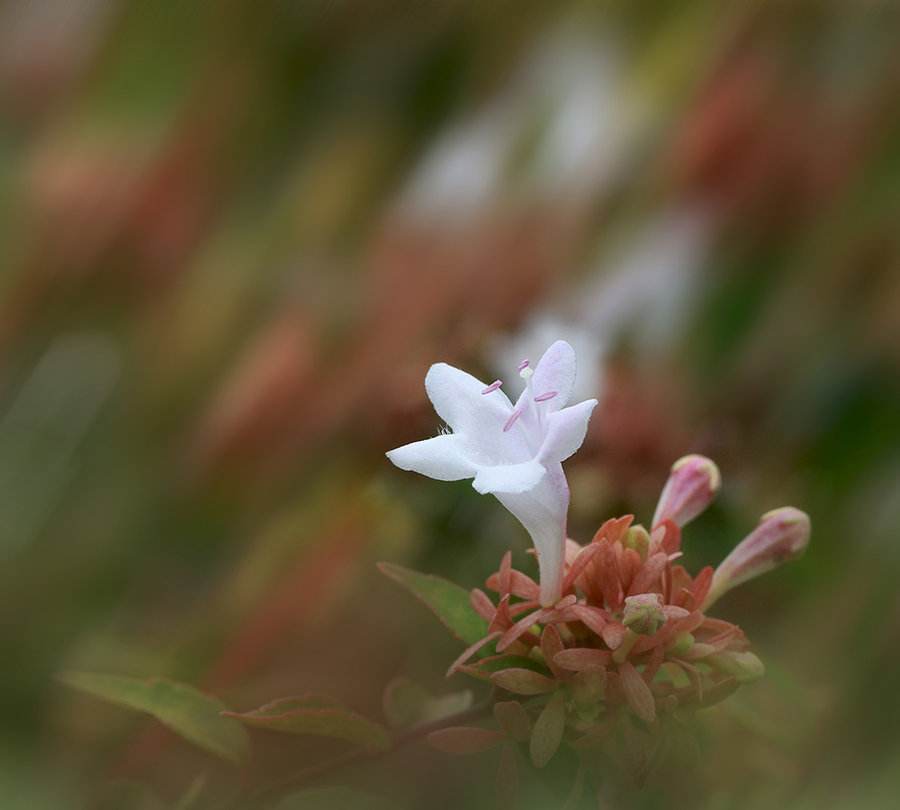
Large-flowered Abelia, English name: Large.flowered Abelia. Family and genus: Caprifoliaceae, Abelia genus. Morphological characteristics: golden yellow leaves, slightly green at the center, pinkish-white flowers. Fast growth, long flowering period. It can be cultivated outdoors in East China, Southwest China and North China.
Abelia is a plant of the Caprifoliaceae family and Abelia genus, native to Jiangxi, Hunan, Hubei, Sichuan and other places in China. It is a relatively precious ornamental flowering shrub, ranging from semi-deciduous to evergreen. Large-flowered Abelia is a dwarf variety of Abelia. It has already been introduced in China at present, but the quantity is very limited.
Large-flowered Abelia
Main value:
Large-flowered Abelia is very beautiful, with soft and drooping branches and a graceful tree form. Whether used as a companion planting in the garden, or for group planting as a hedge and in flower borders, it is very suitable. Every year from early summer to mid-autumn is the peak flowering period of Large-flowered Abelia. When it blooms, the whole tree is covered with white flowers, carved like jade and ice, crystal clear. Under sunlight it glows faintly, set off by pink calyxes and dark green leaves, making it especially eye-catching. What is even more valuable is that even after the white flowers fade, the red calyxes can persist until winter, which is extremely spectacular.
Large-flowered Abelia is not only very beautiful, but also highly adaptable. It does not demand much from the soil; both acidic and neutral soils are fine. Its requirements for fertility are also not strict, and it is tolerant of drought and barren conditions, with very strong tillering and sprouting ability. At the same time, it can be pruned repeatedly.
Among Abelias, Large-flowered Abelia is an earlier horticultural species. It was formed by crossing the Chinese native Abelia chinensis and Abelia uniflora. Later, through foreign breeding, several more distinctive horticultural varieties were developed.
Large-flowered Abelia
Cultivated varieties:
Golden-edged Large-flowered Abelia was developed by crossing Large-flowered Abelia. Compared with the parent, its greatest feature is that the leaf surface is golden yellow. The small branches are red and hollow. The flowers are small, abundant, and carry a faint fragrance. It is one of the best varieties among Large-flowered Abelias.
Pink-flowered Abelia is the only red-flowered variety among Abelias, with pink and vivid flowers, exceptionally bright and beautiful. The leaves are relatively small, and the slender branches curve into an arch shape. The pink sepals persist for a longer time, making it very distinctive.
Sunrise Abelia has dark green leaves in the center, with golden yellow stripes along the leaf margins when young; as it grows, the stripes turn creamy yellow. It is currently the only variegated-leaf variety, and has not yet been introduced in China.
Dwarf White Abelia is a dwarf variety of Abelia. It has already been introduced in China at present, but the quantity is very limited.
There are many varieties of Abelia with excellent ornamental effects. Some domestic nurseries are gradually introducing foreign varieties. Large-flowered Abelia is widely used in gardens in Shanghai and the developed cities of Jiangsu and Zhejiang, and this situation is beginning to improve the previously limited application of Abelia in China.
Large-flowered Abelia
For more professional agricultural science and technology information, please scan the QR code to follow WeChat: NongXunNET

Please indicate the source when reprinting.