What Is the Concept of Bonsai? An Introduction to the Meaning of Bonsai
Bonsai originated in China. It is a traditional Chinese art treasure with a long history, deeply loved by the broad masses of people, and enjoys a reputation around the world. Bonsai is an ingenious combination of plant cultivation techniques and formative art. It uses plants, ...
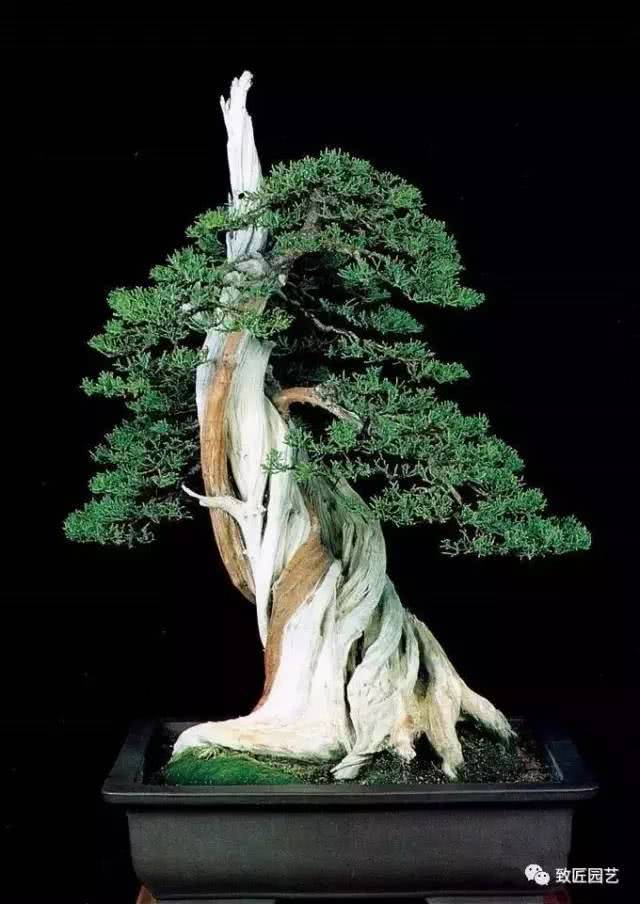
Bonsai originated in China. It is a traditional Chinese art treasure with a long history, deeply loved by the broad masses of people, and enjoys a reputation around the world. Bonsai is an ingenious combination of plant cultivation techniques and formative art. It uses materials such as plants and landscape stones, which through artistic processing are planted or arranged in a pot to imitate beautiful natural scenery as a decorative item; it is the crystallization of cultivation techniques and formative art, and also a combination of natural beauty and artistic beauty.
Before the 1930s, potted plants and bonsai were collectively called bonsai. However, because they differ in having trees as the main subject or landscape stones and scenery as the main subject, and because trees are living plants that constantly change with the seasons and as the tree ages, while landscape stones and scenery change little; at the same time, the trees in landscape bonsai are artificially made, and there is also "single-stone bonsai," in which a single stone forms a landscape; while "stone curios" do not change. Therefore, two different kinds of artworks gradually took shape: those with trees as the main subject are called potted plants or tree-stump bonsai; those with landscape scenery as the main subject are called bonsai or landscape bonsai. At present, those with trees as the main subject are mostly called by the name "potted plants" internationally, directly transliterated as "Bonsai." But in daily life, people are still accustomed to using the term "bonsai."
Tree-stump bonsai
Landscape bonsai
It is worth mentioning that bonsai developed further from potted plants (pot cultivation), but there is a fundamental difference between bonsai and potted plants. Generally, using pots or vessels to grow plants is all commonly called potted plants. Potted plants merely plant plants in a pot for viewing in all four seasons, and their aesthetic object is only the bright colors and shapes of branches, leaves, flowers, fruits, and so on; while bonsai is an artwork created into a scene through artistic treatment and horticultural craftsmanship. In addition to achieving the ornamental purpose of potted plants, it must also, through careful artistic modeling, express endless poetic charm and painterly meaning, express a natural beauty that fascinates the mind and stirs the imagination, and express people's love for nature. Therefore, bonsai is also the sustenance and expression of the author's artistic emotions, and the revelation of subjective spirit. Bonsai is a fusion of scenery and emotion, an organic combination of natural beauty and artistic beauty, the condensation of natural charm, with both form and spirit manifested.
The difference between bonsai, potted plants, and stone curios
Bonsai is the miniature of natural scenery, and a comprehensive formative art that integrates garden cultivation, literature, painting, and other arts, combining and merging them into one. Bonsai artists use creative techniques and reasonable layout to cultivate trees, flowers, and plants that have undergone a certain artistic modeling, or various landscape stones that have undergone artistic processing, in pots of different depths, lengths, and widths, and different shapes, sizes, colors, and textures, so that they form a scene imitating nature and an ideal three-dimensional picture surpassing the original state of mountains and fields. This formative art is called bonsai.
Bonsai uses plants, mountains, stones, water, soil, and so on as materials, and is completed through the author's conceptual design, modeling and processing, and careful tending. Arranged in a tiny pot, it can "shrink a thousand miles" and "shrink a dragon into an inch," displaying the infinite scenery of nature, so bonsai is praised as "three-dimensional painting" and "silent poetry." As time and seasons change, it can also present different postures, colors, and artistic conceptions.
In a certain conceptual sense, bonsai is also a synthesis of aesthetics, literature, and science. So-called aesthetics means that the making of bonsai should give people aesthetic appreciation, elegant and beautiful, with vivid charm and much to ponder; so-called literature means that bonsai modeling and conception have poetic charm and painterly meaning, with high and low levels, with modulation and cadence, with introduction, development, transition, and conclusion, reflecting a relatively high level of literary grace; so-called science means that the main modeling material of bonsai is plants, which have the characteristics of life and the laws of growth and development, and this determines that making it requires mastering the knowledge of horticultural science and carrying out long-term artistic processing as well as maintenance and management work. Only in this way can its survival and graceful posture be guaranteed.
Highlights
For more professional agricultural science and technology information, please scan the QR code to follow WeChat: NongXunNET

Please indicate the source when reprinting.