A pine tree dug up on the mountain, Grandpa took it home and turned it into an exquisite bonsai
Grandpa spent decades at it, and after a long time he no longer found it particularly special, so Father began to explore something new. He discovered that making bonsai was quite fun, so he went wandering in the mountains. One day, passing by a small hillside, he found many pine trees. They looked...
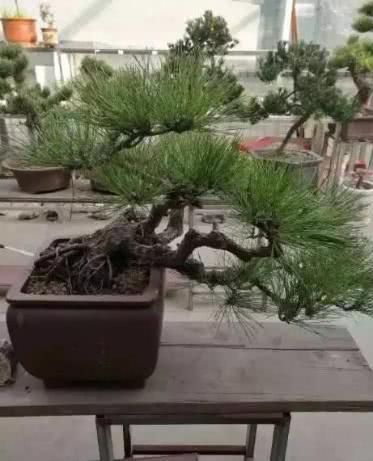
Grandpa spent decades at it, and after a long time he no longer found it particularly special, so Father began to explore something new. He discovered that making bonsai was quite fun, so he went wandering in the mountains. One day, passing by a small hillside, he found many pine trees. They looked good, so he started digging them up for bonsai at home.
Watching others make bonsai, the choice is to pick more unusual shapes. Father-in-law felt that he had chosen this pine tree, and the effect was not bad. When potting a pine seedling, bring along as much of the old soil as possible, and cut off the dead branches, fallen leaves and roots at the base of the roots. The roots spread through the potting soil, and the soil stays in solid contact with the roots, which is good for growth and survival.
Pine bonsai have a venerable, upright bearing, and are commonly planted in ceramic pots or glazed ceramic pots. The shape of the basin differs with the tree: for cascade styles, a tall thousand-tube pot; for upright trunks, a deep rectangular pot with slanted sides or an oval pot; for the upright type, a shallow pot or stone type.
Pine bonsai soil is generally characterised mainly by pine bark, breathable black stone powder, river sand, construction stone powder, coal cinder and so on. In addition, these culture soils are very easy to obtain. After cultivation, the soil covering can be inserted around the tree roots, and a depth of about 3 inches is appropriate.
The potting shape of a pine tree is based on climbing and bending, combined with pruning. Climbing and bending should be done during the dormant period, using brown ties, without exposing the main bends, branches and the natural posture. Small branches and leaves are pruned into flakes or hemispherical shapes, layered differently.
The craft of making pine bonsai is foundational work; do every step carefully, and rot turns into wonder. The creation of artistic bonsai is meant to give hard work and wisdom, and it can only be achieved through creation.
For more professional agricultural science and technology news, please scan the QR code to follow WeChat: NongXunNET

Please indicate the source when reprinting.