There are many varieties of hibiscus, and some can grow up to 4 m tall.
Guide: Growth time and planting time selection for hibiscus. Hibiscus is a brightly colored perennial that can grow up to 4.6 m tall where there is no frost. The showy large flowers can be in a variety of colors or bicolors. The hibiscus shrub is a deciduous plant with dark green leaves. Growth period: The growth rate of hibiscus depends on
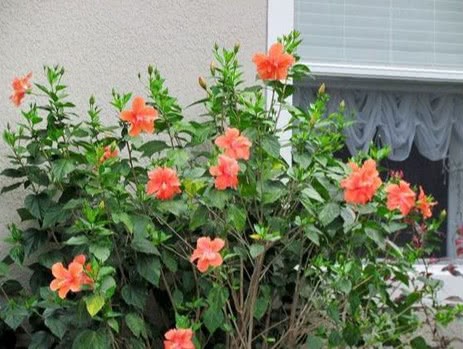
Growth time and planting time selection for hibiscus
Hibiscus is a brightly colored perennial that can grow up to 4.6 m tall where there is no frost. The showy large flowers can be in a variety of colors or bicolors. The hibiscus shrub is a deciduous plant with dark green leaves.
Growth period
The growth rate of hibiscus depends on many factors. These factors include the planting site, the method of propagation, and the weather conditions that normally occur. Some hibiscus varieties take up to 18 months to bloom. If hibiscus is purchased as a mature plant, it usually blooms in the same year it is planted.
Soil and light preferences
Hibiscus plants perform best in well-drained soil. These flowers need to be kept consistently moist, but not soggy. If the soil is not fertile, compost can be mixed with the soil used for the planting hole. Hibiscus needs to be planted in an area with full sun. They also perform well in containers, which need to be placed in the sun for several hours each day.
When and how to plant
Hibiscus can be planted at any time in spring, summer, or fall. These plants need to be spaced about 0.9 to 1.8 m apart. The hole dug only needs to be as deep as the root ball. The width of the hole is about 2 or 3 times the width of the root ball.
Varieties
Hibiscus has many varieties. Common garden varieties are usually a single solid color. However, tropical hibiscus varieties have flowers in more than one color. All types of hibiscus are perennials. Some varieties grow into large shrubs or medium-sized trees after a few years.
There is not just one kind of hibiscus; it turns out there are so many varieties
Hibiscus (Hibiscus spp.) is a large, showy flower that is the star of the midsummer garden. When many other plants struggle under high humidity and high temperatures, these tough plants are already putting on a flourishing display. And surprisingly, under the mild temperatures of the Southwest region, some hibiscus plants grow very well.
About the Southwest
The southwestern United States, usually defined as the states from New York to Maine, has moderate summer temperatures, cold winters, and heavy snowfall. This region falls in USDA plant zones 3b to 6, with average winter temperatures between -17.8°C and -37.2°C. Gardeners in most of the Southwest can choose among different types of hibiscus.
Red hibiscus
Red or crimson hibiscus (petunia-flowered hibiscus) is cold-hardy and suitable for growing in gardens in the milder parts of the Southwest. This is a perennial native plant with bright red flowers 15.2 cm to 20.3 cm across, and the flowers are star-shaped. The sturdy foliage is deeply cut. Red hibiscus can be planted in full sun in moist, even swampy, soil.
Rose mallow
Rose mallow, commonly called hardy hibiscus, is another perennial hibiscus that grows in the eastern United States. In spring, rose mallow is slow to break dormancy, so mark its location carefully so that you do not accidentally disturb its roots. Once rose mallow begins to grow, it quickly becomes a shrub 0.6 m to 0.9 m tall, covered with 30.5 cm flowers. Many varieties are available, mainly red, white, and pink. Hardy hibiscus grows well in sun and moist soil.
Hibiscus
Rose of Sharon, also called shrub althea, is a deciduous shrub 2.4 m to 3 m tall with a vase-like growth habit. This shrub blooms on new growth, so it can be heavily pruned in spring to control its size and shape. Like hardy hibiscus, rose of Sharon also grows slowly in spring. Once it begins blooming in midsummer, it continues until frost. The flowers are blue, white, or pink, usually with a darker color in the center. These shrubs tolerate a wide range of soils and grow well in poor urban soil. Rose of Sharon blooms well in sun or shade and is hardy in zones 5 to 9.
Hibiscus can grow 4-5 m tall and needs to be pruned once a day
From July to September, hibiscus shrubs (hibiscus flowers) produce bright blooms. White, pink, and red flowers look beautiful in landscaping, but hibiscus should not be planted arbitrarily. In the early stages, the shrub may look delicate and compact, but as it matures, hibiscus spreads and grows. Gardeners must prepare for the eventual height and spread of hibiscus to avoid a difficult transplanting process.
Cultivation
Properly cultivated hibiscus plants will reach their greatest potential. Unhealthy plants will show stunted development and dwarfed growth and, if present at all, will bring little benefit to the garden environment. Give hibiscus full sun and light, well-drained soil. Heavy clay will hinder root growth, and hibiscus may fail to grow under such conditions. Amend moist, high-density soil with sand so that it drains well.
Height and width
Hibiscus shrubs can grow up to 4.5 m tall, although in cultivated settings they usually do not exceed 2.1 m tall. At their widest, hibiscus shrubs can spread to 1.5 m. Consider these maximum dimensions when choosing a planting site for hibiscus. Pay special attention to shaded areas of the lawn, because the plant needs full sun to grow and bloom properly.
Root spread
Hibiscus roots do not spread very extensively. A 3-gallon container, about 25 cm wide, is enough to hold one hibiscus shrub. A potted hibiscus can grow in a 25 cm pot, but without restriction the roots will spread in all directions underground for several meters.
Pruning
When pruning hibiscus shrubs, gardeners may follow their own aesthetic sense. You can leave hibiscus in an area of its own and let it grow and spread freely, or prune it to maintain a neat, clean shape. Otherwise, you should prune hibiscus regularly and remove all diseased, dead, and damaged branches. Prune hibiscus at least once a year, removing all unhealthy parts.
For more professional agricultural science and technology news, please scan the QR code to follow WeChat: NongXunNET

Please indicate the source when reprinting.