What is the oddity among the plants of the genus Bombax?
Introduction: The turtle-shell Bombax, a perennial succulent plant. Its root base is thick and sturdy. The stem is swollen, block-shaped, and fleshy, with gray outer bark marked with light green stripes and a cracked surface. The rootstock of this species is swollen, with a peculiar form resembling a turtle shell. It is currently a relatively rare and curious succulent plant in the country, suitable for potting or for display in botanical gardens. Xiamen Botanical Garden
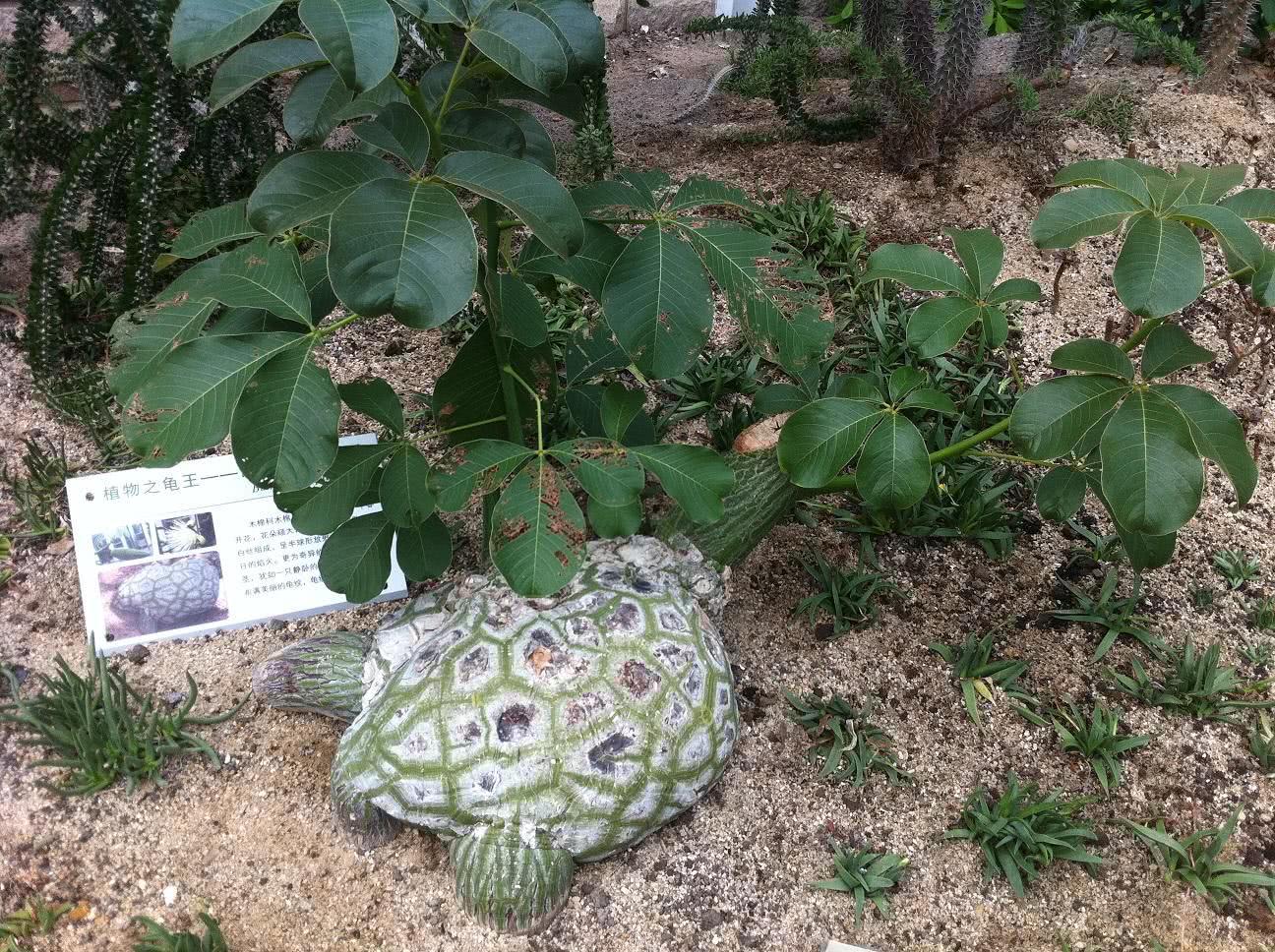
The turtle-shell Bombax, a perennial succulent plant. Its root base is thick and sturdy. The stem is swollen, block-shaped, and fleshy, with gray outer bark marked with light green stripes and a cracked surface. The rootstock of this species is swollen, with a peculiar form resembling a turtle shell. It is currently a relatively rare and curious succulent plant in the country, suitable for potting or for display in botanical gardens. Xiamen Botanical Garden has plantings.
Turtle-shell Bombax
Morphological characteristics:
Perennial succulent plant. Root base thick and sturdy. Stem base irregularly swollen, block-shaped, fleshy, outer bark gray, distributed with light green stripes, surface cracked like a turtle shell, storing a large amount of water. Apical green short branches, generally less than 1m tall. Palmately compound leaves alternate, with 5 leaflets, obovate, leaves falling during dormancy. Flowers white (some sources say purplish red), filaments long, borne near the branch tips during the growing season. Capsules relatively large, long elliptical.
This "brother" comes from Mexico in the Americas, and is a perennial succulent plant of the genus Bombax in the family Malvaceae. The lower part of its fleshy stem is irregularly swollen, with a peculiar shape like a giant turtle resting on the ground; the outer bark is gray, distributed with light green stripes, and the surface is cracked like a turtle shell, storing a large amount of water to adapt to the arid and hot desert environment. Its name matches its form, and it is called: turtle-shell Bombax. Apical green short branches, generally less than 1m tall. Palmately compound leaves alternate, 5 leaves, long elliptical; only in this respect is it somewhat similar to its "elder brother" Bombax. Leaves fall during dormancy. It blooms in early spring, with large flowers; when open, the corolla is composed of hundreds of white filaments, filaments numerous and long, growing at the tips of the branches, in a hemispherical radial arrangement. If several flowers bloom together, countless silver threads create a distinctive sight.
Turtle-shell Bombax
Growing environment:
Prefers a warm, dry climate with plenty of sunlight. Not cold-tolerant, not tolerant of waterlogging. Fertile, loose sandy loam is suitable, and drainage must be good. During the growing season it needs an adequate water supply. During dormancy, watering should be reduced, keep it dry, and pay attention to ventilation.
Main value:
The turtle-shell Bombax is currently a very rare curious succulent plant in the country. The two turtle-shell Bombax plants in the desert greenhouse of the greenhouse group scenic area at the South China Botanical Garden were introduced from the Americas in 2008. One has a form like a turtle, and the other like a frog; turtle and frog face each other, making people marvel.
Turtle-shell Bombax
Plant culture:
Bombax is the city flower of Guangzhou, and the elegance of Bombax is already one of the deepest impressions in the minds of Guangzhou citizens. In the third month of spring, Bombax blooming all over the streets is a vivid red, dense and spectacular, passionate and unrestrained, becoming the most brilliant scenic line of the Flower City. However, the tall and upright Bombax tree has a "brother" very different from it. Not only is it short in stature, but its appearance is also precocious, with a peculiar shape, and its flower shape and color are worlds apart from Bombax.
For more professional agricultural science and technology information, please scan the QR code to follow WeChat: NongXunNET

Please indicate the source when reprinting.