A Comprehensive Introduction to the Basics of Peanut Cultivation
Introduction: With the advancement of technology, agricultural planting models have been constantly updated in recent years. The hottest trend at present is crop relay intercropping or intercropping models, which can rationally utilize land resources and increase farmers' profits. Below, the editor will introduce the high-yield and high-benefit intercropping cultivation method of peanuts and arrowhead. Peanuts are sown in late February to early March
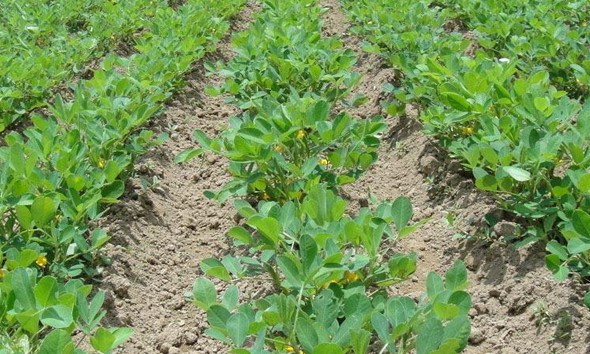
With the advancement of technology, agricultural planting models have been constantly updated in recent years. The hottest trend at present is crop relay intercropping or intercropping models, which can rationally utilize land resources and increase farmers' profits. Below, the editor will introduce the high-yield and high-benefit intercropping cultivation method of peanuts and arrowhead.
Peanuts are sown in late February to early March and harvested in late June. Arrowhead is raised as seedlings in March, transplanted in July, and harvested from January to February of the following year.
High-yield varieties suitable for paddy field cultivation include Yueyou 13, Shanyou 188, Zhongkaihua No. 1 and Yueyou 45.
Field mice are trapped and killed along the ditches, roadsides and crossroads around the peanut fields to increase the peanut seedling emergence rate. First plow, then harrow; harrow until the soil is broken up and level. Decide the direction of the beds according to the principle of facilitating drainage, and build beds at a specification of 1.4 m including the ditch.
When the bed is half built, apply 750 kg of farmyard manure and 40 kg of peanut compound fertilizer, broadcast them on the bed surface, then cover the fertilizer well with soil and finish the whole bed.
Sow from late February to early March. Sowing specification: for a bed of 1.4 m including the ditch, plant 4 rows, using a wide-narrow row arrangement, with the middle wide row 40 cm, the two narrow side rows 23 cm, and hill spacing 20 cm; open holes and sow, then cover the seed with fine soil after sowing.
For pre-emergence weed control, 3 to 5 days after sowing, use 95% S-metolachlor at 500 to 800 times dilution or 50% acetochlor at 400 to 500 times dilution; for post-emergence weed control, after the peanuts have all emerged, use Hangai emulsifiable concentrate at 500 times dilution.
The first topdressing is seedling-strengthening fertilizer; together with checking and replanting seedlings, after the peanuts have all emerged, apply 4 kg of urea and 7.5 kg of potassium chloride per mu. When the peanuts begin to flower, apply pegging fertilizer again, with 15 to 20 kg of compound fertilizer and 0.5 kg of borax. The third is fruit-strengthening fertilizer, applied after the peanuts are in full bloom, using 6 to 8 kg of compound fertilizer per mu.
To control rust, spray 75% chlorothalonil wettable powder at 800 times dilution in the early stage of the disease; for leaf spot, spray 70% thiophanate-methyl at 8000 times dilution; the tobacco cutworm often occurs during the pegging stage of peanuts, and in the young larval stage, spray 100 ml of 40% dimethoate emulsifiable concentrate plus 200 ml of bisultap or 2000 times dilution of abamectin, which can also control aphids at the same time.
Peanuts are relatively drought-tolerant and afraid of waterlogging. After entering May to June, with high temperature and frequent rain, drain accumulated water in time to prevent rotten pods and sprouting.
When the stems and branches turn yellow-green, the plant changes from compact to loose, and the upper leaves turn yellow, seize the time to harvest quickly on a sunny day, and return the peanut seedlings to the field in time.
Before sowing, take the terminal buds of arrowhead out of the sand, remove the dried, dead and rotten buds, soak them in 58% metalaxyl-mancozeb wettable powder at 200 to 250 times dilution for 20 to 30 minutes, then take them out and dry them for later use.
Choose a paddy field that is sheltered from the wind and faces the sun, convenient for irrigation and drainage, and with relatively good fertility. One mu of nursery land can meet the needs of 8 to 10 mu of field. Irrigate and harrow the field in advance, and build low beds at a specification of 1.3 M.
After "Awakening of Insects," when the temperature rises and stabilizes above 15 degC, choose a sunny day and gently insert the prepared seed buds into the mud at a specification of 10x10 cm, with the depth just exposing the terminal bud.
New buds can be seen sprouting 15 to 20 days after sowing. During this period, irrigation is mainly by exposing during the day and irrigating at night. After new leaves appear, keep shallow water. During the seedling period, it is not recommended to use chemical fertilizer as topdressing. One month before transplanting, liquid fertilizer can be gradually applied 2 to 3 times. When weeds are present, remove them by manual weeding. Pay attention to controlling aphids and other pests and diseases.
It is advisable to choose fields convenient for irrigation and drainage, facing the sun, with a plow layer of 15 to 25 cm, and with clay, loam or sandy loam soil.
Because the previous crop was peanuts, all peanut seedlings are returned to the field. The base fertilizer can be appropriately reduced; apply 750 kg of ash manure per mu, or 40 to 50 kg of organic compound fertilizer, applied throughout the whole layer when harrowing the field one day before transplanting.
When arrowhead seedlings grow to 6 to 8 leaves, they can be transplanted to the field. The time is scheduled for mid to late July, no later than early August. Before transplanting, pull the arrowhead seedlings up by the roots from the nursery land, trim off the old roots, and peel off about 2 old basal leaves. The plant and row spacing specification is: 33 x 35 cm or 30 x 33 cm, ensuring 5000 seedlings planted per mu; fields with poorer fertility can plant 6000 seedlings, leaving a 40 cm working row every 2.5 to 3 M.
5 to 7 days after transplanting, together with the first topdressing, use 100 to 125 ml of butachlor and 5 to 6 kg of urea per mu, mix them thoroughly and broadcast evenly, and keep a shallow water layer in the field for more than 5 days.
During the field growth period, arrowhead has a large demand for fertilizer, so timely topdressing must be carried out. The first topdressing can be done together with chemical weed control. The second topdressing is seedling-strengthening fertilizer, carried out 25 to 30 days after transplanting, applying 7.5 to 10 kg of urea and 15 kg of potassium fertilizer per mu. The third topdressing is corm-forming fertilizer, carried out from late September to early October. During this period, arrowhead grows vigorously, and a kind of stolon will sprout from the base, which farmers call "arrowhead bearer" or "arrowhead shoot." This stolon grows downward until the bottom of the plow layer, and swells into a ball at the tip; this is the arrowhead we eat, and at this time a large amount of fertilizer is needed. Apply 500 to 750 kg of decomposed chicken manure or 20 to 25 kg of sulfur-based compound fertilizer per mu. By early November, if the arrowhead leaves are found to have noticeably lighter color, a fourth fertilization can be supplemented, applying 3 to 5 kg of urea and 8 to 10 kg of sulfur-based compound fertilizer per mu.
Brown spot and stripe disease are usually controlled by spraying 75% chlorothalonil at 600 to 800 times dilution, or 28% Yibanjing at 1200 times dilution, or 80% mancozeb at 800 times dilution; smut can be controlled by spraying 1:1:250 Bordeaux mixture or 25% triadimefon at 1000 times dilution, spraying once every 10 days, alternating the chemicals; generally 2 to 3 applications can achieve a very good effect. Aphids mainly damage young buds and heart leaves, and can be controlled with 40% dimethoate at 800 times dilution or 1.8% abamectin at 2500 times dilution; for stem borers, use 20 g of 15% indoxacarb suspension concentrate diluted with water and spray.
Arrowhead is an aquatic plant and has a relatively large water requirement throughout the growth period. Within half a month after transplanting, keep mainly shallow water, then gradually irrigate deep water of 10 to 12 cm, and during the corm-forming stage return to shallow water again.
Harvesting and digging begin after New Year's Day and end by the end of February. For arrowhead shipped elsewhere, simply wipe the soil off the surface lightly; arrowhead sold locally can be washed before going to market. For arrowhead harvested after the Winter Solstice, the terminal buds can be broken off and stored in fine sand for seed retention; the terminal buds can generally remain in fine sand for 45 days or even longer.
Speaking of cultivation, I think many of you growers do not know what to plant, and it is very difficult to choose a category, because the prices of various grain crops are unstable now, and yields are also hard to increase. The editor strongly recommends peanuts and arrowhead. Their costs are low, and intercropping can rationally utilize land resources. The above is the detailed cultivation method; everyone can take a look.
For more professional agricultural science and technology information, please scan the QR code to follow WeChat: NongXunNET

Please indicate the source when reprinting.