Using moist soil when potting succulents makes it easy to grow strong roots
For the potting method of succulents, whether bought from a flower market, a greenhouse, or online, throw away all the soil from the original pot. (Online purchases generally do not come with potting soil.) Next, wash the roots of the plant. Make sure to basically rinse off all the soil clinging to the roots, because it very likely contains large numbers of insect eggs and bacteria. Be gentle when washing; some root damage is unavoidable, but keep it to a minimum. You can hold the roots in a basin of water and shake them back and forth. It is advisable not to turn on a large faucet and blast them with a very strong stream of water, as this will break off a large number of roots. Repeat the shaking and soaking several times; once you can see the white main roots, that is enough.
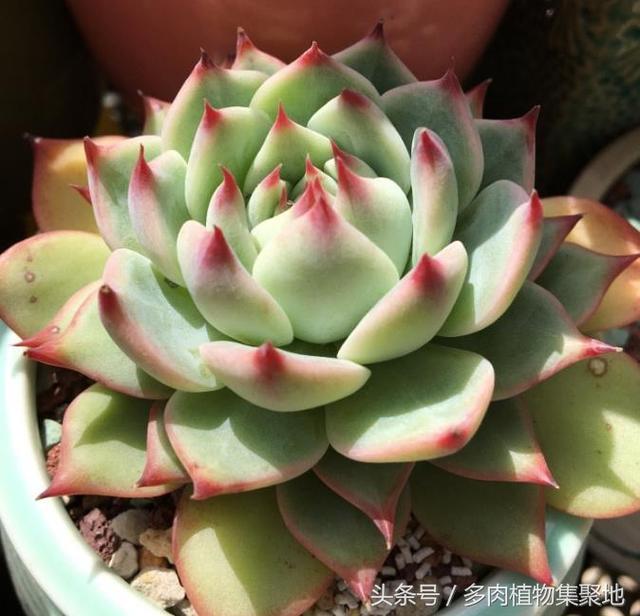
For the potting method of succulents, whether bought from a flower market, a greenhouse, or online, throw away all the soil from the original pot. (Online purchases generally do not come with potting soil.) Next, wash the roots of the plant. Make sure to basically rinse off all the soil clinging to the roots, because it very likely contains large numbers of insect eggs and bacteria. Be gentle when washing; some root damage is unavoidable, but keep it to a minimum. You can hold the roots in a basin of water and shake them back and forth. It is advisable not to turn on a large faucet and blast them with a very strong stream of water, as this will break off a large number of roots. Repeat the shaking and soaking several times; once you can see the white main roots, that is enough.
Why is it said that potting succulents in moist soil is good? Let succulents be planted dry in moist soil; once potted, there is moisture right away, and this environment can spur the succulents to root. Wait three days before watering the succulents. Waiting three days lets the succulents heal the wounds left by the granular soil during potting, and the moisture in the pot is also used up by then, making it a suitable time to water the succulents. Waiting 3-5 days is fine. When watering the succulents, do not soak them through; the main purpose is to entice the succulent roots to seek out water themselves. Then after another week, you can simply water the succulents thoroughly.
When repotting, many mature plants already have roots when you buy them. If the roots of the plant you receive are very long and dense, I generally trim them a bit, because too many old roots actually make it harder to grow new roots, and these old roots also cannot play a role in absorbing nutrients, so it is better to trim some off. After carefully checking that the plant has no insects or eggs, I will not specifically soak it in chemicals.
Right after potting, place the plant in a spot with bright, indirect light; it should not be exposed to direct, harsh sun. Keep it ventilated and cool, and do not water. Next comes the acclimatization stage. After one week, resume watering, restore full sun, and return to normal care. If during the acclimatization period the potting soil feels too dry, you can spray a thin mist of water or fungicide on the soil surface every day, just to increase humidity; be careful to stop at that. After the acclimatization period, you must water decisively, otherwise the plant will keep wilting, going soft, and dropping leaves due to lack of water, and the mortality rate may increase.
There are many signs that succulents have settled into their pots, such as the leaves spreading out, the leaves starting to be consumed, and the center of the leaves turning green; all of these indicate that the succulent roots are growing hard, and after that you can care for the succulents normally. When watering succulents, you can water according to the plant's condition. Generally speaking, water the succulents thoroughly once every 2-3 weeks; if the air humidity is high, you can stretch out the watering interval for the succulents.
Flower pots are generally divided into two types, those with holes and those without. If you choose a pot without holes, you need to put some stones at the bottom as a water barrier layer. When the roots grow to the bottom of the container, if there is no water barrier layer, then after each watering the roots directly sit soaked in the water and soil at the very bottom, and root rot is very likely. Moreover, over a long time, salts and alkalis in the water will deposit at the bottom of the pot, and after the roots absorb them they will harm the plant. Succulents have a strong chain effect; once the bottom roots rot, the rot will slowly move upward until the whole plant dies.
This is a gathering place for succulent lovers, sharing succulent care tips; you are welcome to follow and exchange ideas.
For more professional agricultural science and technology information, please scan the QR code to follow WeChat: NongXunNET

Please indicate the source when reprinting.