How to Grow Window Sill Herbs? 5 Simple Steps to Grow an Herb Garden
If you can't grow plants on a balcony but still want to grow some small potted plants, you can grow some herb plants on the windowsill. They can also be used to make tea, salads or garnish dishes. You don't need a big yard; a small and simple windowsill is enough to grow them, and just a little bit of scattered light every day is sufficient.
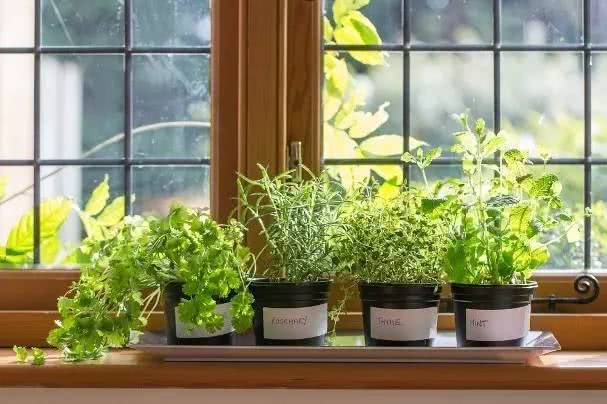
If you can't grow plants on a balcony but still want to grow some small potted plants, you can grow some herb plants on the windowsill. They can also be used to make tea, salads or garnish dishes. You don't need a big yard; a small and simple windowsill is enough to grow them, and just a little bit of scattered light every day is sufficient.
1. Choose a suitable container
On the windowsill, you can choose common ceramic pots or plastic flower pots. They don't need to be too big, but good drainage must be ensured, and it is best if they come with a tray.
Herb plants are all shallow-rooted plants and don't need very deep pots. Herbs such as mint, cilantro, basil, thyme and dill are all shallow-rooted plants.
2. Soil selection
Of course, you can't use clay or yellow soil. You just need to prepare loose, fertile nutrient soil or humus soil, and appropriately add river sand to maintain drainage. The bottom of the container must have drainage holes; a container without drainage holes cannot grow herb plants well.
Ordinary nutrient soil is enough to grow herb plants well. They like fertile, loose and well-drained soil. It is best to appropriately add perlite or river sand to the soil. Compost soil and leaf mold are also good choices. To increase fertility, appropriately adding some decomposed organic fertilizer at the bottom of the pot is also a good choice.
3. Choose plants according to the environment
If the light is not sufficient, don't think about growing flowering plants. Growing some fragrant and delicious herbs is also a good option.
If there is about 3~6 hours of scattered light, then you can choose to grow rosemary, basil, thyme, herbs, sage and oregano and the like. If there is not even 3 hours of scattered light, then you can consider growing some parsley, lemon balm and mint and the like.
4. Later care
These herbs are very easy to propagate by sowing. Transplant the seedlings when they grow to 4 true leaves. During this period, keep the moisture sufficient and the soil slightly moist. In summer, water frequently; in winter, control watering.
If you want potted herbs to grow more luxuriantly, you need to apply light fertilizer frequently and fertilize regularly. Nitrogen fertilizer is best. Nitrogen fertilizer can promote more luxuriant leaf growth. Apply fertilizer about once every half a month.
5. Pruning and harvesting
If you want potted herbs to grow more branches and have more luxuriant foliage, then you can regularly pick the herbs and remove overly luxuriant branches and leaves. Only in this way can healthy and vigorous growth of branches and leaves be promoted.
--THE END--
Flowers and Wild Nature
The most readable WeChat public account in the field of floral art
Floral Aesthetics | Plant Aesthetics | Life Aesthetics | Plants & Floral Art Exploration
For more professional agricultural science and technology information, please scan the QR code to follow WeChat: NongXunNET

Please indicate the source when reprinting.