Sow once, take cuttings once: even the balcony is almost too crowded for this flower
Geraniums (Pelargonium) are loved by many gardeners because they bloom for a long time, come in rich colors, are easy to grow and easy to flower. What's more, geraniums can be propagated in 2 ways, and within a few months, the balcony at home is almost too crowded for them. 1. Sowing: Put the seeds in clean water...
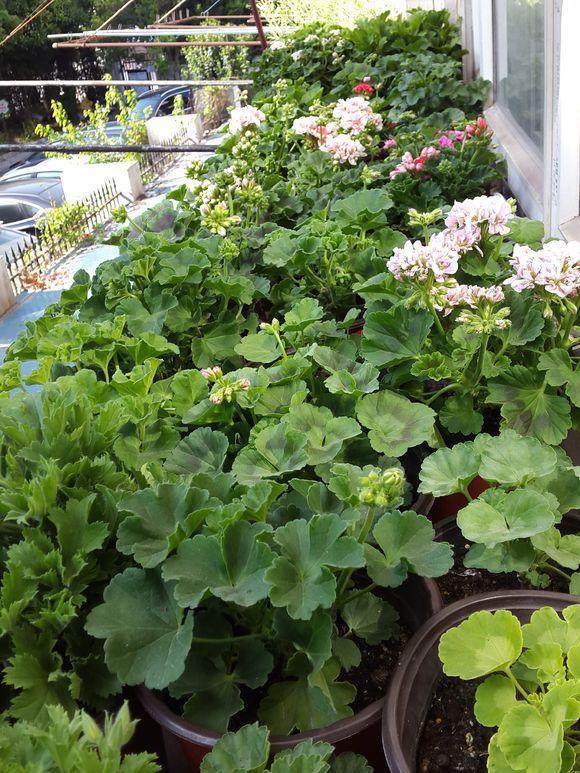
Geraniums (Pelargonium) are loved by many gardeners because they bloom for a long time, come in rich colors, are easy to grow and easy to flower. What's more, geraniums can be propagated in 2 ways, and within a few months, the balcony at home is almost too crowded for them.
1. Sowing
Soak the seeds in clean water for 8-12 hours. Choose a relatively fine, loose, clean substrate; preferably use special sowing peat moss plus a small amount of perlite, and put it into a seedling tray. Immerse the seedling tray in water and let the water gradually seep into the substrate through the bottom holes. When the substrate surface is moist, take the seedling tray out of the water and leave it for 2-3 hours, letting the water in the substrate drain until it stops seeping. Scatter the soaked seeds onto the substrate and cover with a little soil, just enough that the seeds are no longer visible.
After sowing, cover with glass or plastic film to keep warm and moist. A temperature of 18-25°C is best; it must not be too high or too low. If too much moisture appears on the glass, ventilate appropriately, but do not ventilate for too long, generally about ten minutes is enough. Seedlings usually emerge in about 1-2 weeks. When the seedlings grow 2-5 small leaves, they can be transplanted; be careful not to plant them too deep.
2. Cuttings
Geraniums can also be propagated by leaf cuttings or by shoot cuttings, and shoot cuttings are the most commonly used method for propagating geraniums. Cuttings are generally taken from May to July, when the temperature is 15-25°C. Use perlite or clean river sand as the cutting substrate.
Choose healthy, disease-free leaves. If the leaf is long, a section can be cut off, generally keeping 3-5 cm. Insert the leaf stalk diagonally into the substrate, then gently press the substrate down with your hand so the leaf stands steady in the substrate without moving. The cuttings should be planted densely, preferably so the leaves do not touch each other.
After about 10-20 days the leaf stalks take root, and after about 50 days you can see 1 or several small buds growing out of the substrate. After another ten days or so, when the small buds have unfolded 3-5 small leaves, the small plant can be cut off and planted in a pot. The original cutting leaf does not need to be pulled out; after about another 30 days, it can still grow new buds.
For more professional agricultural science and technology news, please scan the QR code to follow WeChat: NongXunNET

Please indicate the source when reposting.