These potted plants are suitable for the elderly to grow, promoting longevity and reducing stress
In recent years, as living standards have improved, more and more friends like to grow some potted plants at home, which can not only green up the home environment, but also cultivate character and temperament, and can make people feel happy and mentally healthy. ...
In recent years, as living standards have improved, more and more friends like to grow some potted plants at home, which can not only green up the home environment, but also cultivate character and temperament, and can make people feel happy and mentally healthy. Especially for retired seniors, growing potted plants and watering flowers at home in their spare time, forgetting worries and reducing stress while moving and lifting things, makes their leisure life richer, which is simply wonderful, and has far-reaching significance for longevity. So, which potted plants are suitable for the elderly to grow? Below we introduce some potted plants suitable for the elderly to grow. Of course, this is just one opinion, and everyone can choose a more suitable potted plant for the elderly according to their preferences. Now let us take a look together.
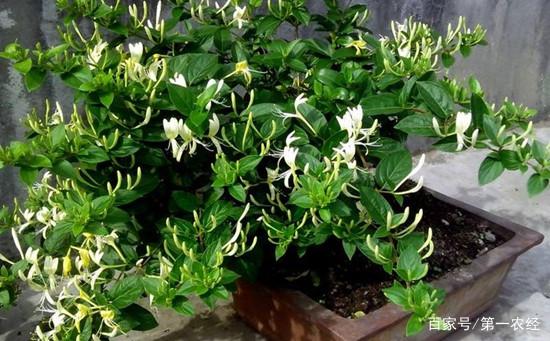
1. Japanese honeysuckle (Lonicera japonica)
Choosing Japanese honeysuckle is not only because its flowers are beautiful, but also because it has high medicinal value, making it very suitable for elderly people who are weak and have chronic diseases to grow. Japanese honeysuckle potted plants can be planted in all four seasons, and planting in late autumn and early winter is best. In order to make the Japanese honeysuckle potted plant grow well, you can plant the already rooted Japanese honeysuckle cuttings in late autumn and early winter in an ornamental pot of a size suitable for the root head, then cultivate it with prepared fertile humus loam soil, spread green moss on the surface, and water immediately to help it survive. Japanese honeysuckle potted plants can develop and grow normally only under conditions of sufficient fertilizer and water, but they must not be allowed to grow unchecked. During this period, depending on its growth, you should flexibly and promptly withhold water, control the tree shape, increase the number of flowers, prevent excessive vegetative growth, promote the maturation of the stems and vines, shorten the internodes, and dwarf the plant shape. Generally, in addition to applying decomposed cake fertilizer once a week, you should also spray the leaves 2-3 times with a 0.2% potassium dihydrogen phosphate solution. Before flower buds form, apply less or no nitrogen fertilizer, and apply more phosphorus and potassium fertilizer. After the branches stop growing and during the bud stage, appropriately apply nitrogen fertilizer to promote larger and brighter flowers. For Japanese honeysuckle potted plants, promptly remove the future vigorously growing water sprouts and buds that are twining and disrupt the tree shape. During the growth process, especially the water sprout branches and buds must be firmly controlled. Remove thin and weak branches and buds that will have no ability to bloom later, so as not to affect ventilation and light penetration. Keep only the buds of ordinary growing branches that can bloom normally later. Generally, after they become branches, cut them at about 20 cm, and most of the branches can bear flowers, and bear many flowers. For individual long branches that affect the tree shape, you can first pinch off the growing tips to ensure a compact tree shape with ventilation and light penetration, and no twining branches.
2. Kalanchoe blossfeldiana
This is a flower whose name alone suggests longevity, with very beautiful symbolism, and it is also very simple to care for, making it very suitable for the elderly to grow. For growing Kalanchoe blossfeldiana, the flowerpot should preferably be small and well-ventilated and breathable; loose and breathable sandy loam is suitable for growing Kalanchoe blossfeldiana. It grows best in a well-ventilated earthenware pot, but placing it indoors is not attractive, so you can put a plastic or porcelain pot on the outside, or plant it directly in a small purple clay pot or plastic pot. When growing Kalanchoe blossfeldiana, place a layer of crushed charcoal pieces or crushed hard plastic foam pieces at the bottom of the pot to enhance its ventilation. Moderate water control makes Kalanchoe blossfeldiana leafy and lush; more phosphorus and potassium fertilizer makes the flowers colorful. Kalanchoe blossfeldiana is a succulent plant with more water in its body, so it is more drought-tolerant and afraid of waterlogging, and grows well under dry air conditions in high-rise buildings. In spring and autumn, water thoroughly about once every 3 days after the potting soil dries, and generally keep it slightly moist. In summer, water less, preferably once every 5 to 7 days. For Kalanchoe blossfeldiana grown outdoors, avoid rain during the rainy season, as too much water easily causes root rot, leaf shedding, or even death. Appropriately control water so the potting soil alternates between dry and wet, and then the branches will be lush and the flowers plentiful. After bringing it indoors in winter, it is best to water with water close to room temperature in the afternoon, about once a week. Kalanchoe blossfeldiana likes fertilizer. After young seedlings are potted and established for 15 days, or after old plants are divided for 15 days, apply nitrogen-based liquid fertilizer 2 to 3 times to promote stem and leaf growth. After flowering, apply one nitrogen-based liquid fertilizer to promote recovery and vigor.
3. Clivia miniata
Clivia miniata has relatively high ornamental value. In addition, the leaves of Clivia miniata have many stomata and fine hairs, and have the effect of absorbing dust and harmful substances in the air and keeping indoor air clean. Therefore, it is also quite suitable for the elderly to grow. The original habitat of Clivia miniata is under the large trees in the forests of the high-altitude areas of southern Africa, with roots rooted in leaf mold layers accumulated over many years. For cultivating Clivia miniata, use loose and fertile neutral or slightly acidic humus soil. The cultivation soil can be mixed with 65% humus soil, 20% clean sand, and 15% fine furnace ash, and the relative humidity should preferably be around 40%. Clivia miniata is prone to being too dry or too wet. Each watering must be thorough, and after flower buds appear, water a bit more. About every 20 days, combine watering with applying once fermented soybean cake water, diluted fishy water, and water from soaked horse hooves, combining watering and fertilizing. When room temperature is low, control watering to prevent the potting soil from being too wet, because too wet potting soil can cause root rot and plant death, but the potting soil must not be too dry either. For Clivia miniata, apply a solid fertilizer once in winter, apply less nitrogen fertilizer, and apply more phosphorus fertilizer and potassium fertilizer. Eggshell powder and thoroughly decomposed fishy water are very good phosphorus fertilizers, while bran ash and tobacco ash are easily obtained potassium fertilizers. You can also apply a compound fertilizer of nitrogen, phosphorus, and potassium to promote the sprouting of more new plants and leaves. Fertilization must be moderate. Never apply concentrated fertilizer or raw fertilizer that has not been fermented and decomposed, otherwise it easily causes scorched or rotted leaf tips.
4. Orchids
Orchid leaves are emerald green, with a kind of reserved beauty, and they also have the reputation of being the gentleman among flowers, making them very suitable for the elderly to grow. Watering orchids should be based on the species, growth conditions, and local climate, and should achieve moist but not wet, dry but not parched. Watering must not be too much or too little. Grasp the principle of not dry in autumn and not wet in winter. In winter, when temperatures are low, the plant is in a dormant state and watering should be controlled, generally once every 5-7 days. However, Cymbidium sinense, which blooms in winter, needs more water. In spring and autumn, water once every 2-3 days, and in summer, water on average 1 to 2 times a day. For topdressing orchids, liquid fertilizer or foliar fertilizer is mostly used, and the concentration should be lighter than for other flowers. Generally, during the growing season, apply a fully decomposed dilute cake fertilizer water of about 15%, or 0.1% urea fertilizer water plus 0.2% potassium dihydrogen phosphate fertilizer water, once every 15-20 days. From before flowering to the flowering period, spray the leaves 2-3 times with 0.2% potassium dihydrogen phosphate or plant ash water to promote the development of roots, stems, and flowers. Orchids have fleshy roots, so do not apply fertilizer that has not been decomposed, to avoid root rot. During orchid cultivation, the plants need pruning. For example, when old leaves turn yellow, they all need pruning, which helps the growth of other leaves and also allows ventilation. Diseased leaves especially need timely pruning to prevent contagion. In addition, scissors also need to be disinfected to prevent infection.
5. Jasmine (Jasminum sambac)
Jasmine flowers are elegant in color and pleasant in fragrance. Placing a pot of jasmine in a room fills the whole room with fragrance. Not only that, the flowers of jasmine can also clear heat and detoxify, and treat symptoms such as colds and fever, making them very suitable for the elderly to grow at home. Jasmine is non-toxic, and the fragrance of jasmine is also non-toxic, provided that one is not allergic to jasmine pollen. Jasmine fragrance is a relatively light scent, not heavy, and smelling it can relax a tense mood and cultivate character. At the same time, jasmine can be placed in the bedroom. The light fragrance of jasmine can help people relax and is conducive to sleep. The whole plant is also safe and harmless to the human body. Whether the plant's respiration at night absorbs oxygen and releases carbon dioxide causes low oxygen content in the room. Jasmine stems are short and small, with very limited carbon content, and the carbon dioxide produced has a negligible effect on room air quality. Placing jasmine in the bedroom should not be excessive, nor should it be placed at close range for too long. Flower fragrance can treat illness and support health, and can likewise cause illness and harm the body. If the floral scent in the air is too strong, it will stimulate excessive breathing in the human body, lower the oxygen content in the blood, and cause symptoms such as headache, dizziness, and nausea. Jasmine is not drought-tolerant, but it also dislikes water accumulation. During rainy seasons, promptly pour out accumulated water in the pot, otherwise the leaves easily turn yellow. On hot sunny summer days, water twice a day, once in the morning and once in the evening. If leaves are found curled and drooping, spray water on the leaves to promote growth.
For more professional agricultural science and technology information, please scan the QR code to follow WeChat: NongXunNET

Please indicate the source when reprinting.