Make your own kitchen-waste fertilizer in a salvaged plastic bottle, and in three months it becomes an eco-friendly natural fertilizer
When growing flowers and vegetables on your own balcony, you naturally don't want to use pesticides and chemical fertilizers, so you can learn to make some eco-friendly, fertile organic fertilizer yourself. Mix fallen leaves and vegetable leaves with some sugar and clean water, and in 3 months you can make an eco-friendly fertilizer...
When growing flowers and vegetables on your own balcony, you naturally don't want to use pesticides and chemical fertilizers, so you can learn to make some eco-friendly, fertile organic fertilizer yourself. Mix fallen leaves and vegetable leaves with some sugar and clean water, and in 3 months you can make an eco-friendly fertilizer.
What we're teaching you to ferment below is "eco-friendly enzyme," which can be used to water flowers and fertilize them.
Old vegetable leaves and discarded vegetable leaves are both fine; at the vegetable market it's easy to buy the leftovers from vegetable vendors.
First, prepare the materials, including: vegetable and fruit leaves (kitchen waste), a 2-liter plastic bottle, black sugar (brown sugar works too)
The specific steps:
1. Material preparation
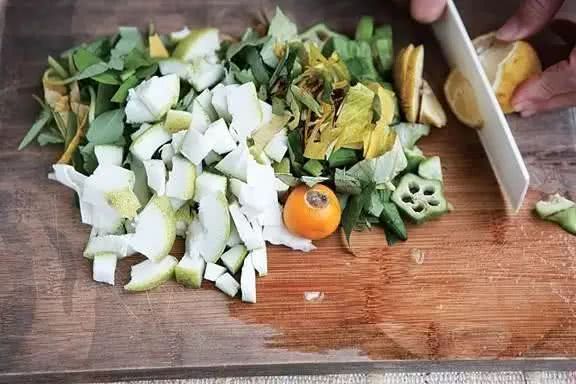
Chop the collected vegetable leaves and fruit peels; the finer you chop them, the higher the degree of fermentation, and it may even finish fermenting in less than 3 months. Prepare clean water; tap water must be left to sit for 3 days before use, while rainwater, purified water, or well water are all fine.
2. Making the eco-friendly fertilizer
Put the chopped leaves and chopped fruit peels (banana peels, watermelon rind, gardenia peel, lemon peel, etc. are all fine) into the plastic bottle. First pour in about 1 liter of clean water, then pour in 120 milliliters of black sugar water or brown sugar water, and finally stir all the materials evenly and seal with the lid. (Prepare a slender wooden stick.)
3. The making process
Use a plastic bottle because fermentation produces gas; if you forget to open it, the bottle will bulge, and a plastic bottle can prevent it from bursting. So be sure to open the lid once a day to let air in and release the gas.
Black sugar or brown sugar can speed up the fermentation of kitchen waste. If you put in more vegetable leaves, after fermentation it will smell like pickled vegetables; if there are more fruit peels, it will smell fruity. It's recommended to add more chopped gardenia peel.
4. Fermentation results
Stir once every five days and let it breathe once a day, and after three months you'll get excellent fertilizer.
The filtered liquid is the best liquid fertilizer, but it must be diluted before it can be used to water flowers; it must be diluted with water more than 1000 times before watering flowers, otherwise it will be too strong and burn the plants. (This liquid can also be used to clean stains in toilets and sinks, and it's very effective.)
The residue obtained can be mixed into soil and used as fertilizer, but not too much.
5. Precautions:
During fermentation, the ratio of water : kitchen waste : sugar water is 10:3:1; roughly is fine, don't deviate too far.
After 3 months, if you feel fermentation is incomplete, you can repeat it once and pour in sugar water again; after 3 months you will definitely get the best fertilizer and fertilizer water.
(Finished fermented kitchen-waste fertilizer) Tap water must be left to sit for 3 days before use.
For more professional agricultural science and technology information, please scan the QR code to follow WeChat: NongXunNET

Please indicate the source when reprinting.