Several major bonsai shaping techniques that beginners can easily master
To create a beautiful bonsai, pruning and trimming are essential. It is just like how people need regular haircuts and styling to maintain their look. Bonsai pruning is all about changing the curvature of the branches and trunk to make the tree's shape...
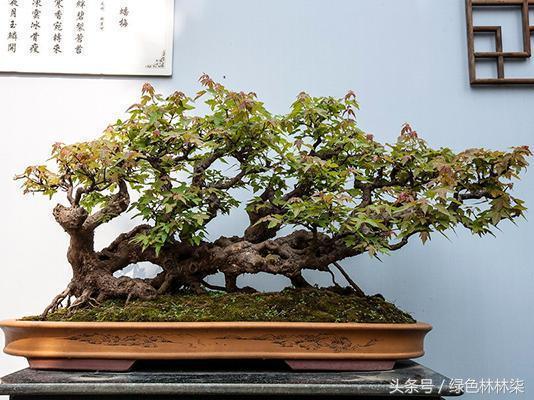
To create a beautiful bonsai, pruning and trimming are essential.
It is just like how people need regular haircuts and styling to maintain their look.
Bonsai pruning is all about changing the curvature of the branches and trunk to make the tree's shape more graceful.
This is also to protect and maintain the tree's established landscape form.
Pruning Time
1. Deciduous bonsai can be pruned all year round; pines and cypresses are best pruned during the dormant season.
2. During the plum rain season there is more rainfall and trees grow more vigorously, so prune less, or avoid heavy pruning. This is because removing a large amount of branches and leaves will affect the tree's normal growth.
3. Near the end of autumn, do not carry out heavy or drastic pruning. After heavy or drastic pruning, new buds will sprout one after another, and when a cold snap arrives it will freeze the tender buds to death.
4. Generally speaking, trees with strong growth and vigorous growth can be pruned more, while weak-growing ones should be pruned less. Based on the tree's shaping needs, usually the messy crossing branches, overlapping branches, parallel branches, whorled branches, opposite branches, weak branches, diseased branches, etc. should be removed.
Pruning Methods
1. Initial shaping cut
The initial shaping cut, also called the positioning cut, refers to the first pruning for bonsai shaping, determining which branches at different positions to keep and removing the excess branches. After the positioning cut, the number of branches, their positions, and the distance between them are determined, which directly affects the beauty of the tree bonsai's form. So before pruning, you must carefully plan and consider the tree's shaping form. As the saying goes, "the idea comes before the cut," and at the same time you must have a clear picture in your mind before you make the cut.
2. Shortening cut
The shortening cut is a pruning method that shortens branches, and it is also an important measure for shaping trees and maintaining the tree's landscape. In terms of shaping, shortening cuts make the tree more compact, the branches fuller, with a controlled taper from top to bottom and varied curves.
3. Thinning cut
The thinning cut maintains the tree's landscape and can increase ventilation and light penetration, reduce the occurrence of pests and diseases, concentrate nutrients, and promote lush branches and leaves with abundant flowers and fruit.
The timing of thinning cuts varies depending on whether it is heavy or light pruning. During the growing season, when branches and leaves are lush, light pruning can be done at any time, but heavy pruning is not advisable. For tree species with strong sprouting ability, such as Chinese plum yew (Sageretia thea) and elm, heavy pruning can be done while avoiding the plum rain season. After pruning, reduce watering, apply thin fertilizer frequently, and increase light exposure.
In addition, besides the wiring method and techniques such as pruning and pinching, there are other techniques for bonsai shaping. The main commonly used ones are the following:
1. Bark-prying method
This is done during the tree's peak growing season. Use a sharp knife to pierce into the cambium layer of the trunk's bark, then gently pry a few times to temporarily separate the bark from the xylem. You can also insert appropriately sized stones into the pried-open bark, then wrap and bind it with hemp fiber or palm fiber. After the wound heals, that part of the trunk bulges and swells, giving it a gnarled, aged appearance.
2. Tearing method
For branches that need thinning, instead of using scissors, use your hands to tear them off together with the bark and part of the xylem, leaving a wooden groove on the tree. After the wound heals it looks as if it formed naturally, giving an impression of antique elegance and aged ruggedness.
3. Stick-bending method
This uses sticks of appropriate thickness, such as wooden sticks, bamboo poles, iron rods, hard plastic pipes, iron pipes, etc., as supports. According to the shaping design, the young tree's trunk is wound around the support to bend it into shape. Depending on the trunk shape and degree of curvature required by the design, one, two, or even three sticks can be cleverly combined and used. Because iron pipes conduct heat quickly and are harmful to trunk growth, cloth, hemp fiber, or similar materials can be wrapped around the iron pipe surface for insulation. Bonsai suitable for bending with this method are all 2-3 year old young trees; older trees with hard trunks are not suitable. After bending, bind firmly with rope, and during the maintenance period prune and shape the branches and leaves. After 1-2 years of binding, remove the sticks, and with a little processing it becomes an osmanthus bonsai with natural curves and graceful, elegant form.
4. Knot method
For shaping with this method, generally choose young trees with soft branches and trunks. Make a knot or a 360-degree loop at a point not far above where the trunk emerges from the soil, bind it slightly, and after several years of cultivation (while also raising the roots), pruning, and processing, it can become a bonsai with a graceful and unique form.
5. Bark-removal method
On the viewing side of the osmanthus bonsai, on the middle-lower part of the trunk, vertically remove a piece of bark in an irregular shape to expose the xylem. After the wound heals and forms a scar, the trunk appears aged and beautiful.
6. Trunk-splitting method
On the viewing side of the bonsai, on the middle-lower part of the trunk, first remove a piece of bark, then use a sharp knife or small chisel to remove about one third of the xylem. After the scar forms, a concave wooden area is exposed, showing the bonsai's ancient and unusual character. But the splitting must not be too deep; at most it must not exceed one half of the trunk diameter. It also must not be done too much; generally 1-2 splits per bonsai is enough, otherwise it will affect the bonsai's growth and give the impression of being "riddled with holes."
7. Branch-breaking method
The branch-breaking method can be divided into two types: breaking the branch and leaving a mark, and breaking but not severing.
(1) The break-and-leave-a-mark method. At the point where the tree branch is to be broken, first use a saw to cut a groove about half the depth of the branch diameter, then tear it off together with the bark and xylem. After the wound heals, it looks as if it grew naturally, with a beautiful form.
(2) The break-but-not-sever method. First wrap the branch to be broken with metal wire, then break the branch halfway (broken but not severed, so the branch still survives). The angle and position of the break depend on the shaping needs. Generally, only one or two branches per bonsai are broken. The curve of the broken branch is stiff and strong, creating a strikingly new look.
8. Vertical bark-splitting method
Some bonsai trunks are smooth and lack an aged look. In spring, make several vertical cuts on the trunk deep into the xylem. After the wounds heal, the bark becomes rough and aged.
9. Trunk-cleaving method
This means splitting the trunk vertically. According to different shaping requirements, there are two ways of doing it: one is to split the roots and trunk into two, but not split the crown, that is, split below but not above, still remaining one plant; the other is to split the roots, trunk, and crown all into two, becoming two plants, which with careful cultivation can be made into two osmanthus bonsai.
For the trunk-cleaving method, choose plants with strong vitality and carry it out before spring sprouting.
For more professional agricultural science and technology news, please scan the QR code to follow WeChat: NongXunNET

Please indicate the source when reposting.