What is the birth flower of Scorpio? A detailed introduction for you
Introduction: Winter stock (Matthiola incana), a species in the genus Matthiola of the Brassicaceae family. Native to southern Europe. It is often introduced in major cities in China, planted in garden flower beds or greenhouses for ornamental viewing. The type specimen was collected in southern Europe. Winter stock is a biennial or perennial herb, up to 60 cm tall, with the whole plant densely covered in grayish-white stalked branched soft hairs.
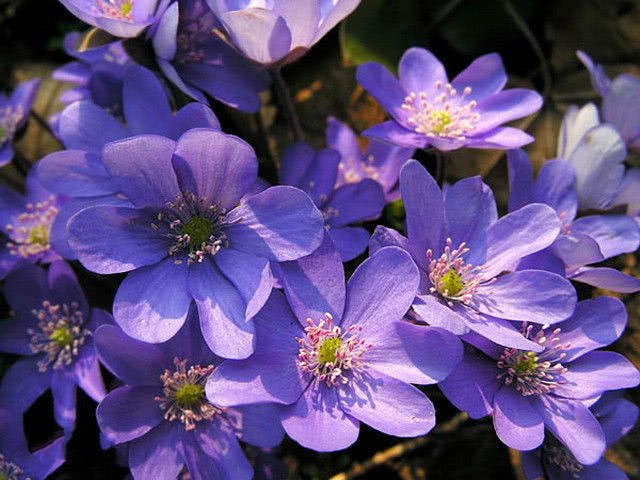
Winter stock (Matthiola incana), a species in the genus Matthiola of the Brassicaceae family. Native to southern Europe. It is often introduced in major cities in China, planted in garden flower beds or greenhouses for ornamental viewing. The type specimen was collected in southern Europe.
Winter stock
Biennial or perennial herb, up to 60 cm tall, with the whole plant densely covered in grayish-white stalked branched soft hairs. Stem erect, much branched, slightly woody at the base. Leaves oblong to oblanceolate or spatulate, 6-14 cm long including the petiole, 1.2-2.5 cm wide, entire or slightly wavy, apex obtuse or rarely with a short mucro, base gradually narrowed into a petiole. Racemes terminal and axillary, flowers numerous, relatively large, the rachis elongating in the fruiting stage; pedicels stout, spreading obliquely upward, up to 1.5 mm long; sepals erect, oblong, about 15 mm long, the inner sepals saccate at the base, margin membranous, white and transparent; petals purplish red, pale pink or white, nearly ovate, about 12 mm long, apex shallowly 2-lobed or slightly concave, margin wavy, lower part with a long claw; filaments gradually expanded toward the base; ovary cylindrical, stigma slightly 2-lobed. Silique cylindrical, 7-8 cm long, about 3 mm in diameter, the midvein of the valves distinct, apex shallowly lobed; fruiting pedicel stout, 10-15 mm long. Seeds nearly round, about 2 mm in diameter, flat, dark brown, with a white membranous wing at the margin. Flowering period April-May.
Winter stock
Prefers cool conditions, grows poorly under hot and dry conditions, cold-tolerant, able to withstand low temperatures of around -4°C in winter, and can overwinter in the open ground in southern China. Prefers full sunlight, slightly tolerant of semi-shade. Prefers a well-ventilated environment and requires fertile, moist, deep neutral or slightly acidic soil. Except for annual varieties, all require low-temperature treatment to pass through the vernalization stage and flower, and are therefore often cultivated as biennials in the open ground. The optimum growth temperature is 15°C-18°C during the day and around 10°C at night, but a low-temperature period of 5°C-8°C is required during flower bud differentiation. Seedlings with more than 8 true leaves will differentiate flower buds when exposed to low temperatures of 5°C-15°C for 3 weeks. Therefore, under natural conditions, most differentiate flower buds in mid-to-late October. In order to bring them to market early, seedlings with more than 8 true leaves must be raised by mid-October. After flower bud differentiation, under long-day conditions, if kept above 5°C, flower buds form quickly and flowering can be advanced by 2 weeks. The flowering period of stock is usually regulated by means of varieties, sowing time, as well as greenhouses, cold frames and electric lighting. For annual varieties, in cool summer regions, they can be sown all year round. Sown in January, they flower in May; sown in February-March, they flower in June; sown in April, they flower in July; sown in mid-May, they flower in August. A growing period of 100 days-150 days is usually required. Winter stock is a type of ornamental flowering plant, with a flowering period from winter to summer; it prefers full sunlight and is slightly tolerant of semi-shade.
Winter stock
The potting soil can be a mix of 2 parts leaf mold, 2 parts garden soil and 1 part river sand. Fertilize once every 10 days during the growing season. Nitrogen fertilizer should not be excessive; phosphorus and potassium fertilizers should be applied. Stop fertilizing during the flowering period and in winter. As for watering, generally when the soil surface becomes dry and pale, water immediately, alternating between moist and dry. As for temperature and light, in winter it prefers a warm climate and should be moved indoors; it tolerates a brief low temperature of -5°C. After flowering, the spent flowers should be cut off, so that it can send out new shoots and bloom again.
For more professional agricultural science and technology information, please scan the QR code to follow WeChat: NongXunNET

Please indicate the source when reprinting.