What orchid is the Monkey King of the orchid world?
Introduction: The "Monkey King" of the orchid world - the monkey-faced Dracula orchid. In the montane rainforests of tropical America, the dark, humid environment and unique geographical features have given rise to many exotic flowers and plants. Among them is a very peculiar orchid, the "monkey-faced Dracula orchid." When the monkey-faced Dracula orchid blooms, its appearance closely resembles a monkey's face. The flower's most
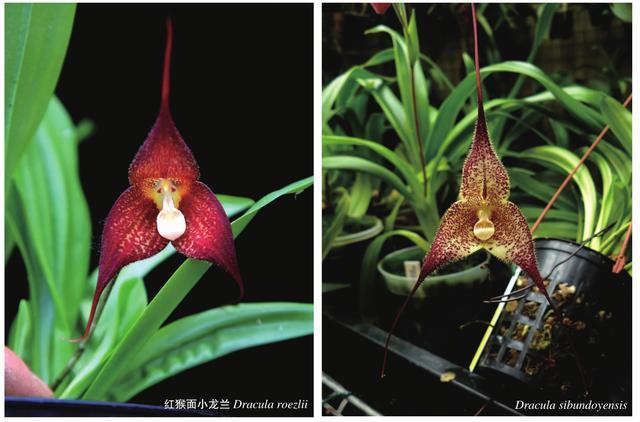
The "Monkey King" of the orchid world - the monkey-faced Dracula orchid
In the montane rainforests of tropical America, the dark, humid environment and unique geographical features have given rise to many exotic flowers and plants. Among them is a very peculiar orchid, the "monkey-faced Dracula orchid."
When the monkey-faced Dracula orchid blooms, its appearance closely resembles a monkey's face. The three outermost sepals form the outline of the "monkey face" like petals, the two lateral petals mark out the clever "eyes," the "monkey nose" is made up of the column unique to orchids, and the remarkably lifelike "monkey mouth" is formed by the highly variable lip. The plant is rather small, usually growing on tree forks piled with dead branches, fallen leaves, moss and other debris, and it is very well hidden, making it difficult for people to spot.
In 1978, botanist Carlyle Luer discovered the monkey-faced Dracula orchid in Ecuador. Together with similar species discovered before and after, the monkey-faced Dracula orchid family currently contains about 120 species and natural hybrids. The vast majority of species are distributed in Ecuador, with a small number in Colombia, Peru, Costa Rica, Panama and other countries. These species differ in various ways in flower color, especially in the shape and structure of the lip. Their flowers resembling Sun Wukong is purely a coincidence, and new species of monkey-faced Dracula orchid are discovered every year. In recent years, new species have been found in Colombia, Costa Rica, Ecuador, Panama and Peru.
The monkey-faced Dracula orchid is a perennial epiphytic herb in the orchid family, genus Dracula. The plant height is 30-40 cm, with a single stem and single leaf that are upright, and short creeping stems but no pseudobulbs. The leaves are ribbon-shaped or elliptical, thin in texture, and 25 cm long. The single flower or raceme arises from the base of the stem, 18-20 cm long, with drooping flowers, bearing one or more flowers, and the flowers are large, with a vertical diameter of 10-30 cm. The sepals are the most prominent part of the flower. The dorsal sepal is upright, and the bases of the two lateral sepals are joined to varying degrees into a flat sheet or cup shape. The tips of the three sepals taper evenly and extend into thin tails, with the tails up to 20 cm long. The sepals often have fine hairs. The two petals are short and thick, relatively small, each with a wart-like protrusion at the tip, positioned on either side of the column above the lip, like two eyes. The lip has swollen lamellae or ridges. The flower colors are rich, including white, red, orange-red, purple, yellow, etc., mostly bicolored. The flowering period is spring and summer, or autumn and winter, and moreover different species bloom in all four seasons, and the scent they give off is similar to that of ripe oranges or mushrooms.
The plant grows at altitudes between 1500-2300 m, with some species' habitats below 300 m, but some also above 2300 m. All wild species grow in the shade of trees, receiving almost no sunlight. They usually grow in tree forks with a layer of leaf litter and moss. Because of the moss and leaf litter, the plant's roots remain moist at all times (but because this layer is airy and permeable, it is not too wet). At the same time, the air humidity in this region is very high, which is very favorable for the growth and reproduction of the monkey-faced Dracula orchid.
The monkey-faced Dracula orchid is quite popular in Western countries. It is easy to cultivate and can be grown by referring to the cultivation methods for Phalaenopsis. Since the flower spike emerges from the base of the stem, to facilitate the extension of the flower spike, hanging baskets or net baskets should be used for cultivation, with bark chunks, moss, charcoal, fern roots, etc. as the substrate. When caring for it, note:
It grows well in a humid, shaded, ventilated, cool environment. When the temperature is above 28°C, the leaves will turn yellow and drop, or the plant may even die. In most parts of China, whether in outdoor gardens, balconies, rooftops or windows, attention should be paid to cooling in summer, while ensuring good ventilation and maintaining appropriate humidity. When it is too hot in summer, use shade netting to control light, or place it in a cool spot indoors to cool down. When the new shoots are nearing maturity, they should be given more sunlight and watering should be appropriately reduced, but they must not be allowed to dry out. This easily induces the new plants to produce flower buds, after which the temperature should be lowered to promote flowering.
The monkey-faced Dracula orchid is relatively averse to rain. If rainy days last too long, water accumulating in the pot can easily cause root rot and death. During the growing season, root dryness should also be avoided. When watering, observe the substrate; as soon as the substrate in the pot dries, water promptly, and water thoroughly in one go. It is best to water on sunny mornings. During the high-temperature period of midsummer, water once in the morning and once in the evening. During flower bud development, in addition to watering, lightly mist the flower buds. During the flowering period, pay attention to watering, avoid alternating dryness and wetness, and prevent rain from falling on the plant. After flowering, watering should be controlled, watering only when dry, and it should not be too wet. Winter and spring are the semi-dormant, slow-growth period, when watering should be even less, about once a week, keeping the substrate in a slightly moist state. When the temperature is below 10°C, watering should stop to avoid cold and wet conditions causing root rot. However, during the overwintering period, the indoor air must not be allowed to become dry; the floor must be sprinkled with water, and the room temperature should be kept above 10°C.
April to October is the main growth and development period of the monkey-faced Dracula orchid. Because the plant is clustered and its stems are very lush, it requires relatively little fertilizer, but rational fertilization can still make the plant grow more robust and produce more flowers. Therefore, during the new shoot growth stage, fertilize once every half month, using "Huabao" stock fertilizer diluted 2000-3000 times, or other special orchid fertilizers, applied by root drenching and foliar spraying. Note that the amount of fertilizer should not be large and the concentration must not be high, otherwise it will cause difficulty in water uptake and may even cause the death of the whole plant. During the vegetative growth period, mainly use nitrogen fertilizer and balanced fertilizer. A mixed fertilizer with an N:P:K ratio of 30:10:10 and 20:20:20 is recommended. During the flower bud differentiation period, a mixed fertilizer with an N:P:K ratio of 10:30:10 and 20:20:20 is recommended. The best time to fertilize is in the evening, followed by watering with clean water once early the next morning. At the same time, during the flower bud stage, spray 0.1% monopotassium phosphate once every other week to promote thick, sturdy flower spikes and bright, beautiful flowers.
To propagate new plants, division can be carried out in spring when repotting. Take out the large plant that has become overcrowded, clean the substrate from the roots, then use a sharp knife to cut apart a clump with 3-5 stems between its connected rhizomes, pull them apart by hand, and transplant the divisions into pots with fresh cultivation substrate. Alternatively, after flowering, sow mature seeds in autumn or spring. When the seedlings grow true leaves, be careful to transplant and divide the seedlings; they can bloom in 2-3 years. Cuttings can also be used: cut tender stems and insert them in sphagnum moss, where they root easily. In addition, because the plant can produce creeping stems at the rhizome, rooted stem sections can be cut off and potted separately. For large-scale production, seedlings can be obtained through tissue culture.
The monkey-faced Dracula orchid has relatively few disease occurrences, but fungicides should occasionally be applied preventively, usually once a month. Common diseases include brown spot, anthracnose, southern blight, tip blight, root rot, etc. Brown spot mostly occurs in warm, humid conditions, so pay more attention to ventilation and avoid high temperature and high humidity. Once it occurs, use orchid-specific Lanbing Bizhi, or 50% procymidone-manganese wettable powder at 1500-3000 times, 70% chlorothalonil wettable powder at 600-800 times, and other agents in rotation for control. In severe cases, first prune off the diseased leaves and spray 800 times Lanhua Bizhi once every 10 days, for 3 consecutive sprays.
After anthracnose, southern blight, tip blight and root rot occur, cut off the infected tissue and burn it, and maintain good ventilation and light. Control agents include Lanbing Bizhi wettable powder, thiophanate-methyl wettable powder, chlorothalonil wettable powder, etc., used alternately. In the early stage of disease, spray 800 times Lanhua Bizhi. If the disease is severe, spray a mixture of 1000 times Lanhua Bizhi + 1000 times 75% thiophanate-methyl wettable powder, once every 10-15 days, for a total of 3-4 sprays.
The main pests include scale insects, red spider mites, aphids, etc. For pest control, orchid-specific Penchongjue, Chongbisha, Chongkejing, etc. at 1000-2000 times can be selected for spraying.
For more professional agricultural science and technology information, please scan the QR code to follow WeChat: NongXunNET

Please indicate the source when reprinting.