Why do money tree leaves develop black spots and keep turning yellow?
The most common problem when caring for a money tree indoors is overwatering. If you water frequently, the money tree will easily drop its leaves. The money tree is also very susceptible to cold damage; it is a tropical potted plant that needs a minimum care temperature above 5°C. If the temperature is too low, it is prone to frost damage.
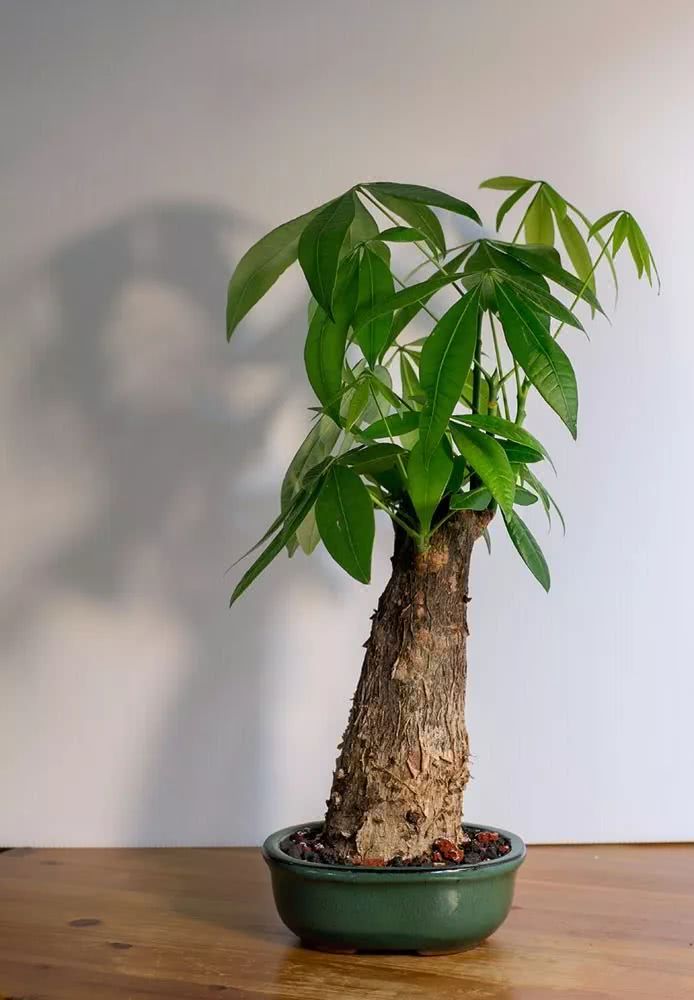
The most common problem when caring for a money tree indoors is overwatering. If you water frequently, the money tree will easily drop its leaves. The money tree is also very susceptible to cold damage; it is a tropical potted plant that needs a minimum care temperature above 5°C. If the temperature is too low, it is prone to frost damage.
Recently a friend asked me why his money tree's leaves keep turning yellow and also develop black spots.
When a money tree's leaves keep turning yellow, it is mostly caused by overwatering. You can directly remove those diseased leaves, and then before each watering, wait until the potting soil has completely dried out for a few days before watering thoroughly.
If you fertilize a money tree randomly, it can also easily cause yellow leaves. The money tree has very low fertilizer needs; generally in spring and summer, give a diluted liquid fertilizer once every one to two months.
1. Why do money tree leaves develop black spots
If a money tree's leaves turn brown, it is generally because the air is too dry, so the money tree's leaves dry out; this is the reason the leaves turn brown.
When a money tree's leaves develop black spots, it is because of a fungal disease infection. You can disinfect the infected diseased leaves, and you can cut off the severely diseased leaves and branches, then apply thiophanate or chlorothalonil.
When caring for a money tree, besides maintaining a warm and humid environment, you also need to keep good ventilation. Potted money trees should be kept away from air conditioners or heaters.
2. What is happening when a money tree keeps dropping leaves
If a money tree keeps dropping leaves, it is usually because the care location has changed. The money tree does not like being moved frequently; it has to adapt to a new environment, so it keeps dropping leaves. Move it as little as possible; if the environment changes too much, it is especially prone to dropping leaves.
3. Why is the money tree so popular
Many people believe the money tree can bring us good luck, or more money.
The money tree looks as if it is very picky about its environment, but in fact it is an especially easy indoor potted plant to care for, particularly for beginners. As long as you control watering and keep it in one environment without moving it around casually, it can maintain good growth.
4. Avoid overwatering
One of the most critical factors in keeping a money tree alive is watering. The money tree can tolerate fairly long periods of drought, but once it is overwatered, it easily leads to root rot, which will kill the plant.
In spring and summer, when temperatures are higher, generally water thoroughly once every two to three weeks, keeping the potting soil completely dry before watering thoroughly.
After autumn turns cooler, reduce watering, even to watering thoroughly once a month. Before each watering, check whether the soil is still moist. Leftover tea and coffee should never be poured into the potting soil.
5. Environmental humidity requirements
The money tree likes higher air humidity, especially in winter. If the air is relatively dry, you can spray water around it, turn on a humidifier to increase air humidity, or even place some pebbles on a tray with a little clean water underneath the pebbles and set the money tree on top of the pebbles.
6. Light for care
The money tree is relatively easy to grow indoors. It is not picky about light and can grow in environments with scattered light or low light. It is a fairly shade-tolerant plant. A potted money tree must not be exposed to direct sunlight or harsh sun, but a windowsill with scattered light is most suitable.
7. Potting soil
Caring for a money tree requires giving it loose, well-draining soil. Generally repot once every 3 to 4 years. Add some peat soil and river sand to the soil to increase drainage; perlite can replace sand.
For both types of money trees, also pay attention to choosing a container of appropriate size. Do not choose a flower pot with too large a diameter, otherwise it easily leads to excess moisture and causes root rot.
8. Other notes
The money tree does not need frequent fertilizing. Generally in spring and summer, give a diluted organic liquid fertilizer once every 3 to 4 weeks.
The money tree rarely has pest problems; problems are generally caused by improper watering, and you need to prevent fungal infections.
If you find pests, deal with them immediately. If an indoor potted money tree is infected by pests, it is best to remove them with an organic method. You can mix soapy water with water, 15 ml to one liter of water, stir the mixture, and then spray it on the pests.
Caring for a money tree does not require frequent pruning. Generally in spring and summer, occasionally cut off some overly long branches to make it look more even. The money tree's new leaves grow relatively quickly, and proper pruning will make it more attractive.
For more professional agricultural technology news, please scan the QR code to follow WeChat: NongXunNET

Please indicate the source when reprinting.