Succulent Care Misconception: A Blackened Stem Isn't Necessarily Black Rot, It Could Be Lignification
In succulent plant care, misconceptions are inevitable. Some friends believe that a blackened stem means black rot. Many flower lovers have encountered this: they suddenly discover that the part of their succulent plant's stem in the soil has turned black, even a purplish black. So...
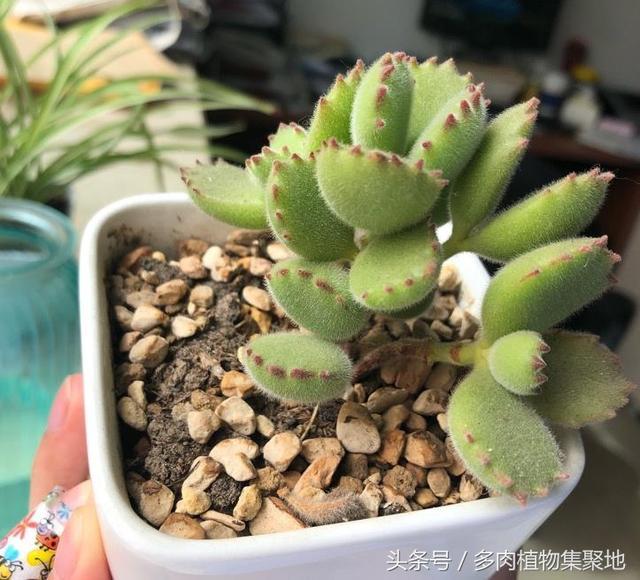
In succulent plant care, misconceptions are inevitable. Some friends believe that a blackened stem means black rot. Many flower lovers have encountered this: they suddenly discover that the part of their succulent plant's stem in the soil has turned black, even a purplish black. Isn't that black rot? But why is the succulent fine? Because that isn't black rot, that's the normal lignification of the stem, and it only looks like that scary black-rot color because it's in the soil.
How do you tell them apart? Look at the plant's condition. If the plant is healthy and plump and the stem is hard, it's fine, completely healthy. If the stem is slightly soft and the leaves fall off at a touch, cut it off quickly -- that's black rot. Succulent black rot is caused by the fungus Fusarium oxysporum (the black rot pathogens of different plants are not necessarily the same). Fusarium oxysporum is a type of facultative parasitic fungus that can both infect plants and survive in soil. Like other plant pathogens, it has infraspecific differentiation and can infect many plant hosts.
Once you've experienced black rot even once, you'll know that the black of black rot and the black of an old stem are worlds apart. Although old succulent stems do lignify, their color basically doesn't turn black, but rather gray or brown and other dark colors, whereas the black of black rot is a black that goes to the bone, truly black. Black rot is accompanied by leaves also turning black, falling off even without being touched, falling off at the slightest touch, whereas a lignified succulent is still in a relatively healthy state. In addition, black rot spreads very quickly, with a big difference in just one day.
The symptoms of succulent black rot start from the middle of the succulent's stem. Some people mistake the black spots and water-soaked rot that appear on succulent leaves for black rot, and believe that black rot can be treated, which is unscientific. This is usually not black rot, but black spot disease. In fact, even without medication, black spot disease can be stopped from spreading by stopping watering and making its growing environment dry. The symptoms of black rot damaging leaves should be as described below: leaves fall off at a touch, and blackening and rot start from the leaf's growing point (the place where leaf cuttings sprout) and spread to the leaf.
Why does black rot mostly occur in summer? Why is it more common after overwatering or rain, when many succulent lovers even think their succulents were killed by the heat? Actually, understanding this problem is simple. Fusarium oxysporum is a fungus, and its brothers and sisters are mushrooms. Why do mushrooms tend to grow after summer rain? Because it's warm and humid, and the conditions for reproduction are met. In the literature on controlling cotton wilt, it is described that the most suitable growth temperature for Fusarium oxysporum is 27 to 32 degrees, so please pay more attention in summer.
Finally, to judge whether a succulent stem has a problem, you can pinch it with your hand. If it's still hard, then it's fine. A black-rotted one will feel soft when pinched and will also ooze liquid. If the outside of the stem looks fine but when pinched the inside has already dried up and shriveled, then also cut off the head early and replant it to grow roots.
This is a gathering place for succulent plant lovers, sharing succulent care tips. Welcome to follow and exchange.
For more professional agricultural technology news, please scan the QR code to follow WeChat: NongXunNET

Please indicate the source when reprinting.