How can jasmine be cared for so that it blooms from early summer all the way to late autumn?
Jasmine flowers are pure white, later turning purplish red, and are fragrant, with a long blooming period that can last from early summer all the way to late autumn. It can be roughly divided into 3 blooming peaks: the first blooming period is in June-July, the second blooming period is in July-August, and the third blooming period is in August-September...
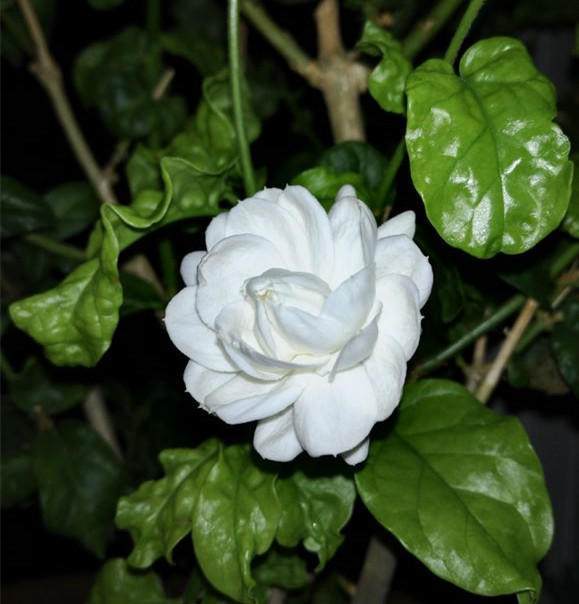
Jasmine flowers are pure white, later turning purplish red, and are fragrant, with a long blooming period that can last from early summer all the way to late autumn. It can be roughly divided into 3 blooming peaks: the first blooming period is in June-July, the second blooming period is in July-August, and the third blooming period is in August-September, among which the flowers that bloom in July-August are large. The fragrance is rich and lasting.
Jasmine likes sufficient sunlight, likes fertile and acidic soil, and dislikes alkaline soil. It fears dampness, especially waterlogging. It fears cold, and grows best at a temperature of 25-35°C; at a temperature of 3°C, the branches will freeze to death.
In cold regions, the potted jasmine can be moved indoors before Cold Dew each year, and throughout the winter the indoor temperature should be kept at 12-14°C at night, while the highest daytime temperature should preferably be 18-20°C. Indoors, attention should be paid to ventilation; move it back outside at the start of summer and place it in a sunny and wind-sheltered spot.
In winter, generally do not fertilize indoors; fertilize again after it sprouts in spring, and in the hot summer apply liquid fertilizer once a week, while also supplementing with 3% ferrous sulfate to prevent leaf yellowing.
Jasmine leaves are opposite, and new shoots growing from the leaf axils also appear in pairs; the more branches and shoots, the more flowers. Generally, after moving it outside, prune and repot it, or prune and repot it indoors in early March. When pruning, generally leave branches 20-25 cm long and cut off all the rest; cut off overly old branches from the base to encourage new branches to sprout. When new shoots reach 10 cm long, pinch off the growing tips.
Jasmine generally takes about 15 days from budding to forming flower buds. The development process of the flower buds is: from tender green -- yellow-green -- yellow-white -- milky white -- snow white. Four hours after the flowers open, they change from snow white to purplish red or yellow.
Jasmine flowering starts from the top and opens in pairs from top to bottom in succession. Autumn flowers and spring flowers mostly open at night, while summer flowers mostly open in the evening. Flowering is most vigorous in 3-6 year old plants, after which they gradually age.
When caring for jasmine, gardeners very easily run into the problem of yellow leaves. Below, let us analyze the causes together:
1. Too much water, too frequently, causing poor drainage. The roots have difficulty breathing, causing root rot;
2. The water is too alkaline, and the growing soil is too alkaline;
3. Lack of nutrients.
Therefore, when caring for jasmine, gardeners should take care not to water frequently, choose slightly acidic soil for repotting and growing, and fertilize jasmine in time to supplement nutrients and promote growth.
For more professional agricultural science and technology information, please scan the QR code to follow WeChat: NongXunNET

Please indicate the source when reprinting.