Gloxinia blooms with just a little light, and Cuban oregano grows more lush the more you prune it
Gloxinia has especially large flowers, and they are incredibly vivid; even placed in a corner it becomes an extremely eye-catching flower. 1. Care environment Gloxinia is also called "falling snow mud"; its flowering period is very long, and it can be seen from spring all the way to late autumn, so it counts as a plant that flowers through all four...
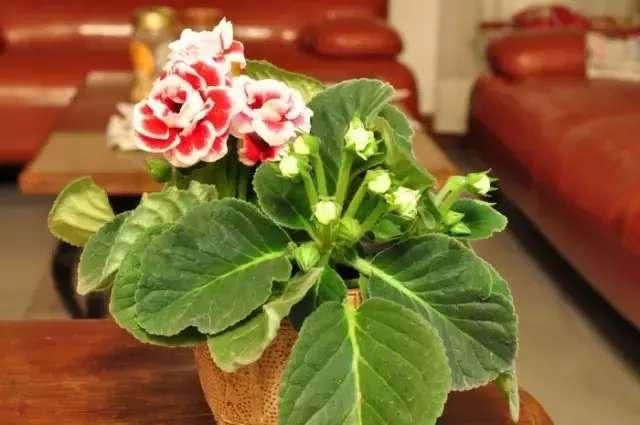
Gloxinia has especially large flowers, and they are incredibly vivid; even placed in a corner it becomes an extremely eye-catching flower.
1. Care environment
Gloxinia is also called "falling snow mud"; its flowering period is very long, and it can be seen from spring all the way to late autumn, so it counts as a plant that flowers through all four seasons, and its flower quantity is also quite large, with rich varieties, numerous flower colors, and varied forms.
Gloxinia's growth requires a warm and humid environment; a little scattered light is enough for its care, and direct sunlight must be avoided. In summer, just keep the environment ventilated and cool.
2. Temperature and water
Gloxinia has a certain heat tolerance. When the summer temperature exceeds 33 degrees, appropriately spray water on the ground to cool it down. Keeping the temperature between 18~25 degrees is most suitable; such a temperature is favorable for it to bloom. In autumn and winter, keeping the temperature at around 10 degrees is best, so it can enter dormancy, conserve nutrients, and grow more vigorously the next year.
Gloxinia likes higher air humidity, but does not like long-term watering; in its care it is even more important to appropriately shelter it from rain. In summer, avoid excessive rain; water thoroughly when the potting soil is dry, and in summer, when ventilated, you can spray water around it to increase humidity.
Note that in winter you must maintain humidity, control watering and spraying, and avoid excessively low temperatures or excessively high humidity.
3. Potting soil selection
The soil for planting Gloxinia should be loose, fertile, slightly acidic soil rich in humus, maintaining the soil's air permeability and drainage. You can place some granular organic fertilizer at the bottom of the pot so that it has sufficient fertility during the growing period.
4. Light:
Gloxinia is a semi-positive plant and likes a semi-shaded environment. In care, be careful not to let it be exposed to the blazing sun; in summer it is even more important to shade it, avoiding direct sunlight, as it is very easy to sunburn. A little weak scattered light is enough.
5. Appropriate fertilization:
Gloxinia likes light fertilizer, especially during the growing period; balanced fertilizer and phosphorus-potassium fertilizer can be used alternately to ensure lush branches and leaves, and it can also keep blooming continuously.
During the growing period, generally give a dilute organic liquid fertilizer once a week. After flower buds appear, increase the application of phosphorus-potassium fertilizer, and avoid fertilizer touching the flowers and leaves, as it easily causes fertilizer burn. Remember also not to give concentrated fertilizer.
6. Propagation introduction
Gloxinia can be propagated directly by cutting healthy leaves, leaving 1 cm of the leaf stalk, inserting them obliquely into clean river sand, with 1/3 of the leaf surface inserted into the river sand and 2/3 left on the surface. Shade appropriately and maintain a certain humidity. At a temperature of about 22°C, they will take root in 15 days, and after becoming small seedlings they can be transplanted into small pots.
2 Cuban oregano grows more lush the more it is pruned; just pinch off a section and toss it into the soil and it will live
Cuban oregano removes formaldehyde, radon, benzene, ammonia, sulfur dioxide, as well as smoke odor, peculiar odors, and carbon dioxide from the air, and can also sterilize.
1. Care environment
Cuban oregano is actually curly-leaf mint, a variant variety of mint, but it is more drought-tolerant and cold-tolerant than mint, and also very shade-tolerant. You can prune and pinch off buds however you like, and it will still grow more lush.
It likes an environment with scattered light, warm and slightly moist; during the growing period, you can keep the potting soil watered thoroughly when dry.
In winter care, keep it appropriately warm. As long as the temperature stays above 0 degrees, Cuban oregano will not freeze to death. After the summer temperature rises above 30 degrees, you can often spray water on the leaves and surroundings to cool it down and maintain a warm and moist environment, and it will maintain vigorous growth.
2. Appropriate water
When the summer temperature is high, water is consumed especially quickly, so you can water once a day. In other seasons, generally water about once every 3 days, and each time water thoroughly. If you find the leaves are a little wilted, then you need to replenish water in time.
3. Appropriate pruning
The more Cuban oregano is pruned, the more lush its branches and leaves grow. During the growing period, you can prune once a week, or you can also keep pinching off the tops.
Also promptly cut off diseased leaves and dead branches, and promptly spray carbendazim for prevention and control. After the autumn weather turns cool, do not prune frequently.
4. Propagation introduction
Cuban oregano is generally propagated by cuttings, or directly by layering. Press a longer section of stem directly into the soil, and after it grows roots, cut it off and transplant it; the survival rate is basically 100%.
Cutting propagation is also very simple: directly cut a section of stem about 7~10 cm long, remove the lower leaves, and directly soak it in water for hydroponic cutting. Change the water once every 2~3 days; it will grow roots in a week, and can be potted in two weeks.
For soil cutting, keep the soil slightly moist and keep it in a ventilated, shaded place; it will resume growth in 2 weeks.
For more professional agricultural science and technology information, please scan the QR code to follow WeChat: NongXunNET

Please indicate the source when reprinting.