Growing Succulents This Way in the Rainy Season Makes Plants Tall, Plump and Ready to Fill Their Pots
April is almost here, and the annual Grain Rain season has begun again. So how should you grow succulents in this kind of continuous rain? 1. Succulents with strong roots need no fuss. What counts as strong roots? It is the kind that, when short of water to the point that the leaves go soft, bounce right back as soon as you water...
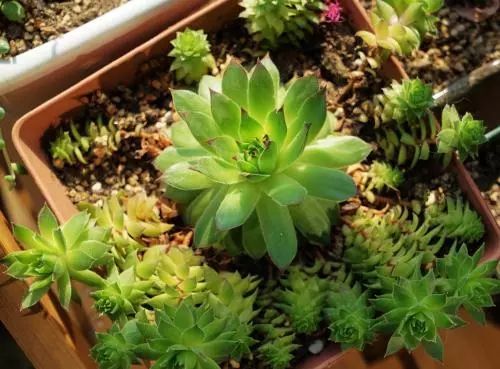
April is almost here, and the annual Grain Rain season has begun again. So how should you grow succulents in this kind of continuous rain?
1. Succulents with strong roots need no fuss
What counts as strong roots? It is the kind of succulent that, when short of water to the point that the leaves go soft, bounces right back as soon as you water it. This kind of succulent needs no fuss at all; rainy days can bring out their potential. As long as the soil has good aeration, a few months of rain can make them fill their pots outright!
2. Help new succulents settle into their pots
For succulents settling into their pots, rainy days have more advantages than sunny ones. Growers all know that the first watering after potting a succulent is especially important. Do not think that you can skip watering just because it is raining; not only do you need to water, you need to water thoroughly! After the first thorough watering, you can then go a long time without watering, and water again only once the potting soil has dried out. When watering on rainy days, you should water even more thoroughly. If you only water the surface, the succulent's roots will be smothered in the soil,
3. Let leggy succulents grow freely
Many growers' succulents become leggy during the rainy season; some flatten out like a pancake, some shoot upward. During the succulents' vigorous growth stage, this is actually often not a bad thing. At this time, do not rush to behead and take cuttings. Because if the light is not good enough, the cuttings you take may not even have put out roots before they become leggy again. Just put them on the windowsill and let them get as much light as possible, so they can grow quickly.
4. Grow rosette-shaped and low clumping succulents with good ventilation
Continuous overcast and rainy days create conditions for mold to multiply. When the weather is damp, even succulents grow fuzz; this is especially true of rosette-shaped succulents, whose lower leaves press tightly against the soil and are particularly prone to mold. If you find any, be sure to remove the moldy leaves, and try to use soil to prop up the lower leaves of the rosette so they touch the soil as little as possible. For succulents with stems, it is better to let the stem hold the rosette up so it does not touch the soil.
5. Care of succulent cuttings
Both stem cuttings and leaf cuttings of succulents sprout more easily in a humid environment. The Grain Rain season happens to provide favorable conditions for cuttings; they need hardly any care, and simply spraying the soil surface damp is enough, with a fairly high survival rate. Never water too much; if the soil is too wet, it will cause the succulent leaves to mold.
For more professional agricultural science and technology news, please scan the QR code to follow WeChat: NongXunNET

Please indicate the source when reposting.