Three Fears of Succulents in Spring: Neglect Makes It Worse Than Summer
Gardeners care more about how succulents get through summer, but when it comes to how succulents get through spring, many people do not pay enough attention. Many gardeners' succulents are fine in winter, yet come to grief in spring, and some fare even worse than those kept through summer. So...
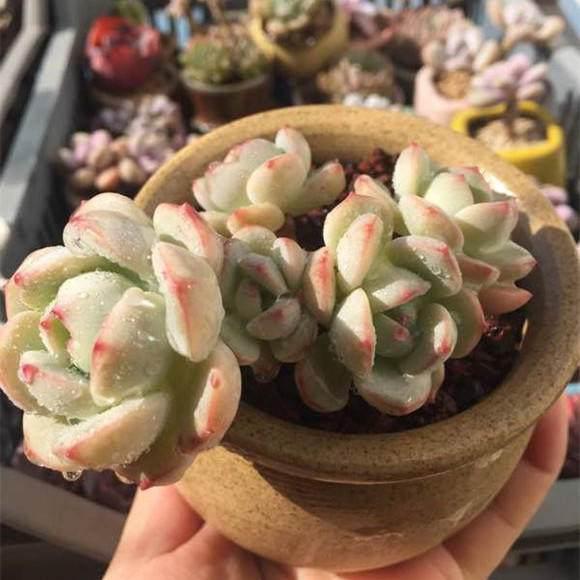
Gardeners care more about how succulents get through summer, but when it comes to how succulents get through spring, many people do not pay enough attention. Many gardeners' succulents are fine in winter, yet come to grief in spring, and some fare even worse than those kept through summer. So how do you get succulents through spring well? There are 3 lessons from experience.
1. In spring, succulents fear cold wind most
In severe cold, gardeners do not open doors and windows for long periods, so the indoor temperature does not change much and generally stays at 4-5°C. At this time, succulents are basically in a dormant state and have already adapted to zheg environment. However, as soon as spring arrives, especially on sunny days, people tend to open doors and windows to let the house ventilate and exchange air fully, while overlooking that cold wind at this time most easily strikes succulents directly, making them unable to adapt to the sudden change in the external environment; they often die from the abrupt cold.
Therefore, when caring for succulents in spring, you need to move them out in large numbers to grow in indoor sunlight only when the temperature is stable. At first, while the temperature is not yet stable, gardeners can move them to a sunny windowsill to acclimatize.
2. In spring, succulents fear too much fertilizer most
In spring all things revive, and the nutrients succulents need increase relatively, but generally let them grow naturally first, and fertilize only after the leaves have grown fairly sturdy and thick and have a certain tolerance for fertilizer.
Some gardeners think of seizing the vigorous spring season and hurry to fatten up their succulents, eager for quick results, fertilizing before spring has even arrived, and often applying unfermented concentrated fertilizer, which is harmful rather than beneficial to succulents that have just sprouted; some will be burned to death outright.
Therefore, when growing succulents in spring, when fertilizing them, be sure to apply thin fertilizer frequently and increase it gradually. Generally, using a dilute water-soluble fertilizer, mixed with water at 1000 times, to water the succulents is the correct way to fertilize succulents in spring.
When fertilizing, remember to give the succulents a follow-up watering of plain water in good time the next day, using a spray bottle dedicated to succulents, first going around the succulent in a circle, then slowly watering beside the succulent.
3. In spring, succulents fear sudden temperature changes most
Some gardeners think that spring has arrived and the weather is warm, so succulents should get more sun, and they hastily move the succulents outdoors. Because of the relatively long exposure to sunlight, the temperature around the succulent pots reaches about 15-20°C, while when they are brought indoors in the afternoon, the indoor temperature is at most about 10°C, a difference of 5-10°C from the temperature under indoor sunlight. This alternation of neglect and heat easily gives succulents a "bad cold" and kills them.
Therefore, in this situation, gardeners should not rush to put succulents in the sun to sunbathe. If they really need sun, they can move them out at 10 in the morning and must move them back indoors at 4 in the afternoon, so the succulents will not catch a "cold."
For more professional agricultural science and technology information, please scan the QR code to follow WeChat: NongXunNET

Please indicate the source when reprinting.