What do the succulents of the Jingyi family look like
Introduction: Plectranthus amboinicus is a perennial shrubby herbaceous plant of the genus Plectranthus in the Lamiaceae family. A garden cultivar. Its leaves are ovate, with fine glandular hairs on the surface, fleshy, with blunt sparse rounded teeth along the edges, arranged in opposite pairs, and it has a fresh fragrance. After being touched, a fresh, pleasant scent remains on the fingers, hence the name "touch-me plant" (Pengpengxiang). Cymes, flowers tubular,
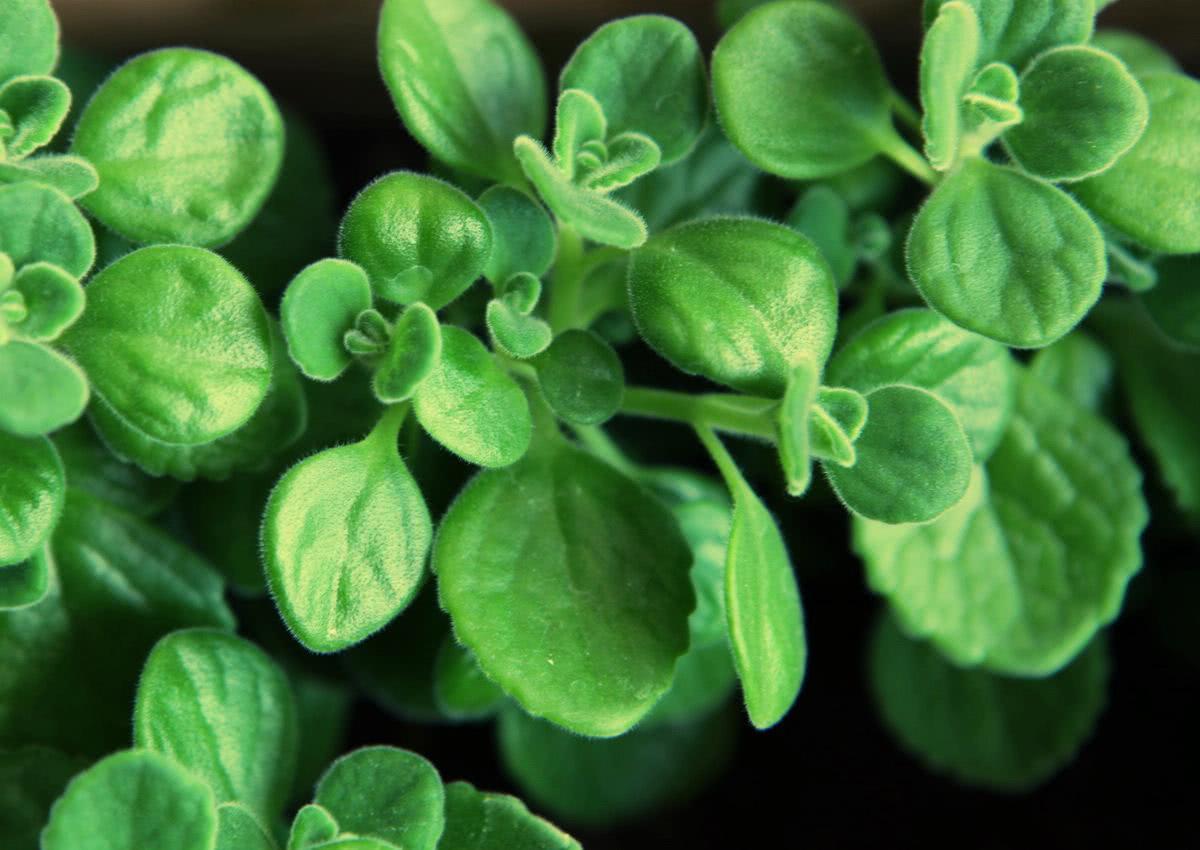
Plectranthus amboinicus is a perennial shrubby herbaceous plant of the genus Plectranthus in the Lamiaceae family. A garden cultivar. Its leaves are ovate, with fine glandular hairs on the surface, fleshy, with blunt sparse rounded teeth along the edges, arranged in opposite pairs, and it has a fresh fragrance. After being touched, a fresh, pleasant scent remains on the fingers, hence the name "touch-me plant" (Pengpengxiang). Cymes, flowers tubular, white. Much branched, the whole plant covered with fine dense white down.
Plectranthus amboinicus
Morphological characteristics:
A subshrub-like perennial herbaceous plant. Much branched, the whole plant covered with fine dense white down. Fleshy leaves, arranged in opposite pairs, green, ovate, with blunt teeth along the edges. Stems slender, prostrate, much branched, leaves round, leaf blades downy, flowers small, white. Because it gives off a pleasant aroma when touched, it enjoys the fine name "touch-me plant" (Pengpengxiang). And because its fragrance is sweet and rich, quite resembling the scent of apples, it also enjoys the reputation of "apple scent." Smelling it is refreshing to the spirit.
Plectranthus amboinicus is much branched, the whole plant covered with fine dense white down, fleshy leaves arranged in opposite pairs, stems slender, small flowers white.
Plectranthus amboinicus
The reason Plectranthus amboinicus gives off fragrance is similar to the principle by which mimosa "blushes" - when its leaves are stimulated by touch, the water within the cells acts, causing the turgor pressure of the pulvinus to change. Unlike mimosa, the leaves of Plectranthus amboinicus do not contract under the effect of turgor pressure; instead, the stomata inside that are used for air exchange expand, and a volatile substance with an apple-like fragrance diffuses through the stomata into the air. In fact, Plectranthus amboinicus also gives off a faint fragrance ordinarily, but this fragrance is relatively weak and not easily noticed by people; when its leaves are touched, this fragrance becomes stronger (it is also on the hands), and only then do people feel that it becomes fragrant upon touch.
Plectranthus amboinicus
Value:
1. Ornamental
It has ornamental value, and this is also the value that people pay the most attention to. Its fragrance adds quite a few points to its appearance. Moreover, its temperament is distinctive; whether placed on a balcony, a desk, or hung indoors, it works.
2. Edible
The leaves of Plectranthus amboinicus can be used to make dishes and soups. When cooking, adding a few leaves can enhance the aroma of the food and increase people's appetite. Its leaves can also be used to make tea or infuse liquor, or the leaves can be directly eaten as a cold salad. The leaves of Plectranthus amboinicus can also be used as a spice or flavoring.
3. Medicinal
Mash the leaves of Plectranthus amboinicus, add honey or granulated sugar, mix with water, and drink it to relieve sore throat; boil its leaves to make tea or infuse in water, and after taking it, it can relieve bloating and gastrointestinal discomfort; mash the leaves of Plectranthus amboinicus and apply them to places bitten by mosquitoes and insects to relieve itching and reduce inflammation;
4. Mosquito repellent
The fragrance of Plectranthus amboinicus can repel mosquitoes and insects. Keeping a pot at home can let family members avoid the nuisance of mosquitoes and insects in summer.
5. Freshening the air
Moreover, it can also purify the air. Plectranthus amboinicus can absorb a variety of harmful gases including formaldehyde, ammonia, and sulfur dioxide, and can effectively purify indoor air.
For more professional agricultural science and technology information, please scan the QR code to follow WeChat: NongXunNET

Please indicate the source when reprinting.