How do you aquascape a small biotope tank? Here is the complete tutorial
Rick Chen's small native biotope tank - biotope setup tutorial! The biotope to be simulated today is the ecological environment of a South American blackwater river basin. Friends with some basic knowledge will certainly know that the water body of a "blackwater" river basin has a pH of about...
Rick Chen's small native biotope tank - biotope setup tutorial!
Biotope
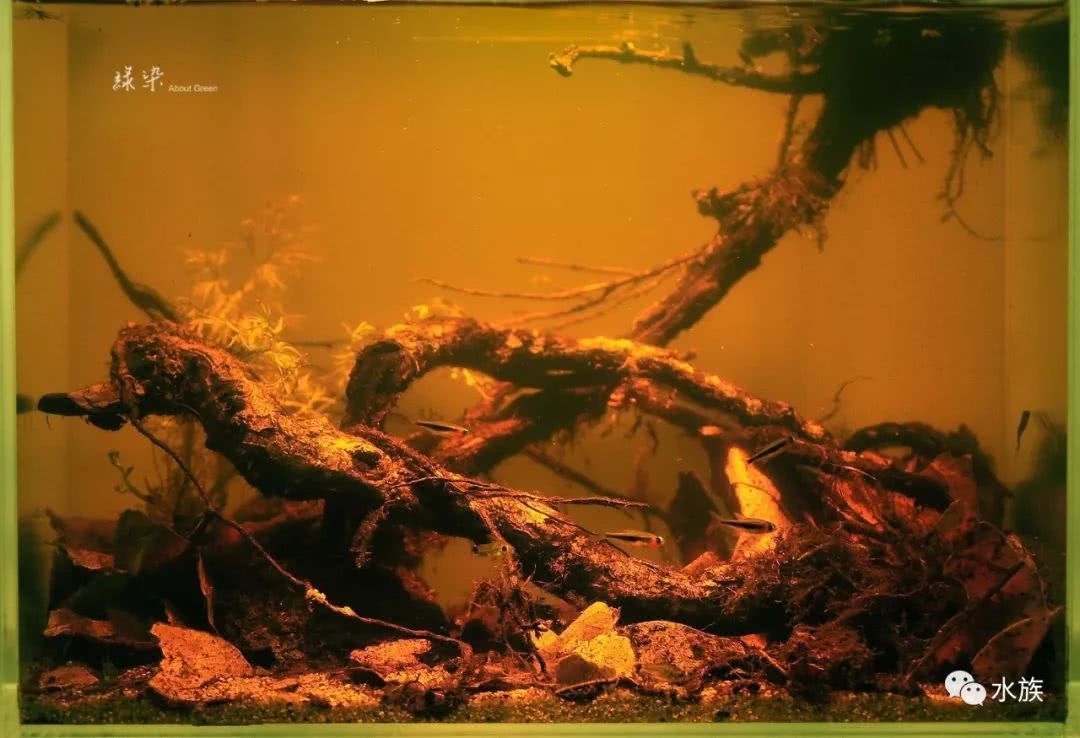
What is to be simulated today is the ecological environment of a South American blackwater river basin. Friends with some basic knowledge will certainly know that in the water body of a "blackwater" river basin, the pH is about 1 and the conductivity is about 0, and the water color is a deep amber shade. This is the primary condition for simulating the environment. How do you make the water take on a deep amber color? This time I bought Munster peat soil. It is rich in humic acid, black humin and trace elements, can soften the water quality, lower the pH, and further can increase the fish's resistance. Simply put, it lets the fish have the "feeling of coming home."
The aquascaping tank prepared this time measures 31 x 18 x 24 cm, which is a small tank size that is not easy to work with. First, pour in an appropriate amount of peat soil
Next up are the large-leaf Terminalia catappa leaves (Indian almond leaves). This thing is a common tree in parks and outdoors, and its function is roughly similar to that of peat soil, mainly also to lower pH, inhibit bacteria and stabilize water quality. Because when Terminalia catappa leaves are about to rot they release a large amount of secondary metabolites, such as tannic acid, oxalic acid, humic acid... etc., all of which are natural organic compounds
An appropriate amount of large-leaf Terminalia catappa is added not only to lower the acid, but also to simulate the scene of fallen leaves on the bottom in a natural environment
Then add crushed stone (to press down the large-leaf Terminalia catappa leaves and prevent them from floating up), and finally add white sand. The white sand chosen this time, in both color and particle size, has always been something Wuchang loves and treasures, and the overall feel is simply natural
Finally, water is added - does the half-filled scene already make your heart flutter? Hehe~~
On the first day after water is added, an air pump is used to aerate for 24 hours. At this time a large amount of peat soil and fallen leaves will float up. After scooping them off the water surface, change half the water, then after another 2 to 3 days of aging the water, the fish can be added
The fish chosen this time are: Tucano tetra (fire spirit lamp). This beautiful tetra was introduced to Taiwan, China about 5 to 6 years ago, and at that time the price was about 800 per fish (NTD). It was one of the beautiful tetras in hot demand at the time. After the price stabilized over the past few years, it is finally possible to get them and see them schooling~
Besides the fire spirit lamp, Wuchang's much-loved Corydoras hastatus (moonlight catfish) is also placed in the tank, and it really looks super cute!
This is the scene after one week. In order to increase the "sense of nature," that is, what the Japanese call the "passage of time," there will still be some adjustments of small details and additions. Sharing this Biotope aquascape with everyone
For more professional agricultural science and technology information, please scan the QR code to follow WeChat: NongXunNET

Please indicate the source when reprinting.