What exactly is the fairy in the sky? Lifting its mysterious veil
Introduction: Snow lotus is named snow lotus because its top resembles a lotus, and is abbreviated as snow lotus. It is a perennial herb, 15-35 cm tall. The rhizome is thick, and the neck is covered with numerous brown remnants of leaves. The stem is stout and hairless. The leaves are dense; the basal leaves and stem leaves are sessile, with elliptical or ovate-elliptical blades; the uppermost leaves are bract-like, membranous
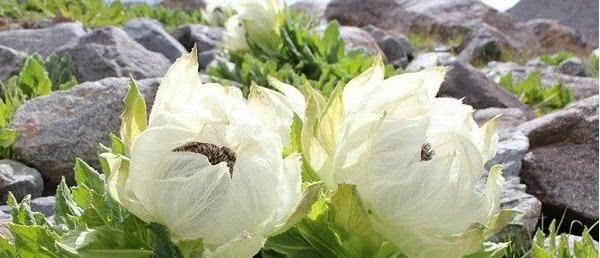
Snow lotus is named snow lotus because its top resembles a lotus, and is abbreviated as snow lotus. It is a perennial herb, 15-35 cm tall. The rhizome is thick, and the neck is covered with numerous brown remnants of leaves. The stem is stout and hairless. The leaves are dense; the basal leaves and stem leaves are sessile, with elliptical or ovate-elliptical blades; the uppermost leaves are bract-like, membranous, pale yellow, surrounding the capitulum, with pointed teeth on the margins. There are 10-20 capitula, densely clustered at the top of the stem into a spherical compound inflorescence. The involucre is hemispherical, 1 cm in diameter; the involucral bracts are in 3-4 layers, with margins or entirely purplish brown. The florets are purple. The achenes are oblong. The pappus is dirty white. The flowering and fruiting period is July-September.
Snow lotus
It is distributed in many high-cold zones of China, and also in Russia and Kazakhstan. It grows in rock crevices, stone walls and glacial moraine gravel beaches near the alpine snow line, at an altitude of 2400-4000 m. The largest production and the best quality come from the Tianshan Mountains. It can be used medicinally and also has a certain ornamental value.In 1996, China listed Tianshan snow lotus as a second-class protected plant. Tianshan snow lotus is the only snow lotus plant included in the "China Plant Red Data Book" and is a national third-class endangered species in China. In 2000, State Council Document No. 13 explicitly prohibited the harvesting and digging of wild snow lotus.
Snow lotus
Medicine:
Snow lotus is warm in nature, sweet and bitter in taste, and enters the liver, spleen and kidney meridians. It has the effects of dispelling cold, strengthening yang, regulating menstruation and stopping bleeding, and is used to treat impotence, weakness of the waist and knees, irregular menstruation in women, metrorrhagia and leukorrhea, rheumatoid arthritis and traumatic bleeding, etc. "Ben Cao Gang Mu Shi Yi" records: snow lotus "is very hot in nature, can replenish essence and strengthen yang"; "Xinjiang Chinese Herbal Medicine" records: "snow lotus is warm in nature and slightly bitter, with the function of dispelling wind and removing dampness."
Snow lotus contains protein, amino acids, flavonoid compounds, alkaloids, etc. It has the effects of promoting menstruation and activating blood, dispersing cold and removing dampness, stopping bleeding and reducing swelling, and eliminating toxins from the body.
Beauty:
It can accelerate skin metabolism, reduce wrinkles, and keep the skin glossy and plump. It delays aging. It also has a good effect on facial freckles, liver spots, etc.
Edible:
Snow lotus black chicken pot, snow lotus squab pot, snow lotus soft-shelled turtle soup
Snow lotus
Folk legend:
In the past, when alpine herders encountered snow lotus on their travels, it was considered an omen of good fortune and treated as a holy object. It is said that this lotus in the snow was scattered by fairies when the Queen Mother of the West of Yaochi went to Tianchi to bathe, and the snow peak opposite, at an altitude of more than 5,000 m, is a beautiful mirror. Snow lotus is regarded as a sacred object. Drinking the dewdrops on the bracts is believed to ward off evil and cure diseases and prolong life.
For more professional agricultural science and technology information, please scan the QR code to follow WeChat: NongXunNET

Please indicate the source when reprinting.