Purple-Black Hues: The Beauty of Unique Colors in Agricultural Products
Introduction: Persian Fritillary, a plant of the genus Fritillaria in the lily family, is native to western Asia and southern Turkey. A perennial bulbous plant, the plant grows 30-60 cm (12-24 inches) tall, and each plant can produce as many as 30 or more conical or bell-shaped flowers, the flowers about 3/4 inch long, with colors ranging from deep purple to greenish brown
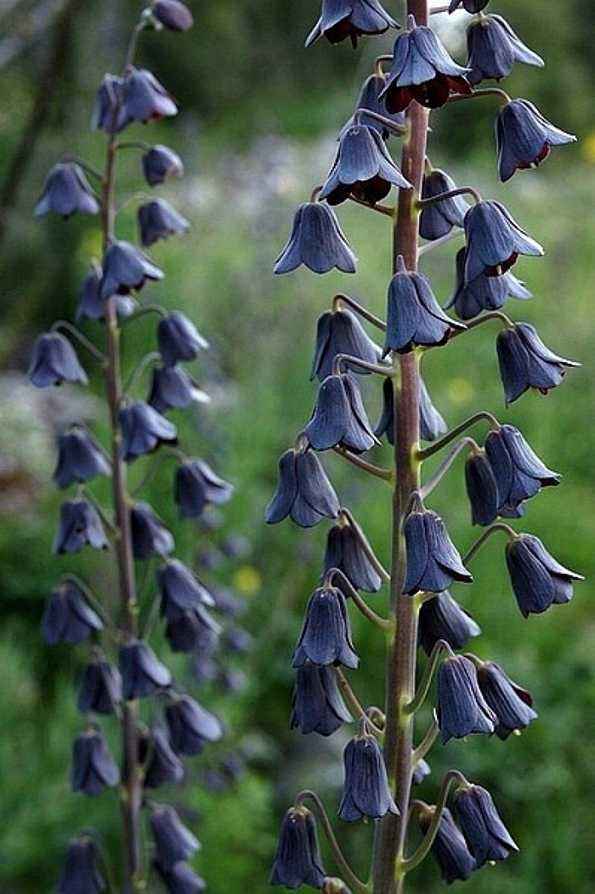
Persian Fritillary, a plant of the genus Fritillaria in the lily family, is native to western Asia and southern Turkey. A perennial bulbous plant, the plant grows 30-60 cm (12-24 inches) tall, and each plant can produce as many as 30 or more conical or bell-shaped flowers, the flowers about 3/4 inch long, with colors ranging from deep purple to greenish brown. Persian Fritillary is one of the commonly cultivated garden plants in Europe, and one of its varieties, named 'Adiyaman', has taller plants and more flower spikes than other varieties; this variety has received the Royal Horticultural Society's Award of Garden Merit.
Persian Fritillary
Fritillaria is one genus of the lily family. Perennial herbs; the bulbs are buried deep in the soil, usually composed of 2 to 3 white powdery scales, rarely with many scales. The stem is erect and unbranched. The leaves are usually cauline, opposite, whorled or scattered, sometimes strongly curled at the apex. The flowers are generally radially symmetrical, solitary and terminal or several arranged in a raceme, less often an umbel, with leaf-like bracts; the 6 tepals are free, often more or less connivent, colored, sometimes with checkered markings, with a sunken nectary groove near the base. There are 6 stamens, inserted at the base of the tepals; the anthers are nearly basifixed or dorsifixed, 2-locular; the style is 3-lobed or unlobed, the stigma protruding above the stamens; the ovary is superior, 3-locular, with 2 longitudinal rows of ovules per locule. The fruit is a capsule, with 6 ribs, the ribs often winged. It dehisces loculicidally and contains many flat seeds. There are about 60 or more species, distributed in the temperate regions of the Northern Hemisphere, especially in Central Asia, the Mediterranean coast and North America. China has about 30 or more species, produced in all provinces and regions except the southern provinces and regions, with the most wild species in Xinjiang and Sichuan. It prefers to grow on riverbanks, grassy slopes, gravel crevices or under forests.
Persian Fritillary
Morphological characteristics:
Perennial herbs; the bulbs are buried deep in the soil, covered with a bulb coat, usually composed of 2 (-3) white powdery scales (with 2-3 pairs of small scales growing inside the scales), less often composed of many scales and many rice-grain-like small scales around them; the former bulbs are nearly oval or spherical, while the latter are often more or less rosette-shaped. The stem is erect, unbranched, with a portion underground. The basal leaves have long petioles; the cauline leaves are opposite, whorled or scattered, curled or not curled at the apex, and half-clasping at the base. The flowers are rather large or somewhat small, usually bell-shaped, nodding (but after fertilization the pedicel gradually turns upward and becomes erect at the fruiting stage), radially symmetrical, rarely slightly bilaterally symmetrical, solitary and terminal or several arranged in a raceme or umbel, with leaf-like bracts; the tepals are oblong, nearly spatulate to nearly narrowly ovate, often connivent, with a sunken nectary groove near the base on the inner side; there are 6 stamens, the anthers nearly basifixed or dorsifixed, 2-locular, dehiscing inward; the style is 3-lobed or nearly unlobed; the stigma protrudes beyond the stamens; the ovary is 3-locular, with 2 longitudinal rows of ovules per locule, on a central axis placenta. The capsule has 6 ribs, the ribs often winged, and dehisces loculicidally. The seeds are numerous, flat, with narrow wings along the edges.
Persian Fritillary
For more professional agricultural science and technology news, please scan the QR code to follow WeChat: NongXunNET

Please indicate the source when reprinting.