You must seize it; only by persevering to the end can you win
Introduction: Columbine is a species in the genus Aquilegia, family Ranunculaceae. Native to Europe and North America. It is a perennial herb with a thick, cylindrical root up to 1.5 cm in diameter, simple or with a few branches, and a dark brown outer bark. The leaves are basal; the leaf surface is glossy and the underside is downy. It blooms in June and July, usually in deep blue-purple
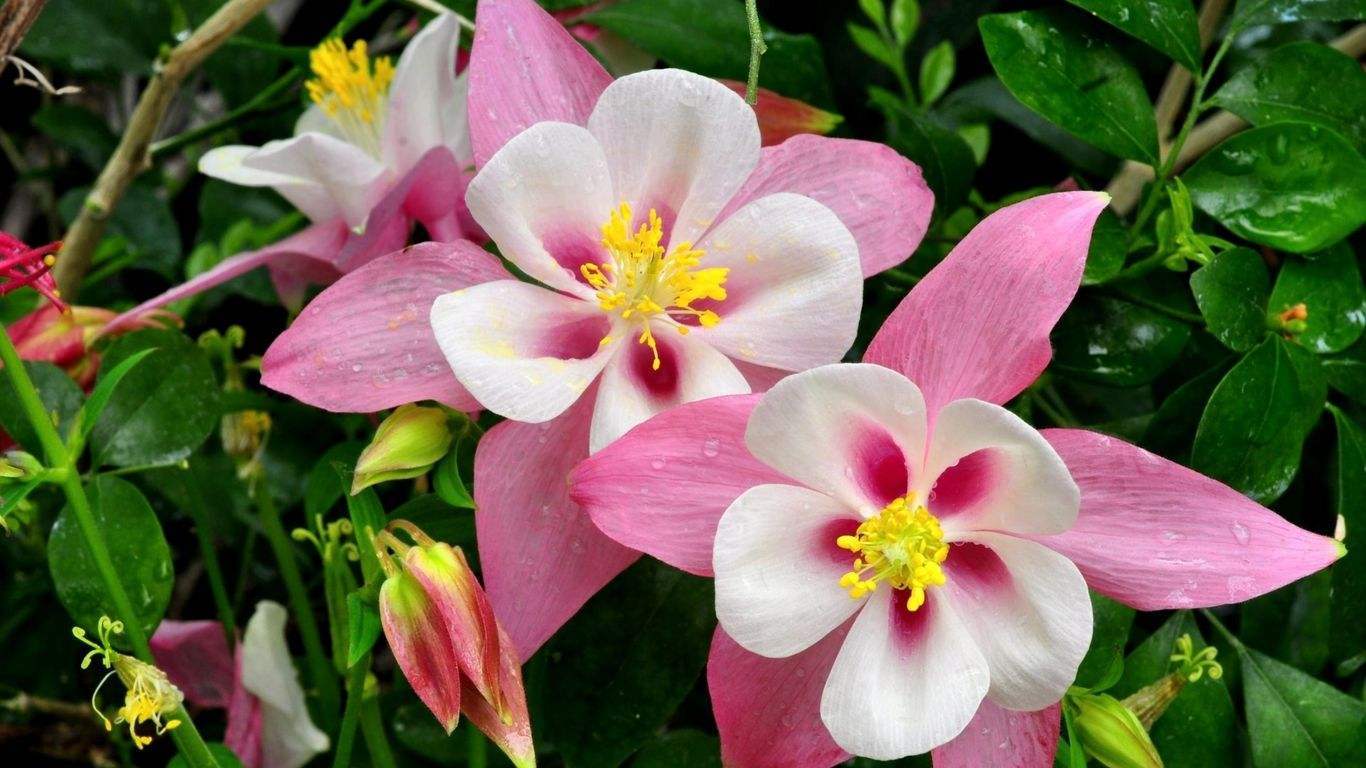
Columbine is a species in the genus Aquilegia, family Ranunculus. Native to Europe and North America. It is a perennial herb with a thick, cylindrical root up to 1.5 cm in diameter, simple or with a few branches, and a dark brown outer bark. The leaves are basal; the leaf surface is glossy and the underside is downy. It blooms in June and July, usually in deep blue-purple or white, with yellow anthers, and is used medicinally.
It grows on mountain roadsides, by rivers, or in moist grasslands at elevations of 200-2300 m. It is distributed in Northeast China, North China, and Shaanxi, Ningxia, Gansu, Qinghai, and other places. It is also found in the Russian Far East.
Columbine
The root is thick, cylindrical, up to 1.5 cm in diameter, simple or with a few branches, and the outer bark is dark brown. The stem is 15-50 cm tall, often branched in the upper part, densely covered with glandular hairs in addition to soft hairs. The basal leaves are few, biternate compound leaves; the leaf blade is 4-10 cm wide, the central leaflet with a short petiole 1-6 mm, cuneate-obovate, 1.5-3 cm long, about as wide or wider, upper part three-lobed, the lobes often with 2-3 rounded teeth, the surface green and hairless, the underside pale green to glaucous green, shortly pubescent or nearly hairless; the petiole up to 18 cm long, sparsely pubescent or hairless, with a sheath at the base. The cauline leaves are several, once or twice ternate compound leaves, gradually becoming smaller upward.
Columbine
Flowers 3-7, inclined or slightly drooping; bracts three-parted; pedicels 2-7 cm long; sepals yellow-green, oblong-ovate, 1.2-1.5 cm long, 6-8 mm wide, apex slightly blunt, sparsely pubescent; petal blades the same color as the sepals, upright, obovate, slightly longer or slightly shorter than the sepals, apex nearly truncate, spur straight or slightly curved, 1.2-1.8 cm long; stamens up to 2 cm long, exserted beyond the flower, anthers oblong, yellow; staminodes white membranous, linear-oblong, 7-8 mm long; carpels densely covered with spreading glandular pubescence, style longer than or equal to the ovary. Follicles 1.5 cm long; seeds black, narrowly obovate, about 2 mm long, with slightly raised longitudinal ridges. It blooms from May to July and bears fruit from July to August.
Columbine
This species has delicate, charming flowers and bright colors, and is highly adaptable. It is suitable for planting in masses on lawns and under dense forests. It is also suitable as ground cover in moist places such as lowlands and stream sides. Naturalistic planting, flower borders, flower beds, rock gardens. An excellent garden flower with unusual leaves and beautiful flowers, suitable for arranging flower beds, flower paths, etc., and the flowering stems can be used as cut flowers.
For more professional agricultural science and technology information, please scan the QR code to follow WeChat: NongXunNET

Please indicate the source when reposting.