The flowers are as white as jade, and when this plant blooms it is the most alluring
Hosta, probably not commonly seen by many flower lovers. It is a fragrant flowering plant with flowers as white as jade and a scent that carries for several li. It is a potted plant very suitable for decorating a courtyard or placing on a windowsill or desk. As soon as the hosta blooms, the flowers hang in clusters all over the stems, and the flower color...
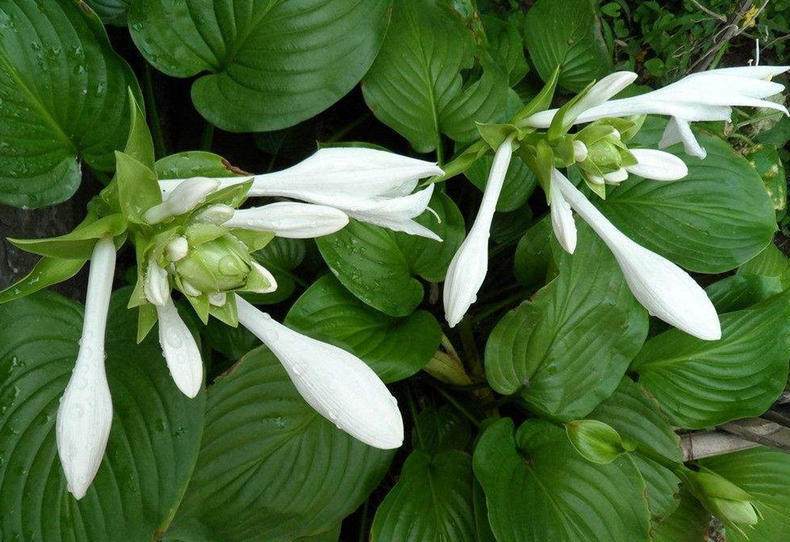
Hosta, probably not commonly seen by many flower lovers. It is a fragrant flowering plant with flowers as white as jade and a scent that carries for several li. It is a potted plant very suitable for decorating a courtyard or placing on a windowsill or desk. As soon as the hosta blooms, the flowers hang in clusters all over the stems, and the flower color is the most alluring.
When planting hostas in general, flower lovers had best choose clay pots or ceramic pots, with a pot diameter of about 20 cm. Hosta wants deep soil and a fertile sandy loam with good drainage. Flower lovers can use fine sandy soil or leaf mold: sand mixed at 3:2, or use garden soil: humus soil: river sand mixed at 5:4:1.
To plant a hosta, first place a piece of tile over the drainage hole of the pot, then spread a layer of growing medium, then put the plant into the pot. The planting depth should be moderate: shallow enough not to expose the roots, deep enough not to bury the crown. After planting, water thoroughly once and put it in a shady place to recover.
In caring for hostas, fertilizing should follow the principle of "light fertilizer applied frequently, small amounts and many times, complete nutrition." During the sprouting stage, apply a fertilizer mainly of nitrogen; during the bud stage, apply a liquid fertilizer mainly of phosphorus.
Starting after the new buds sprout, apply a dilute liquid fertilizer combining nitrogen and phosphorus once every 2 to 3 weeks. After summer begins, apply fertilizer mainly containing phosphorus and potassium, which can promote flower bud differentiation and also keep the flower color pure. Stop fertilizing during the flowering period. After autumn begins, continue applying liquid fertilizer until the aboveground parts wither and then stop, which can ensure the roots absorb enough nutrients, greatly enhance their cold resistance, and also benefit their growth the following year.
Hosta likes moisture and cannot tolerate drought. During the growing period, pay attention to watering, but it should not be too dry, nor should there be excessive water that causes waterlogging; too much waterlogging can easily cause the hosta to die. Watering is generally best at sunrise, and at night the leaves should be kept dry to prevent disease. If watering at dusk around sunset, spray some fungicide.
Also do not water the plants at noon in high temperatures, otherwise it can easily cause scorching and disease. Watering should be even and consistent to prevent some areas from being too dry or too wet; being too wet easily causes root disease. After each fertilizing, water the plant.
Hosta likes a bright light environment. In spring, autumn, and winter, because the temperature is not very high, it can be allowed to receive direct sunlight, which helps it carry out photosynthesis and form flower buds, bloom, and set seed.
In high-temperature summer weather, appropriate shading should be provided, with a shade level of 50%, otherwise after the plant receives direct sunlight, growth becomes very slow or it enters a semi-dormant state, and the leaves will also be scorched and slowly turn yellow and drop. When keeping it indoors, place it in a place with bright light as much as possible.
Hosta likes a warm climate, but high temperatures and stuffiness in summer, especially in an environment with a temperature above 35°C and relative air humidity above 80%, are not good for plant growth. At this time, air circulation should be strengthened to help it carry out transpiration, help it lower its internal temperature, and also spray the leaf surface to cool it down. Winter temperature requirements are very strict; the temperature must be above 10°C, otherwise below 10°C it will stop growing, and when frost occurs it cannot overwinter safely.
The hosta flowering period is from July to September. Before the hosta blooms, you can spray phosphorus and potassium fertilizer, which can make the plant bloom beautifully. After the flowers open, you can appropriately shorten the light exposure, which can extend its flowering time. You can also appropriately lower the temperature to extend the flowering period.
For more professional agricultural science and technology information, please scan the code to follow WeChat: NongXunNET

Please indicate the source when reposting.