The succulent is still short and thin even in the growing season, how do you grow it plump and tender?
For succulents that are not growing, a short period of no growth may be due to the succulent's dormancy period or the potting-in period, but this is only short-term no growth, so we can first understand the growth habits of the succulent, and see whether the succulent is...
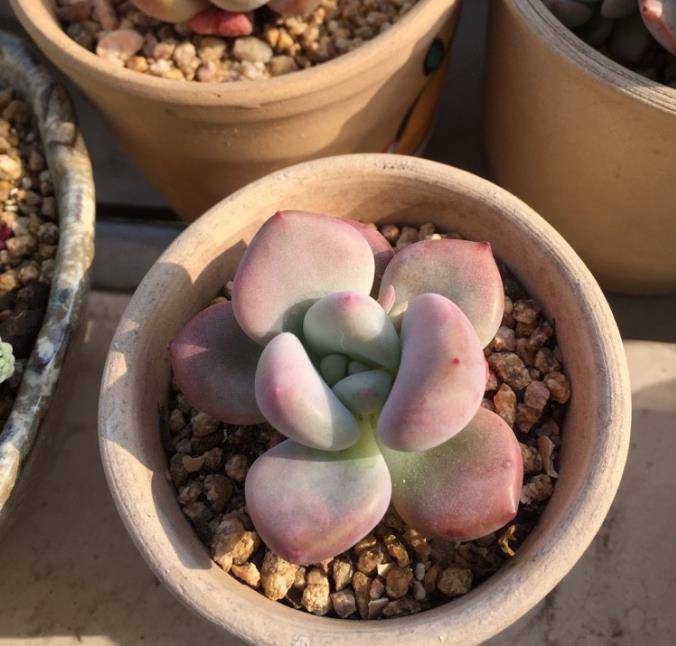
For the situation where the succulent is not growing, a short period of no growth may be due to the succulent's dormancy period or the potting-in period, but this is only short-term no growth, so we can first understand the growth habits of the succulent and see whether the succulent is in its dormancy period. If the succulent you are growing shows no sign of growth for more than half a year, it is basically all because of one reason, and that is poor roots. To get the succulent to resume growth, we need to repot the succulent and check it. It is now spring, which is exactly the good time to repot succulents, and after pruning the roots, the succulent will also pot in very quickly.
After about two years, succulents need to be repotted and the soil changed, because by then the fleshy plant's root system has already become very developed and may have filled the entire container, with almost no nutrients left in the soil, and it may even have become compacted, which is very unfavorable for drainage and air permeability. If you find problems such as root rot or a white powder on the roots, you must repot and change the soil, and check whether it is due to pests or pathogens. If necessary, the roots and even part of the stem need to be cut off, and roots need to grow again.
When you decide to repot, completely stop watering one to two weeks in advance. Repotting when the soil is dry can minimize damage to the root system; healthy roots will tightly grip moist soil, and if the soil is moist, healthy roots are very likely to be damaged when cleaning the soil around the roots. When you decide to repot, completely stop watering one to two weeks in advance. Repotting when the soil is dry can minimize damage to the root system; healthy roots will tightly grip moist soil, and if the soil is moist, healthy roots are very likely to be damaged when cleaning the soil around the roots.
Never use a container that is not breathable and has no drainage holes to grow succulents. It is not breathable, and it also easily accumulates water, which very easily causes the fleshy plant to rot at the roots and develop black rot. When mixing soil, try to add granules that do not easily break down, such as maifan stone, volcanic rock, and coal cinder, these granules with hard texture and good air permeability. Even if you repot, they can be reused, they do not break down and do not compact, and they are beneficial for the roots to absorb nutrients and air.
If you want the succulent to grow bigger, you must first grow the root system well. When potting, use a slightly larger flower pot so that the root system can have enough space to grow. A small pot will restrict root growth. If you want the succulent to grow bigger, do not use a small pot. With a developed root system, it is very simple to make the succulent grow bigger. It is now the succulent's growing season, and fertile soil helps the succulent grow quickly. Some succulent enthusiasts increase the proportion of granular soil in the soil for succulents, but granular soil does not contain many nutrients, so it is not suitable for small succulent seedlings.
This is a gathering place for succulent lovers, sharing succulent care tips, welcome to follow and exchange.
For more professional agricultural science and technology information, please scan the QR code to follow WeChat: NongXunNET

Please indicate the source when reprinting.