Refreshing summer must-haves to help you stay cool all summer long
Introduction: Mint, commonly known as "yindancao," is a plant in the Lamiaceae family, referring to the dried whole herb of the same genus. It mostly grows in mountain wilds, wetlands and by rivers, with rhizomes spreading underground, mostly at an altitude of 2100 m, but it can also grow at an altitude of 3500 m. It is an aromatic crop with special economic value. The whole plant is fresh and aromatic. Leaves are opposite
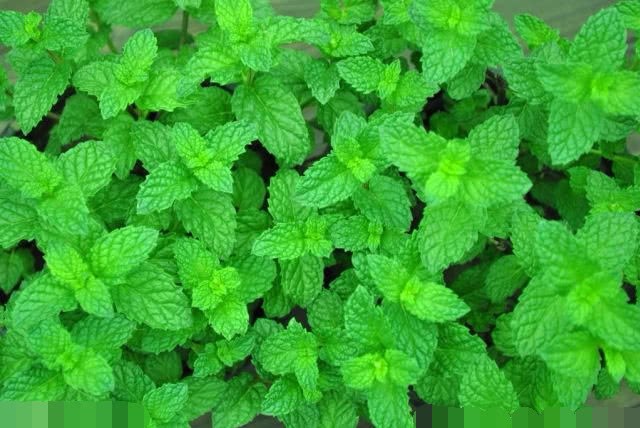
Mint, commonly known as "yindancao," is a plant in the Lamiaceae family, referring to the dried whole herb of the same genus. It mostly grows in mountain wilds, wetlands and by rivers, with rhizomes spreading underground, mostly at an altitude of 2100 m, but it can also grow at an altitude of 3500 m. It is an aromatic crop with special economic value. The whole plant is fresh and aromatic. Leaves are opposite, flowers are small and light purple, lip-shaped, and after flowering it produces small dark purple-brown granular fruits. Perennial herb. Stems erect, 30-60 cm tall, the lower several nodes with slender fibrous roots and horizontal creeping rhizomes, sharply four-angled, with four grooves, the upper part covered with recurved puberulent hairs, the lower part puberulent only along the angles, much branched.
Mint
Leaf blades oblong-lanceolate, lanceolate, elliptic or ovate-lanceolate, rarely oblong, 3-5 (7) cm long, 0.8-3 cm wide, apex acute, base cuneate to nearly rounded, margin above the base sparsely coarsely tooth-like serrate, lateral veins about 5-6 pairs, slightly sunken above and conspicuous below, green above; densely puberulent along the veins and sparsely puberulent elsewhere, or nearly hairless elsewhere except the veins, light green above, usually densely puberulent along the veins; petiole 2-10 mm long, concave above and convex below, puberulent.
Verticillasters axillary, outline spherical, about 18 mm in diameter at flowering, stalked or sessile, when stalked the stalk up to 3 mm long, puberulent; pedicels slender, 2.5 mm long, puberulent or nearly hairless. Calyx tubular-campanulate, about 2.5 mm long, outside puberulent and glandular-dotted, inside hairless, 10-veined, inconspicuous, calyx teeth 5, narrowly triangular-subulate, apex long acute, 1 mm long. Corolla light purple, 4 mm long, outside slightly puberulent, inside puberulent below the throat, limb 4-lobed, upper lobe apex 2-lobed, larger, the other 3 lobes nearly equal, oblong, apex obtuse. Stamens 4, the anterior pair longer, about 5 mm long, all exserted beyond the corolla, filaments filiform, hairless, anthers ovate, 2-celled, cells parallel. Style slightly exceeding the stamens, apex nearly equally 2-cleft, lobes subulate. Disc flat-topped. Nutlets ovoid, yellowish brown, with small glandular pits. Flowering period July-September, fruiting period October.
Mint
Edible value:
Mint has both medicinal and edible functions. The main edible parts are the stems and leaves, and it can also be juiced and consumed. In food use, mint can serve as a seasoning, a spice, and can also be paired with wine, brewed as tea, etc. Every 100 grams of dried mint contains 9.6 grams of water, 6.8 grams of protein and 31.1 grams of fiber, and provides 870.7 kilojoules of calories.
Medicinal value:
Mint is a commonly used traditional Chinese medicine in China. The young tender stem tips can be eaten as a vegetable, and the whole herb can also be used as medicine to treat cold, fever, sore throat, headache, red and painful eyes, muscle pain, itchy skin wind rash, incomplete eruption of measles and other conditions. In addition, it is also effective for carbuncles, deep-rooted boils, scabies, ringworm and lacquer sores.
Mint contains menthol, a substance that can freshen breath and has various medicinal properties. It can relieve abdominal pain and gallbladder problems such as spasms, and also has effects such as antiseptic and bactericidal, diuretic, phlegm-resolving, stomachic and digestion-promoting. Eating large amounts of mint can cause insomnia, but eating it in small doses helps with sleep.
Mint
Precautions:
1. People with yin deficiency and blood dryness, hyperactivity of liver yang, or excessive sweating due to exterior deficiency should avoid taking mint leaves.
2. Women during pregnancy should avoid using it. Also, because mint has the effect of inhibiting milk secretion, women who are breastfeeding should not use too much of it; and because mint is aromatic, pungent and dispersing, patients with lung deficiency cough or yin deficiency fever with excessive sweating should also use it with caution. In addition, the components of mint easily volatilize and lose effectiveness when heated, so it is advisable to add it after the water has come to a boil. And because it has refreshing and stimulating effects, it should not be drunk too much at night, so as to avoid sleep problems.
Plant culture:
Hades, the king of the underworld, fell in love with the beautiful nymph Minthe, which aroused the jealousy of Persephone, the wife of the king of the underworld. In order to make the king of the underworld forget Minthe, Persephone turned her into an inconspicuous little grass growing by the roadside, trampled by people at will. But after Minthe, strong and kind at heart, turned into little grass, she possessed a comfortable, cool and charming fragrance, and the more she was broken and trampled, the stronger it became. Although she had become little grass, she was loved by more and more people. People called this grass mint.
Mint is a plant full of hope. In life, it is inevitable that there are many people or things missed, and there is almost no chance to meet, grow close to and love each other again, but the less there is, the more one misses them. Although mint is a plain flower, its taste is refreshing to the heart, and the coolness seeps into the skin from every pore, making every cell in the body feel clear. That is a very happy feeling, and it will give a bit of comfort to those who have once lost something. Therefore, the flower language of mint is "wish to meet you again" and "love me once more." In addition, it also has a flower language of "a person of virtue."
For more professional agricultural science and technology information, please scan the QR code to follow WeChat: NongXunNET

Please indicate the source when reprinting.