Is the Christmas cactus a desert plant? Actually, that's a misunderstanding many flower lovers have
The leaves of the Christmas cactus look like crab claws, and the name fits it perfectly. Many flower lovers think that because it belongs to the cactus family, it is a desert plant, but actually many flower lovers have misunderstood it. The Christmas cactus actually originates from Brazil...
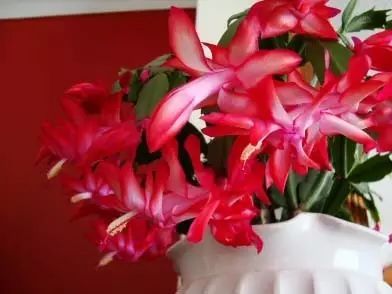
The leaves of the Christmas cactus look like crab claws, and the name fits it perfectly. Many flower lovers think that because it belongs to the cactus family, it is a desert plant, but actually many flower lovers have misunderstood it.
The Christmas cactus actually originates from the tropical rainforests of Brazil. It is an epiphytic plant of the forest, meaning it grows on tree trunks, and it likes shaded, humid environments. It needs diffused light to bloom.
This also explains why some flower lovers find that their Christmas cactus gets sunburned easily when exposed to too much sun, and its leaves become shriveled, because it does not like strong sunlight, especially in summer, when shade is a must.
There are also many varieties of Christmas cactus, but most can only be distinguished by flower color, and the differences between varieties are not great. Flower lovers can try grafting different varieties of Christmas cactus onto a cactus, and then they can get a single Christmas cactus that blooms in a riot of colors.
I. Christmas cactus care guide
1. Light
It is not a desert cactus. It naturally grows in shaded, warm, humid forests. It does not like direct sunlight and prefers bright light, but in summer it needs shade.
(With too much sun, it turns out like the picture above)
2. Water
The Christmas cactus also does not like too much watering. After all, we grow it in soil rather than letting it grow epiphytically on trees. It should not be watered frequently. Its thick leaves are also full of water, so you must wait until the soil has dried out completely before watering.
3. Humidity
The tropical rainforest is a misty, humid environment, which we naturally cannot provide, but the Christmas cactus is also fairly drought tolerant. However, the environment should not be too dry, otherwise it is prone to red spider mites. If it is too dry, spray water on the ground. If the environment is too humid, the Christmas cactus will rot.
4. Fertilizing
In spring and autumn, generally fertilize once a month. An ordinary balanced fertilizer is fine, and the potassium content can be slightly higher. A general-purpose plant fertilizer is also acceptable.
5. Temperature
In winter the temperature should be around 7-15°C. Only this is favorable for producing flowers. Reaching this temperature without heating is the most ideal. Too high a temperature in winter is also unsuitable.
In summer, pay attention to shading and avoid exposure to strong sun.
6. Repotting
The Christmas cactus grows slowly, and it needs a long time to adapt to a new environment. After transplanting or blooming, do not rush to repot. Generally, once every 3 years is most suitable. If it is grafted, once every two years is fine.
7. Propagation
In spring and summer, cut off 2-3 segments of the Christmas cactus. After the cut surface has dried, it can be inserted into compost soil. The soil should be slightly moist, not wet.
For cuttings, you can dip them in a little rooting powder. Just after planting, do not water too much; too much moisture will cause rot.
(The Christmas cactus below has grown for 25 years, and it really grows very slowly!)
8. How can it bloom?
If you want it to bloom, from June to September in summer it should be kept in a shaded, ventilated place. In winter the temperature should not be too high; 7-15°C is most suitable. In spring and autumn it can get a little light, with light fertilizer applied frequently.
Once flower buds have formed, do not move it around casually. If it has been grown for three or four years without blooming, then it needs repotting. There are no nutrients in the soil, so give a light fertilizer once a month in spring and autumn.
II. Problems often encountered when growing Christmas cactus:
1. The leaf edges turn red, or the whole plant turns red. What is going on?
As shown in the picture above, this Christmas cactus is sunburned. It has received too much light, or the sunlight is too strong, and it needs shade.
2. There are holes in the leaves (as shown in the picture above)
These are bitten out by slugs or snails. Use medicine or sprinkle salt around the flower pot. Check the bottom of the pot or the saucer; they may be hiding underneath.
For more professional agricultural science and technology news, please scan the QR code to follow WeChat: NongXunNET

Please indicate the source when reprinting.