Whether an aloe vera is growing well can be told just by looking at its leaves
Whether an aloe vera is kept well can be told just by looking at its leaves. Plump leaves with a glossy surface mean it is at its healthiest. Unhealthy aloe veras have some leaf tips that are scorched, some that curl inward, and some that even become soft and droopy. Below is the correct way to care for them 1, ...
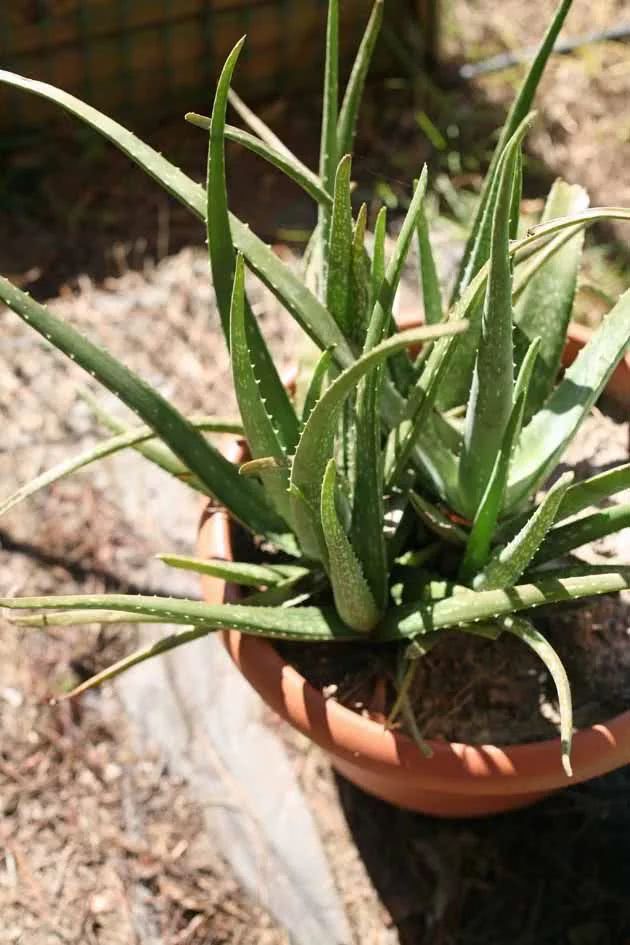
Whether an aloe vera is kept well can be told just by looking at its leaves. Plump leaves with a glossy surface mean it is at its healthiest. Unhealthy aloe veras have some leaf tips that are scorched, some that curl inward, and some that even become soft and droopy.
Below is the correct way to care for them
1. Make sure the aloe vera gets plenty of sunlight
Except in summer, it is best to give the aloe vera 8 to 10 hours of light every day, usually placing it at a south-facing or west-facing window; in the current weather, full sun is best.
Shade it in summer, and in winter move it inside by the window to bask in the sun; that way, it is hard not to keep it well.
2. Wait until the soil is completely dry before watering
Many gardening friends water thoroughly right after planting an aloe vera, which is wrong. The aloe vera is a succulent plant; after planting, give water 4 days later, and expose it to light after 5 to 7 days.
After that, always wait until the potting soil is completely dry before watering. You can insert a finger 3 to 5 cm into the soil; if it is dry all the way, it is completely dry. The aloe vera does not like too much moisture, and too much water causes root rot.
In winter the aloe vera grows upright and does not need watering (at most two or three times), while in summer it needs more water.
3. Fertilize once every spring
Fertilizing should focus on phosphorus fertilizer; give a little slow-release, long-lasting compound fertilizer. Of course, do not give strong fertilizer, and do not fertilize frequently; once a year is enough.
4. Prevent infection by pathogens
What if you see whiteflies or scale insects? Discover them early and immediately apply alcohol to the affected area, and you can easily remove the pests. Usually, take care that the potting soil does not stay waterlogged all the time.
If the air is too dry, spray a little water around it, not on the leaves. Do not keep spraying water on the leaves; long-term water accumulation in the leaf center easily causes stem rot.
5. Check the leaves to understand its health
Whether the aloe vera leaves are healthy or not is most directly seen by looking at the leaves. Some gardening friends find that the leaves even seep a yellow sticky liquid; that means the roots have not grown well and there is too much water. If, as in the left of the picture above, the leaves curl and become thin and shrunken, that means a lack of water; drooping leaves mean a lack of sunlight.
6. What should you do if the aloe vera grows slowly?
Sometimes, friends' aloe veras have no pests or diseases at all (they are not prone to attracting pests or diseases), but after being kept for a long time they simply do not grow taller. What should be done?
(Before the aloe vera was repotted, there was too much water and the roots had not grown well)
The simplest method is, when repotting each year, to line the bottom of the pot with small pebbles, then add a layer of soil, a layer of organic fertilizer, then another layer of soil, and only then plant the aloe vera. This is very helpful for the aloe vera's growth.
Many aloe veras grow poorly because the soil drainage is poor; in that case, water less, and give water only after the leaves have shriveled a little.
(After the aloe vera was repotted, it grew very well, with side shoots constantly emerging)
Be sure to give plenty of sunlight. Although it can grow indoors too, only sunlight lets it grow more robustly. (If it has been kept indoors for a long time, do not suddenly expose it to too much sun; take it slowly)
Some gardening friends water with tap water for a long time, so the soil becomes alkaline and it will not grow; you can appropriately give a little alum fertilizer water as a supplement. Repot once a year and properly clean up the roots, and only then can it grow better.
For more professional agricultural science and technology information, please scan the QR code to follow WeChat: NongXunNET

Please indicate the source when reprinting.