Camellias and azaleas have dry, yellow leaves and won't bloom - what should you do? Do these few things well
Camellias and azaleas often develop dry leaves, yellow leaves, leaf drop, no flowering or few flowers during cultivation. These problems all arise from not understanding their growth habits and growth needs. Different flowers have their own...
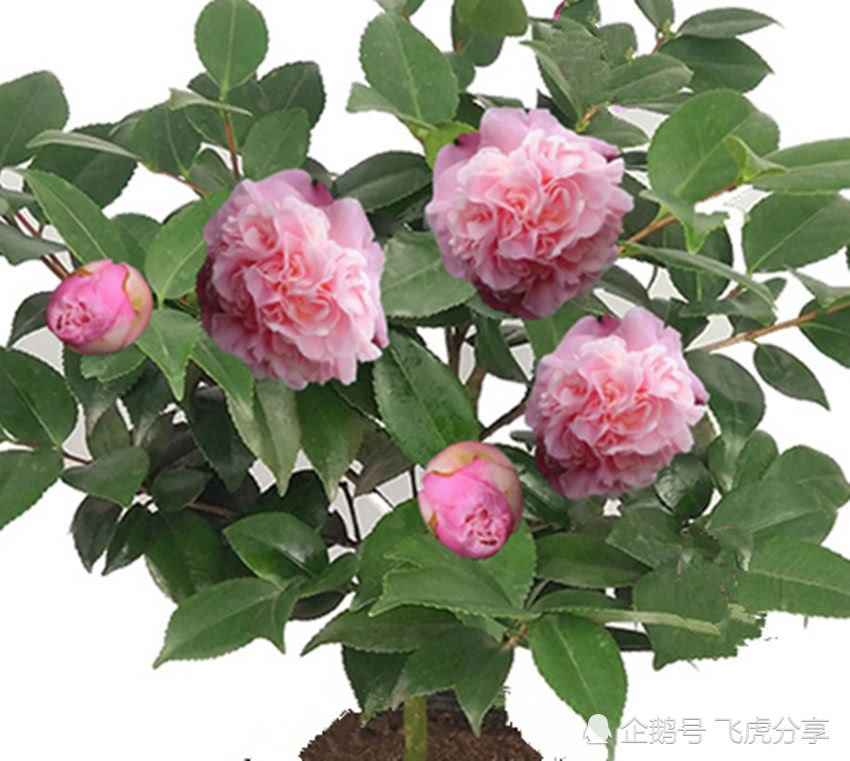
Camellias and azaleas often develop dry leaves, yellow leaves, leaf drop, no flowering or few flowers during cultivation. These problems all arise from not understanding their growth habits and growth needs. Different flowers have their own growth habits and needs, so by mastering the following points in care, you can make camellia and azalea leaves thick and deep green, and have them bloom every year.
1. Camellias and azaleas are both semi-shade plants, and both are long-day flowers. Many people may not understand what long-day means. In fact, long-day and light are two different concepts. Long-day means that the flower can only form flower buds in an environment with a day length of more than 12 hours. The sunshine here refers to bright light rather than sunlight. Therefore, during care they should be placed in a semi-shade environment and should not receive overly strong direct sunlight. Especially in summer and autumn, shade them or place them in dappled shade under trees. In addition to giving a semi-shade environment, also provide a humid air environment, because dry air can easily cause leaves to turn yellow, drop and dry up. So, for a dry growing environment, frequently spray water on the leaves to increase humidity and keep the leaves fresh and dewy.
2. Nutrition must be reasonable. Camellias and azaleas are very sensitive to water and nutrients. Too much fertilizer will make the leaves small, black, hard and slow-growing. Insufficient nutrients will make the branches and leaves turn yellow, thin and grow poorly. Too much nitrogen fertilizer will cause excessive growth of branches and leaves, no flowering or few flowers. Therefore, fertilizing flowers must be balanced and not one-sided. Before flowering, phosphorus and potassium fertilizer should be the main type, and after flowering, compound fertilizer should be the main type. Insist on light fertilizer applied sparingly. Usually it is best to keep a little foliar fertilizer or nutrient solution at home and spray the flowers once every few days. This can not only reduce yellow leaves and leaf drop, but also make the leaves more oily green and shiny. Camellias and azaleas are most afraid of alkaline soil and water quality, and the water quality in the north is mostly alkaline, all of which are unfavorable to their growth. Note that alkaline water must be acidified before watering the flowers. The specific method is to store tap water for 2 days and add acidic fruit peels to it, so that the chlorine in the water evaporates, and also to adjust the pH of the water, and it also contains a certain fertilizing effect.
3. Shaping and pruning. After camellias and azaleas finish flowering, dry branches, diseased and weak branches, crossing branches, overly dense branches, and branches that clearly affect the plant shape should be cut off, and excess flower buds should be thinned to improve ventilation. If you want camellias and azaleas to have oily green leaves all year round, in addition to the above, the most critical thing is soil. Choose sandy loam with good drainage and strong water retention. It should be rich in humus. You can also mix 4 parts leaf mold, 5 parts peat soil and 1 part coarse sand. Such soil generally will not cause yellow leaves or leaf drop. In addition, during care, do not casually move the position, otherwise it is unfavorable to their growth.
For more professional agricultural science and technology information, please scan the QR code to follow WeChat: NongXunNET

Please indicate the source when reprinting.