The king protea is the national flower of the Republic of South Africa.
Introduction: The king protea, also known as the pincushion protea, is the national flower of the Republic of South Africa. Its flowers are huge, oddly shaped, magnificently colorful, noble and elegant, and it is known as the "king of flowers." The long-lasting king protea is hailed as the most luxurious and splendid flower in the world, representing vigorous and tenacious vitality and symbolizing victory, completeness and good fortune.
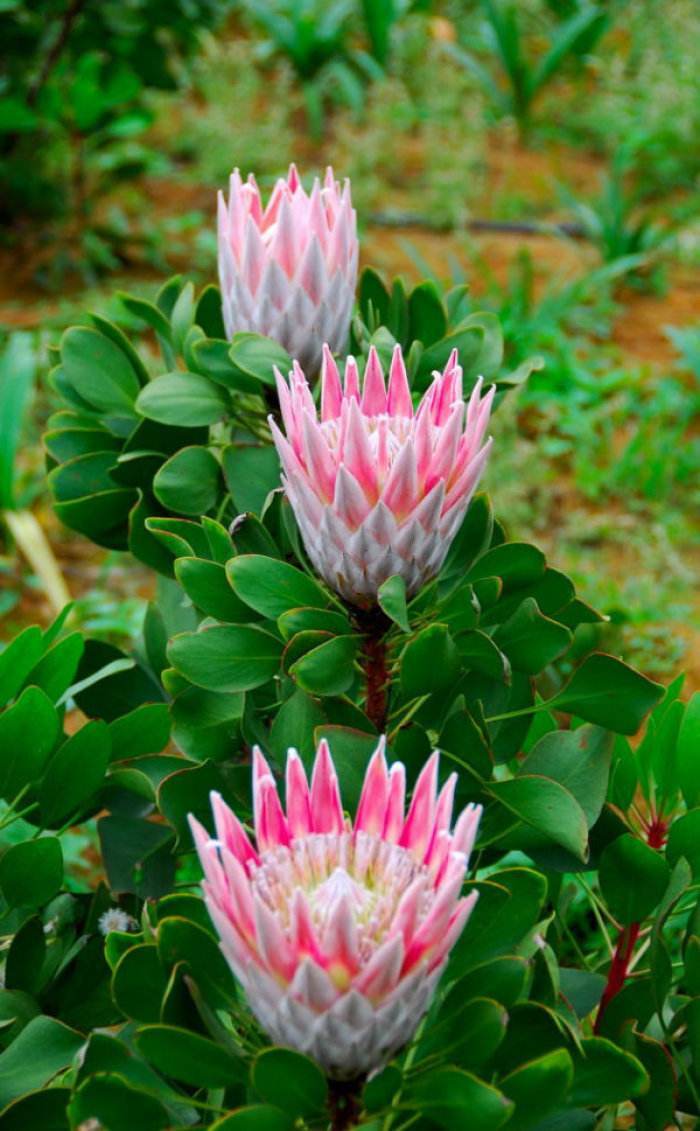
The king protea, also known as the pincushion protea, is the national flower of the Republic of South Africa. Its flowers are huge, oddly shaped, magnificently colorful, noble and elegant, and it is known as the "king of flowers." The long-lasting king protea is hailed as the most luxurious and splendid flower in the world, representing vigorous and tenacious vitality and symbolizing victory, completeness and good fortune.
It prefers a warm, slightly dry and sunny environment, is not cold-tolerant, favors well-drained soil, and dislikes waterlogging; it requires loose, well-drained acidic soil. It can grow from 0 m above sea level up to 1500 m on high mountains. Different climatic conditions and geographical environments cause great changes in the leaves, flower shape, flower color and flowering time of the king protea. It has strong ornamental value as well as medicinal and edible value.
King protea
A perennial, multi-stemmed evergreen shrub. Its flower is actually a flower head, with many stamens, surrounded by huge, richly colored bracts. The flower head is 12-30 cm in diameter. The diameter of the flower head varies between 12 cm and 30 cm. In one growing season, a large and sturdy king protea plant can produce 6-10 flower heads, and an occasional plant can produce 40 flower heads in one growing season. The color of the flower head bracts varies from milky white to deep red. It has sturdy stems and glossy leaves, and the plant is about 1 m tall when mature.
King protea
Landscape value:
The king protea is an evergreen shrub with luxuriant branches and leaves, large flowers, upright bracts and petals, and exceptionally beautiful colors. It has a long ornamental period, is suitable for potted display, and is also an excellent material for cut flowers and dried flowers.
Medicinal and edible value:
King protea herbal tea is made by brewing the dried flowers. It helps promote digestion, relax the nerves, induce sweating and urination, and lower blood pressure, and is beneficial for relieving colds and fever, soothing rhinitis and sore throat, and preventing arteriosclerosis. Use 10 pieces for brewing, and add honey to taste when drinking. Drinking king protea herbal tea can improve insomnia, and it is suitable for drinking before bedtime.
Effects: antispasmodic, astringent, cough-relieving, mind-clearing, nasal congestion-relieving, diuretic, skin-softening, blood pressure-lowering, nerve-soothing, sedative, and sweating-promoting.
King protea
In South Africa, the king protea is even revered as the national flower. The king protea is one of the most widely distributed varieties in the Protea family and can grow from sea level up to 1500 m on high mountains. Different climatic conditions and geographical environments lead to great changes in the leaves, flower shape, flower color and flowering time of the king protea; in commercial cultivation, even under the same growing conditions, the king protea retains these characteristics. This allows the king protea, when grown as a cut flower, to meet market demand around the world for king proteas in different seasons. This South African Protea flower is widely cultivated in New Zealand and has been successfully grown as a garden flower under the Mediterranean climate conditions of Europe and in suitable soil types in the Americas, Australia and Hawaii.
For more professional agricultural science and technology information, please scan the QR code to follow WeChat: NongXunNET

Please indicate the source when reprinting.