What causes a checkerboard pattern between the veins of a leaf
Introduction: Nerve plant (Fittonia) belongs to the Acanthaceae family, genus Fittonia. Nerve plants are short, grow creeping, have small delicate leaves, and the leaf surface bears fine white or red vein networks. Nerve plants are very popular abroad and have been introduced and cultivated in China. Nerve plants are grown as indoor potted plants and can be used to decorate and arrange studies, coffee tables, windowsills and other places, and can also be used as hanging decorative plantings
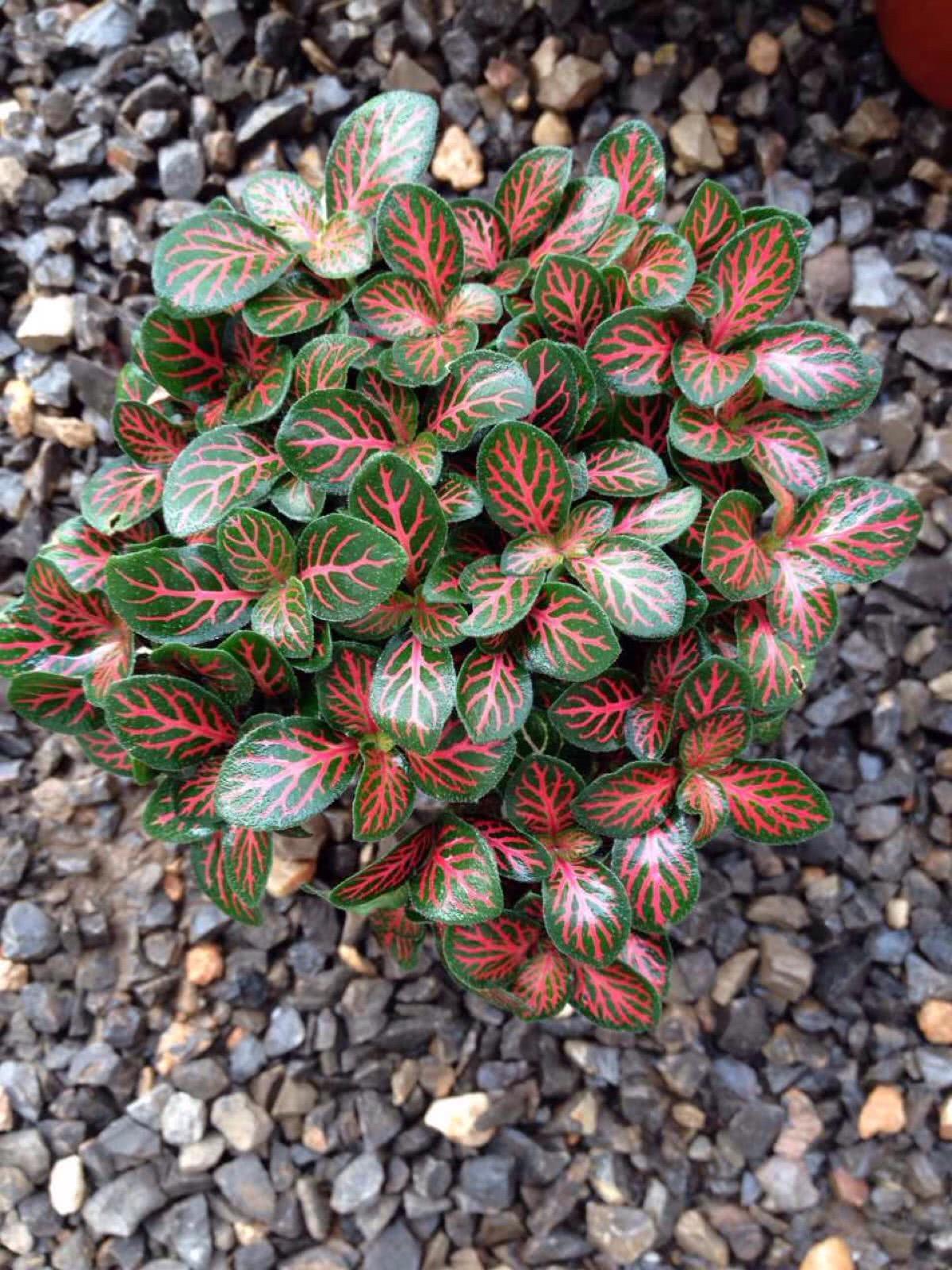
Nerve plant (Fittonia) belongs to the Acanthaceae family, genus Fittonia. Nerve plants are short, grow creeping, have small delicate leaves, and the leaf surface bears fine white or red vein networks. Nerve plants are very popular abroad and have been introduced and cultivated in China.
Nerve plants are grown as indoor potted plants and can be used to decorate and arrange studies, coffee tables, windowsills and other places, and can also be used as hanging decorative plantings. With a light and graceful posture and a small, exquisite form, they belong among foliage plants as small potted plants. Because they are exquisite and delicate, with clear veins, elegant leaf color and even texture, they are deeply loved by people, and are currently a very popular small potted variety in Europe and America.
Nerve plant
Nerve plant is a perennial evergreen herb. The plant is low-growing, about 5-20 cm tall. The creeping stem nodes readily produce roots. Trailing. Leaves are decussate, ovate or elliptical; the stems, branches, petioles and pedicels are all densely covered with fine hairs, with no stipules, and the reticulate veins are silvery white or red. The terminal spike inflorescence has small yellow flowers. Flowering period is September-November.
Nerve plant prefers a high-temperature, humid and semi-shaded environment, and is especially sensitive to temperature. The optimum growing temperature is 18-24°C, and it favors a humid environment. During the growing period it needs relatively high air humidity, especially in the hot summer season when water evaporation is high and the air is dry; besides watering to increase the moisture of the potting soil, spraying the leaf surface and sprinkling water on the ground are even more necessary. For light, diffused light is best, and direct light should be avoided. In summer, a shade net is needed, with 50-60% shading being most suitable. In winter, sufficient sunlight is needed, with slight shading protection at noon; on rainy and snowy days, supplementary light should be added, so that the leaves grow robustly, the leaf color is emerald green, and the veins are clear. The soil should preferably be a sandy loam rich in humus.
Nerve plant
Diseases: Common diseases of nerve plant include leaf rot and root rot. For leaf rot, spray with a 1000-fold dilution of 25% carbendazim wettable powder for control; for root rot, soak the roots in a 1000-fold dilution of streptomycin to sterilize.
Pests: Pests of nerve plant include scale insects, red spider mites and snails. For scale insects and red spider mites, spray with a 1000-fold dilution of 40% omethoate emulsifiable concentrate. Snails can be caught by hand or killed by baiting with methaldehyde.
Nerve plant
Pot culture - Plant several cuttings in a colorful ceramic pot with a diameter of 10 cm and a height of about 13 cm, decorate around the growing medium with colorful stones or moss, and place it on a tabletop or desk for an especially elegant look.
Hanging pot - Grow it in a hanging pot, and when the pot is full, place it indoors for a lush spring-like feel.
Combination - Nerve plant is one of the main auxiliary materials for combination plantings; plant several shrubs of different colors or forms in a pot, paired with low-growing plants such as nerve plant, ivy and spider plant, to form a vivid three-dimensional picture.
For more professional agricultural science and technology information, please scan the QR code to follow WeChat: NongXunNET

Please indicate the source when reprinting.