Beautiful Plants That Are Great for Growing Indoors
Introduction: Calathea warscewiczii belongs to the family Marantaceae, genus Calathea, a perennial evergreen herbaceous foliage plant. The plant can reach 80 cm in height, with large leaves and a full, bushy form; the leaf surface is deep green and glossy with stripes, and the leaf underside is purplish red; the inflorescence is a panicle, the bracts are white and membranous; the sepals are nearly equal; the corolla tube and sepals are hard and leathery, and the capsule splits open into 3 valves
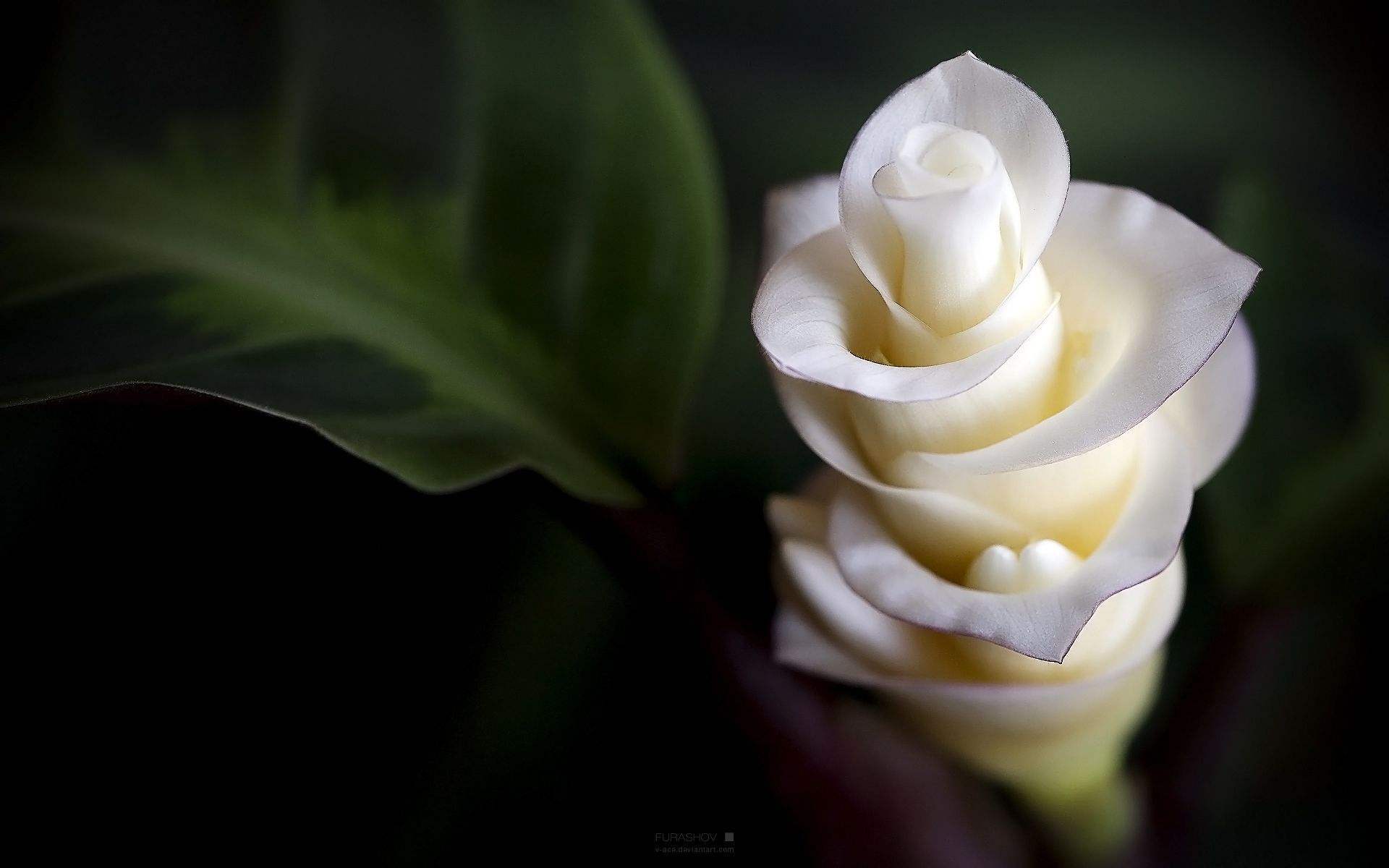
Calathea warscewiczii belongs to the family Marantaceae, genus Calathea, a perennial evergreen herbaceous foliage plant. The plant can reach 80 cm in height, with large leaves and a full, bushy form; the leaf surface is deep green and glossy with stripes, and the leaf underside is purplish red; the inflorescence is a panicle, the bracts are white and membranous; the sepals are nearly equal; the corolla tube and sepals are hard and leathery, the capsule splits open into 3 valves, and the seeds are triangular.
Native to Brazil and other places. It prefers a warm, humid and semi-shaded environment. Because this plant is shade-tolerant, it is very suitable for decorating and greening family homes. It can be displayed for long periods in a brighter room, and being placed in a darker room for 4-6 weeks has no great effect on its growth, so it can be kept in a darker room for a long time and still grow well. Calathea warscewiczii produces small white flowers in autumn and winter, and the ornamental period can last up to 2 months.
Calathea warscewiczii flower
Morphological characteristics:
Perennial herb, with rhizomes; plant height 30-80 cm, with fleshy rhizomes, petioles relatively short, leaves broadly oblong-elliptical, about 20-35 cm long and 10-20 cm wide; the leaf surface has glossy zebra-like stripes interwoven with light green and dark green, and the leaf underside is purplish red.
Inflorescence a panicle, bracts and sepals white, waxy. The inflorescence is head-like or cone-like, sessile or stalked, solitary or accompanied by 1, rarely 2, ordinary leaves; bracts 2 to several, usually spirally arranged, rarely in 2 rows; flowers usually more than 3 pairs, bracteoles membranous; sepals 3, nearly equal; corolla tube equal to or longer than the sepals; outer staminode 1, very rarely absent, usually relatively large; the hard leathery one is similar to it, and together they form a false two-lipped shape at flowering, rarely short; the hooded one is usually smaller than the outer whorl, with a lateral lobe; the fertile stamen has a petal-like, thickened appendage that does not connect to the top; ovary 3-locular. The capsule splits open into 3 valves, the valves separating from the central axis; seeds 3, triangular, convex on the back, with a 2-cleft aril.
Calathea warscewiczii flower
Main value:
Calatheas have underground rhizomes or tubers, with solitary, relatively large leaves. In addition to an open sheath at the base, the leaves also have a noticeably swollen joint where the leaf blade joins the petiole, called the "pulvinus", which contains water-storing cells and serves to adjust the orientation of the leaf, that is, when water is sufficient at night the leaf stands upright, and when water is insufficient during the day the leaf spreads out; this is a characteristic of plants in the family Marantaceae. In addition, some calatheas also have "sleep movement", that is, the leaves spread out during the day and fold up at night, which is very peculiar.
Landscape greening:
This species has rich and colorful leaf colors and extremely strong ornamental value, and most are shade plants with strong shade tolerance and relatively strong adaptability; they can be planted in courtyards, under the tree shade in parks, or beside roads. In South China, more and more species have been used in landscape greening. Planting methods can use block planting, clump planting, or arrangement in combination with other plants. In northern regions, they can be cultivated in ornamental greenhouses for landscape viewing.
Calathea warscewiczii
Indoor arrangement:
Because this species has relatively strong shade tolerance and beautiful leaf color, it can be planted directly in corner areas of public places such as hotels, shopping malls and large venues as a permanent arrangement. However, during cultivation and management, light should be supplemented appropriately and water should be sprayed on the leaves regularly to increase air humidity.
Potted plants and cut leaves:
Because of its beautiful plant form, colorful leaf surface, relatively strong shade tolerance and relatively simple cultivation and management, it is used for indoor potted viewing and is one of the most famous indoor foliage plants in the world. Large varieties can be used to decorate the halls of hotels and shopping malls, while small varieties can accent the balcony, living room, bedroom and so on of a home. During cultivation and management, after being displayed for a period of time, it should be placed in a place with stronger sunlight, such as a balcony or windowsill, to enhance light, so as to facilitate long-term viewing. Because its leaf color is variegated with striking markings, it is a high-grade cut-leaf material and can be used directly in flower arrangements or as a filler material for flower arrangements.
For more professional agricultural science and technology information, please scan the QR code to follow WeChat: NongXunNET

Please indicate the source when reprinting.