Pruning Roses: If You Don't Know How, Just Follow Along and You Can't Go Wrong
If you've grown roses, there's no need to stress again how important pruning is for their blooming. Gardeners who know how to prune roses correctly and in good time always end up with full, well-shaped plants, new growth, vigorous basal shoots, a surge of flower buds, and finally the result: branches covered in rose blossoms.
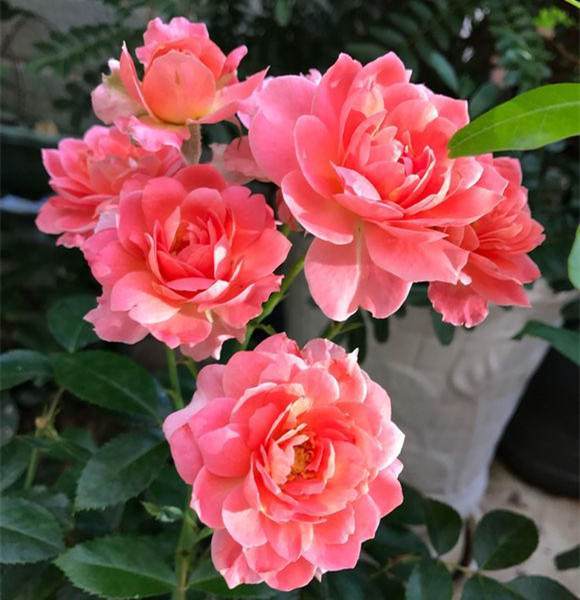
If you've grown roses, there's no need to stress again how important pruning is for their blooming. Gardeners who know how to prune roses correctly and in good time always end up with full, well-shaped plants, new growth, vigorous basal shoots, a surge of flower buds, and finally the result: branches covered in rose blossoms.
But while there are many people growing roses and countless rose lovers, few truly know how to prune them. So how should you prune roses to get the most blooms? If you really don't know how, just follow the steps below and you can't go wrong.
1. Pruning Hybrid Tea Roses
This type of rose is mostly grown outdoors in the north, and most need winter protection. Carry out heavy pruning before winter arrives: choose sharp garden shears, and apart from keeping the main stems at the base of the clump, leave only 3-4 lateral buds at the base of each side branch, then cut it back short. Gardeners in temperate regions need to thin out this type of rose, keeping 5-6 thicker side branches per plant and cutting away the rest. Cut the retained side branches back short, leaving 5-6 buds on each branch.
For potted hybrid tea roses, prune heavily every year before winter begins, leaving only 2 lateral buds at the base of each large side branch, then cut it back short. Hybrid tea roses continually produce new shoots throughout the year, and flower buds differentiate at the tips of the new shoots; as the shoots lengthen, the flower buds keep swelling. As long as new shoots keep emerging through the year, the plant will bloom continuously.
Therefore, gardeners should cut back promptly after each bloom, and not wait until new shoots have emerged to cut back, otherwise the flower buds will be cut off. Cutting back prompts the axillary buds lower down the branch to sprout and form more flowering branches. When cutting back, generally leave only 3-4 leaves. This allows the 2 lateral buds below the cut to sprout at the same time, becoming 2 flowering branches. If you cut back too weakly and leave the branch too long, usually only the bud at the cut sprouts, forming just 1 flowering branch.
2. Cluster-Flowered Roses
For this type of rose, the principle of pruning is to keep the plant relatively small while preserving its profuse flowering habit. Because they grow weakly and each flowering branch carries many flowers. To ensure flowering quality, for plants grown in the ground the number of main branches is generally kept to 6-8, with the rest thinned out. Do not prune hard after flowering, to avoid stimulating the axillary buds to sprout.
Prune heavily after winter sets in, keeping 4-6 sturdy side branches per plant, leaving 2 lateral buds on each side branch, then cut back short. If the retained branches are too long, the following year only the tips of the branches will sprout and flower, while the lower parts stay bare, losing their ornamental value.
3. Grandiflora Roses
These roses are tall plants, often used as background decoration in gardens and courtyards. They are strongly double-flowered and their axillary buds sprout readily, so cutting back should not be too severe, and more lateral buds should be kept. Since these varieties are relatively cold-hardy, they generally need no winter protection when winter comes, and can be kept at their original growing height.
4. Climbing Roses
These roses grow fast, and some one-year-old branches can reach 6-7 m in length. The principle of pruning is to keep a certain amount of cane, remove overly dense canes from the base, then set up a trellis or support and train them by hand. After flowering each year and before new flower buds differentiate, remove aged branches from the base.
5. Growing Tree-Form Roses
The pruning principle for tree-form roses is to select 1 sturdy main branch and remove all the other branches, so that nutrients are concentrated to thicken this main branch, while supporting it with a stake, and cut it back short at a height of 1-1.5 m, so that the 3-5 lateral buds near the top sprout to form side branches.
In early spring of the second year, cut the side branches back short, leaving branches about 30 cm long, and keep 3 lateral buds on each main side branch, removing the surplus lateral buds; in this way the shaping forms 9 side branches, creating a "three forks, nine tops" headed tree form. After that, simply thin out and pinch back the new side branches, letting them produce flowering branches, constantly expanding the crown so that the flowers bloom ever more abundantly.
For more professional agricultural science and technology news, please scan the QR code to follow WeChat: NongXunNET

Please indicate the source when reposting.