The 11 favorite herb plants of gardening enthusiasts, often used as seasonings by Westerners
Nowadays many Western herbs have become new ingredients in some of our country's restaurants. Whether Chinese or Western herbs, they are all very easy to grow, suitable for pots, and increasingly popular. In addition, because most are small plants, you might as well plant several kinds in...
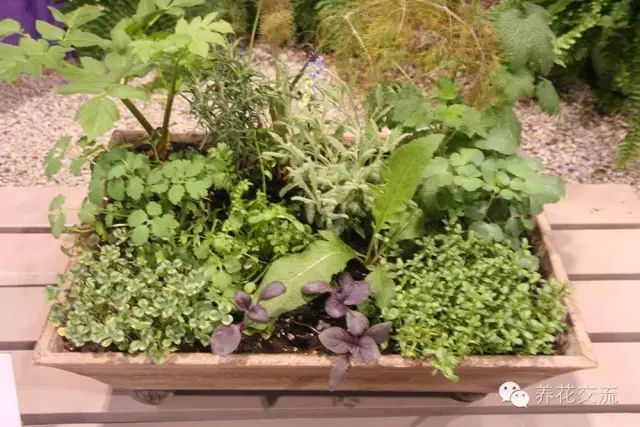
Nowadays many Western herbs have become new ingredients in some of our country's restaurants. Whether Chinese or Western herbs, they are all very easy to grow, suitable for pots, and increasingly popular.
In addition, because most are small plants, you might as well plant several kinds in one pot, so you can pick several kinds for use at any time.
Most herbs are grown for their leaves, but some are grown for their seeds, flowers, berries, stems, roots, or even bark. Not every kind will suit your taste; some you have to try to know, and some you need to get used to gradually.
1. Nine-layer pagoda (basil):
This herb plant that Italians love, nine-layer pagoda, has become the most popular herb plant in recent years, suitable for dishes with tomatoes.
It is called nine-layer pagoda because this plant can keep growing upward, like layer upon layer of a pagoda.
It can reach more than two chi in height. If you pinch it off in the middle during the growing period, it will grow more side branches instead of only growing taller. But do not over-encourage growth on the same plant, because then the flavor of the leaves becomes weak. At the same time, pinch off any flowers as soon as you see them, because after flowering it will only produce seeds and the leaves will be fewer.
Nine-layer pagoda is an annual plant in cold zones; in the north you can plant seeds indoors in winter and transplant them outdoors after there is no danger of frost damage.
In hotter areas, use more compost soil, bark chips and the like on the soil surface to keep the soil surface moist.
If you like to eat fresh basil, you can scatter seeds once every four weeks. Nine-layer pagoda is suitable for both ground planting and pot planting. The planting location needs full sunlight, and the soil drainage must be good.
There are many kinds of nine-layer pagoda, and the flavor differs accordingly. The common green-leaved kind is relatively sweet; one with a lemon flavor is called lemon basil;
the Thai variety Thai basil, and also a purple kind, purple basil, whose flavor lacks the usual sweetness. You have to try these to appreciate them.
2. Catnip
Catnip is perennial and somewhat like ordinary mint, generally relatively short. It has green heart-shaped leaves and small purple flowers.
Mints are all very vigorous and need almost no care at all. But they need full sunlight; to stop the branches from growing too long, you can pinch off overly long branches from time to time.
Besides being used as a seasoning, the dried leaves can also be brewed as tea.
3. Cumin seed (sweet fennel):
Fennel is perennial and can grow three to four chi tall, with leaves as fine as threads. For harvest, the stems before flowering are best.
Both the stems and leaves have a fennel flavor; generally people eat the white base of the stem, usually sliced thinly, or used in salads and as a side dish. The seeds are also useful, when cooking or as a topping for cheese.
Sowing seeds on the soil surface in spring germinates very easily; because the plant is tall, plant one every one and a half chi. When it grows to one and a half chi, set up a bamboo pole for support.
4. Lavender:
Lavender is a perennial plant; even if it were not an herb plant, it is a popular garden flower. The whole plant is fragrant, and the pale purple flowers also have ornamental value.
Lavender is very easy to grow and is not fussy about soil, but it likes slightly alkaline soil. It also needs full sunlight.
Lavender is generally very short; to keep the lavender's shape beautiful, it must be pruned in early spring.
Generally lavender flowers and leaves are dried and used to scent clothes or as a fragrant oil.
4. Oregano
Oregano is also often used on pizza, and is also called pizza herb. It is a cold-hardy perennial plant. It smells like thyme.
It is perennial, very cold-hardy, and makes few demands on soil. To make the leaves lush, it is best to remove the flowers when it blooms, and when the branches grow too long you can also pinch them.
Every three or four years you can dig it up and divide it, otherwise the roots become too crowded, and the branches also become too thick, which also affects the tender greenness of the leaves. Generally the tender leaves are eaten, and you can also collect excess leaves and dry them for storage. Besides being used to season pizza, it is also suitable when cooking lamb racks or steak.
5. Italian parsley
Italian parsley is used similarly to our country's cilantro, but the flavor is different. In the past it was the most common of all herbs.
Because its leaf shape is attractive and its flavor unique, it is suitable both for garnishing dishes and for seasoning. It can be used in soup, with salad, in sauces, and can also be dried for eating, but then the flavor is weaker.
Italian parsley is annual in cold zones; although it can overwinter, it will die after scattering seed, so it can be called biennial, but you harvest only once. In warm temperate zones it can overwinter.
It can be sown; the seeds are best soaked in water overnight first, to germinate more easily. It is very suitable for pots, and can also be planted at the edge of a flower bed, because the plant looks very nice.
A kind with curled leaves is even more popular. When planting it needs full sunlight, but in the tropics it can have some shade; the soil surface must stay moist and not too hot, and you can add a little topsoil. The soil drainage must be good.
When harvesting, cut from the base of the outer part of the plant, so that the inner stems continue to grow. The first harvest will stimulate the plant to become denser.
6. Mint
Mint is a common seasoning, mostly used in desserts, for brewing tea, and also for meat dishes. In addition, it is also used in large amounts in industry; mint oil can be used medicinally or for washing.
Mint is perennial and very vigorous, spreading very easily, so some people plant it in a pot and then plant the pot in the ground, to control the spread of its roots.
To stop leggy branches, it is best to pinch the branches from the middle from time to time, making it denser with more branches and leaves. At the same time, cut off any flowers as soon as you see them, so that it does not stop growing after setting seed.
7. Rosemary
Rosemary is perennial, but only suitable for warm regions. In cold zones it must be moved indoors in winter, or protected with topsoil.
It is generally suitable for pots; when planted in the ground it needs sunlight and well-drained soil, with more compost soil, or even better organic soil. To stimulate more leaf growth, pinch off overly long branches from the middle from time to time.
Rosemary roots very easily from branch cuttings. Following the usual cutting method, pinch off the lower leaves and plant into moist potting soil; it roots very easily. Sowing rarely germinates; generally the germination rate is less than ten percent. Before planting, it is best to soak the seeds in water for 8-12 hours to help germination.
Rosemary is suitable as a seasoning when roasting meat and barbecuing, and can also be used when plating meat dishes.
8. Sage
Sage is a common flower; as an herb it is generally perennial, with thick gray-blue leaves and a strong fragrance, very suitable as a seasoning and stuffing when roasting pork, chicken, and grilling fish.
When growing sage it germinates very easily from seed, and cuttings also root very easily. Before flowering it is best to pick leaves for use; after flowering cut off the flower heads to encourage more branches and leaves.
After every three or four years the stems become woody, and you should replant new plants.
9. Tarragon
Tarragon leaves have a special fragrance, suitable for curing meat, or for making sauces, and can also be used in salad. Both the leaves and the stem tips can be used, but it is not suitable for drying.
Tarragon is perennial; when planting it needs sunlight, but it can also take partial shade. Every three or four years it must be replanted, otherwise the branches become woody.
10. Thyme
Thyme is a very popular aromatic herb plant; it can be used for seafood dishes, roast chicken, or braised beef. Its oil can also be made into perfume or used medicinally.
Thyme is a perennial low-growing plant; its leaves are very small and gray-green, and its small purple flowers are very small. It is often grown as a creeping ground cover, and gives off fragrance at a light touch.
Thyme is very suitable as a ground cover plant, or for planting along the edge of a flower bed, and in rock gardens.
11. Savory
Savory is divided into two kinds: summer savory and winter savory.
Ordinary savory is an annual that fears cold, reaching at most one and a half chi. Besides ground planting it is also very suitable for pots. Its leaves are fine and long, somewhat like rosemary, with a pungent, strongly aromatic flavor.
When used as a seasoning it has a somewhat spicy taste. If you like strong-flavored food, it is suitable when cooking meat and vegetables. Winter savory does not fear cold, but its flavor lacks the fragrance of the summer variety.
Savory germinates very easily; in early spring during the frost-free period you can sow the seeds directly into the soil. When planting it needs a sunny location; it grows very quickly and sometimes needs support.
The perennial varieties can tolerate minus 10 degrees weather, and generally can last about four or five years.
For more professional agricultural science and technology information, please scan the QR code to follow WeChat: NongXunNET

Please cite the source when reprinting.