100 Succulent Insights: Do You Agree?
1: Getting into succulents is actually a process, a relatively slow process from common varieties to expensive ones, so it is not advisable to go straight for the expensive ones as soon as you start. Try growing some common ones first. Once you fall into the succulent pit, you won't want to say anything anymore! 2: No matter what you do...
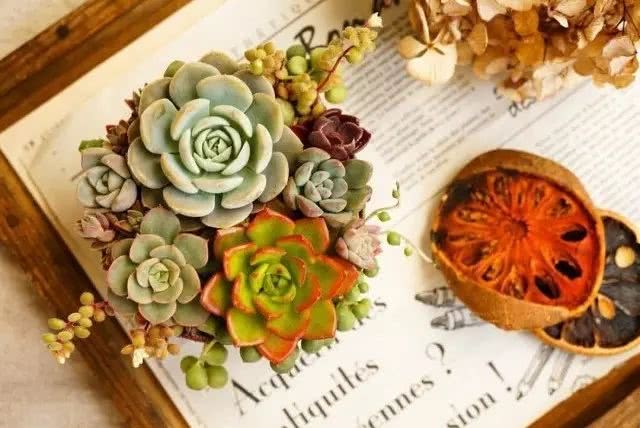
1: Getting into succulents is actually a process, a relatively slow process from common varieties to expensive ones, so it is not advisable to go straight for the expensive ones as soon as you start. Try growing some common ones first. Once you fall into the succulent pit, you won't want to say anything anymore!
2: No matter what you do, whether growing succulents or raising a husky, it is a learning process. This learning process can be gained through websites, exchanging with fellow succulent lovers, self-study and other channels, constantly enriching yourself. Suddenly you find that you have learned quite a lot about plant cultivation and photography techniques.
3: Look further ahead, look around more, go out and walk around more, and perhaps you will discover something when you least expect it. Stimulate your own creativity. In fact, in Uncle's view, creativity runs through the entire process of growing succulents. Uncle himself also very much likes creativity and has especially many weird ideas.
4: Succulent lovers can attend some succulent exchange gatherings. You will find that there are many experts there, and you will gain a lot. On the road of growing succulents, you will walk more steadily.
5: No matter what kind of succulent it is, please respect its life. Some people, when they have grown some well, have the desire to share occupy their entire heart and constantly share the good succulents. When some are not grown well, they just let them decline, paying no attention at all. A true succulent lover will not abandon any single succulent. Those ordinary ones will one day also bring you surprises!
6: Many succulents are common varieties, easy to grow, economical and affordable. Beginners can start by trying these succulents as a foundation for the future.
7: Many succulents grow rapidly and can fill a pot in a relatively short time. Succulent lovers who want to experience the beauty of a full pot may want to give them a try.
8: Many succulents can show layered, three-dimensional beauty in space. Friends who want to arrange their balcony reasonably may want to give them a try.
9: Many succulents can endure harsh outdoor environments. Succulent lovers who want to leave them alone and wait for surprises can give them a try.
10: Most succulents of the Crassulaceae family can undergo all sorts of transformations within a year. Of course, the extent of the changes depends entirely on the knowledge you have learned yourself.
11: If you are truly ready to enter the pit, then find a suitable season before starting. Do not jump into the pit in summer. Spring and autumn are good seasons to jump in. Choosing the right season is very important.
12: If you feel that the four seasons pass too quickly, then pay attention to the 24 solar terms (each solar term has three hou, and each hou has five days). The changes in them are truly wonderful, and the changes in succulents are wonderful too.
13: I hope you will pay attention to the weather. Your succulents cannot withstand several rounds of bad weather torment. Clear skies are good weather. Rainy days also bring surprises.
14: For extreme weather, you must prepare in advance. In such weather, please promptly do the corresponding preparatory work so that the succulents can pass through safely.
15: If you are ready to enter the pit, then when choosing succulents, you must look carefully before buying. Although the internet is quite developed, I still hope you will look carefully before buying. Try to choose a better place. It is best if you can go to a greenhouse and choose freely!
16: Succulent lovers may want to exchange and grow them, that is, adopt succulents. In this way, not only will you have your own varieties, but you will also continuously add many varieties you did not have. The premise is that you must learn to share.
17: If a fellow succulent lover is doing leaf propagation, you may as well take the initiative to ask for one. After all, everyone likes them and will not refuse you.
18: You can often go stroll around succulent greenhouses. After all, the people there are a bit more professional.
19: If group members organize a visit to a greenhouse, then go along and see the world. Bring a little less money. But in this way you can get quite a few at a cheaper price.
20: Try hard to get to know the masters in the same city. Then become friends with them. See whether they can give you a little, but some people who love succulents will not give you any.
21: This is what I heard from a master: beginners use red clay, advanced growers switch to black square pots, and fanatics build greenhouses. I feel this deeply!
22: Growing succulents is not just about what soil you use, not just about what fertilizer you use, not just about what water you use. The most important thing is to put your heart into it!
23: If you buy a large number of high-end pots right from the start, all kinds of them, then it is very unnecessary. But if you really are in the pit very deep, then there is no way.
24: It does not matter whether red clay pots have holes or not. I would rather recommend using holeless international pots, which are quite suitable for growing succulents.
25: There is no need for especially expensive flower vessels. After all, what we are growing is succulents. Uncle can use just about anything as a flower pot. Creativity is very important.
26: Choose whatever kind you like. Uncle likes full pots, so he chose many succulents that fill pots, and the sense of achievement is very strong.
27: Plastic pots and ceramic pots are both very common, and their prices are all cheap. They are good choices for entering the pit.
28: The flower pots for growing succulents are too varied. Make full use of the things around you. There is only what you have not thought of, not what is unsuitable. Anything can be used.
29: The pot is not the most important thing. What is important is your mood.
30: Seedling trays and plug trays should also be prepared in several. Leaf propagation seedlings are neat and uniform, so they can be distinguished well.
31: A broken pot can also create a very good effect, but you must remember, creativity!
32: The materials that can be used as succulent planting medium are likewise very many. Sourcing locally and saving costs is very necessary, and also the most convenient.
33: The simplest soil mix is peat plus sand and gravel plus garden soil. It is very suitable for succulents.
34: Buying ready-made soil is indeed simpler. But the price is really quite expensive, and when the quantity increases it is also a considerable expense. Better to choose to mix your own soil.
35: Do not believe in all kinds of fancy, miraculous soils. So many things mixed together and advertised as "specially formulated perfect" soil.
36: A very simple material is coal cinders + leaf mold + perlite. I have also used it and found it very good to use. For the ratio, use one third of each.
37: As for materials, try not to demand how good they are. As long as they can be used, that is enough.
38: Even if it is only for aesthetics, top dressing is still a must. You must remember this.
39: Odd and strange things can be used, but there are also many that cannot, such as tea leaves and so on.
40: Putting something at the bottom of the pot is also necessary. Ceramsite is good and comes in many specifications, but comparatively speaking, are the limestone and stones seen everywhere on construction sites not even cheaper?
41: After putting in the bottom layer, remember to add a layer of fiber cloth. To prevent soil and water loss, it is really very useful. Very simple.
42: No matter what kind of succulent it is, after buying it back you must trim the roots. How to trim
1: Clean off the soil originally attached to the roots.
2: Observe whether there are signs of pests. If there are pests, soak it in Huahuashen.
3: Remove the shriveled and overly long roots.
4: Trim to about 2-3 cm of root length and that is enough.
43: As for the saying of wet soil below and dry soil above, Uncle has not verified it. Anyway, Uncle always waters thoroughly when potting.
44: I absolutely believe in the idea of "settling water." Even though succulents are different from other plants. At least in my attempts I have not found anything improper.
45: After trimming the roots, do not rush to pot the succulents. You can place them in a cool place to rest for a period of time. One night may feel long. One or two hours can always be waited, right? Basically, those sent by express delivery have all gone through shade drying.
46: After potting, they cannot be exposed to the sun immediately. Do not rush to sun the succulents. Better to wait a while. There is no rush to put them out in the sun for just a day or two.
47: About acclimating to the pot: after potting, for a period of time the lower end of the succulent will have leaves wither. If the withering is gradual, then it is an intuitive sign of acclimating to the pot. Wait until the leaves spread out. The growth point recovers vitality. Then the succulent has adapted. This is a process.
48: The process of acclimating to the pot is the process of the succulent taking root and growing. Everyone can observe it. It is very peculiar.
49: About repotting. Spring and autumn are both very suitable. In winter, absolutely do not repot. In summer, even more so, no need to say. Everyone just remember this.
50: After potting, if you find that the plant is leaning, you can completely use a bamboo skewer to support it. Or it means the succulent was buried too shallowly. Please redo it. Move your little hands.
51: There are roughly more than 10,000 kinds of succulents in the world, but there are not 10,000 ways of caring for them. Although everyone has their own growing methods, they are basically much the same.
52: Be sure not to get tangled up over varieties. Appearance, however, is worth pursuing. With a good foundation, then it definitely will not go wrong.
53: I absolutely believe in the saying that southern oranges become bitter when grown in the north. The same kind of succulent, in different places and different environments, will definitely have a different condition. Even when it colors up, it will still be different.
54: When growing succulents, you absolutely must not be impatient. This is a process. What Uncle enjoys is exactly this process. Acclimating to the pot is a process. Transformation is a process. Flowering is a process. Pollination and seed setting is a process. You must never try to pull up seedlings to help them grow. Just wait slowly.
55: One sun, two water, three ventilation. This is what I have said, and it is also the three key elements for growing succulents well. Slowly understand it.
56: About sun: it also depends on the weather, otherwise it will really harm the succulents.
57: In winter, all-day sun without shade. The succulents perform quite well. The colors they should develop can fully develop as well. This can continue all the way into spring. When the spring cold is still sharp, the colors remain bright and beautiful.
58: In summer, it is necessary to avoid the afternoon sun. So for Crassulaceae, shade in summer is absolutely necessary. For shade netting, a three-pin one is recommended and that is enough. In this way it continues into autumn, and even the autumn tiger is not to be feared, right?
59: As for small seedlings, just put them to one side. No need to manage them specially. Ventilation, sunlight, moisture, as long as they are satisfied, that is fine.
60: Watering takes ten years of skill? Is it really that formidable? Actually, it is not. The simplest is to water thoroughly after the soil dries out. Can everyone do that? If you can do it, you are already halfway to success.
61: The temperature in a greenhouse is very good. As long as watering is managed well, that is enough. But at home, you need to pay attention in this respect.
62: In the peak of summer, there is actually no need. I also did not stop watering. But you must pay attention to the amount.
63: Now about rainwater. It is absolutely a good thing, natural acidic water.
64: Now about making your own acidic water. Acetic acid, hydrochloric acid, isn't that troublesome? This kind of thing is only studied by senior tycoon-level divine figures. I do not recommend it. I do not insist on principles. Anything is fine.
65: Tap water is convenient enough, right? Choose clear weather, fill a bucket in the morning and put it in the sun to sun, let it sit until the afternoon, and the water quality for watering is completely achieved.
66: Ventilation is a very important and also absolutely necessary condition for growing succulents, bar none.
67: As for ventilation, then it is fine. Especially for growing on a balcony.
68: If there is no window, then you can only add a fan. That should always be okay.
69: Succulents grown from spring to summer tend to stretch, but after that they can become old stems. So will you still be afraid of succulents stretching?
69: From summer to autumn is a great time to fertilize. In order to prepare for winter, go all out.
70: From autumn to winter, by the time people get here, basically everyone has succulents worth showing off and photographing, right? Take photos as souvenirs and look at the changes over the past half year. You will be moved.
71: From winter to spring, all things grow. Full of vitality. A new round of leaf plucking work must be put on the agenda. You cannot be soft-hearted. But it also must be done with restraint.
72: About fertilizing, it has always been better to keep it natural. So just let the succulents grow on their own, but it is also necessary.
73: For mixed materials, you can also add a little of other things, so that nutrition is also kept up.
74: About leaf propagation, in spring and autumn there is no question about plucking leaves. Summer and winter are not that you cannot pluck, it is just unsuitable and not recommended.
75: How to take leaves, just twist left and right and it is done. If the leaves are soft, it means lack of water. Water thoroughly, and taking leaves the next day will be much smoother.
76: When taking leaves for leaf propagation, you must choose healthy and plump leaves. If you see some that are not healthy, better give up on them.
77: As for whether leaf propagation should be laid flat, or inserted obliquely and shallowly into the soil? Both are okay. Uncle has not researched this. Just put them down and let them do their own thing.
78: For the leaf propagation seedling bed, use a plastic box, the kind with many small flower pots. Simple to use.
79: Plants all have individuality, and so does each leaf. Some first grow roots and then grow seedlings, and some first grow seedlings and then grow roots. No need to worry, just wait.
80: Several special situations.
1: That is, only roots grow for a really, really long time, with only roots.
2: That is, only leaves grow and there are no roots. They will grow like this.
3: Roots and leaves together. These are all normal.
81: After leaf propagation seedlings enter an active growth period. The mother leaf will wither, shrink and fall off. At this time the leaf propagation seedlings become independent. You can help the old leaf fall off.
82: Secondary leaf propagation is completely feasible. When the leaf propagation seedling grows up and the mother leaf is still plump and healthy, you can completely remove the leaf propagation seedling. The leaf can continue to be left to propagate.
83: Beheading very easily creates surprises. After the late spring cold and the autumn tiger, it is a good time for beheading. Fill the pot!
84: For beheading, you must reasonably choose the cutting position (the string position), then peel off a ring of leaves. It is convenient for cutting (stringing). The movement must be delicate and steady.
85: After beheading, the mother plant must be kept cool and ventilated, so that the wound will quickly air-dry and heal. The beheaded seedling also needs to be left still to heal the wound. Only after the wound heals can it be potted to grow roots.
86: About rooting. After the wound heals, if placed on the planting medium, within a period of time it will naturally grow roots. For healthy plants, the cell division speed of the wound is very fast.
87: Air rooting is more intuitive. You can observe the entire rooting process.
88: As for the environment needed for rooting, just place it in a bright, indirectly lit and ventilated environment. As for what a bright, indirectly lit environment is, under dappled tree shadows, at a desk under blinds.
89: As for sowing, because the conditions required are really quite many, and I feel this is another world, many people like to sow their own seeds. Uncle has tried it, but gave up.
90: Actually, caring for succulents is very simple. Put some heart into it.
91: Start with common varieties and keep at it, and you will definitely have different rewards.
92: Sunlight, rain and dew, and air are all indispensable. You must remember this.
93: Do not love them too excessively. Although they are very cute and very adorable, excess will also harm them.
94: No matter what, you must grow them well. You cannot abandon or give up on any single one.
95: Sharing is very important. Whether it is leaves or pots, they can all be shared.
96: What you enjoy is the process of growing them. Once you integrate yourself into this process, you are fulfilled.
97: When growing succulents, adjust yourself well too. Give yourself a little more space and a little more happiness.
98: Take the time to appreciate every succulent. What nature gives it is a different individuality.
99: After reading these, Uncle wants to tell you, this is a pit, a deep pit. Remember it!
100: Fellow succulent lovers, do you have anything to add? You can exchange thoughts together in the comments!
For more professional agricultural science and technology information, please scan the QR code to follow WeChat: NongXunNET

Please indicate the source when reposting.