A Grand Roundup of the Strange and Wonderful Varieties Among Succulents
Intro: The succulent "light bulb" is a succulent plant belonging to the genus Conophytum in the family Aizoaceae. The skin is usually bright green and semi-transparent, goes dormant in summer, and turns red in environments with ample light. The flowers are pale purplish-red with white centers, blooming in spring or autumn. The flowers usually open during the daytime in clear weather and close at night; if the growing environment lacks sufficient light
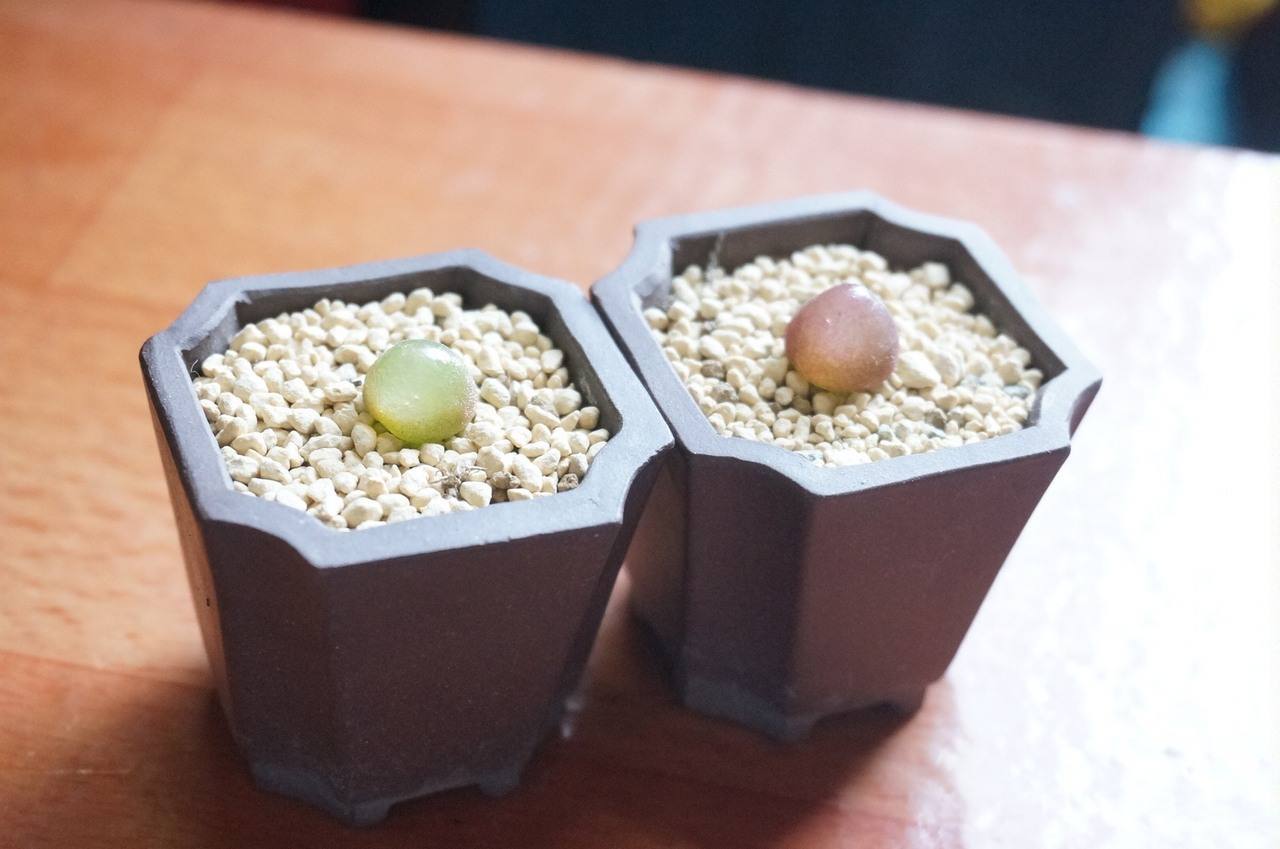
The succulent "light bulb" is a succulent plant belonging to the genus Conophytum in the family Aizoaceae. The skin is usually bright green and semi-transparent, goes dormant in summer, and turns red in environments with ample light. The flowers are pale purplish-red with white centers, blooming in spring or autumn.
The flowers usually open during the daytime in clear weather and close at night; if the growing environment lacks sufficient light or the weather is cloudy and rainy, it is difficult for them to bloom. Being semi-transparent, it can be seen under direct light that it is semi-translucent, giving off a faint reddish sheen; because the plant is crystal clear and looks sparkling, it resembles a light bulb, which is how it got its name, and because its shape closely resembles Japan's Mount Fuji, it also has the alias "Mount Fuji." It is a succulent plant with no stem, generally single-headed, though occasionally double-headed, and even 3-headed or 4-headed clustered plants occur. The fleshy leaves are hemispherical, with a single head 2.5-4 cm in diameter or larger.
Light Bulb
The skin is bright green and semi-transparent; during the summer dormancy, in environments with ample light, the skin turns red. The flowers are large, pale purplish-red with white centers, blooming in spring or autumn. The flowers usually open during the daytime in clear weather and close at night; if the growing environment lacks sufficient light or the weather is cloudy and rainy, it is difficult for them to bloom. Being semi-transparent, it can be seen under direct light that it is semi-translucent, giving off a faint reddish sheen; because the plant is crystal clear and looks sparkling, it resembles a light bulb, which is how it got its name, and because its shape closely resembles Japan's Mount Fuji, it also has the alias "Mount Fuji." It is a succulent plant with no stem, generally single-headed, though occasionally double-headed, and even 3-headed or 4-headed clustered plants occur. The fleshy leaves are hemispherical, with a single head 2.5-4 cm in diameter or larger. The light bulb is a very charming small succulent; its sparkling, smooth, round, and crystal-clear body is like the colored bulbs twinkling during a holiday (which is also how it got the name "light bulb"), and also like a bright, smooth pearl, fresh and natural yet noble and elegant, and it can even produce delicate, beautiful flowers. It is suitable for growing in a small pot, to be admired in detail in leisure time and to appreciate its unique charm.
A blooming light bulb
The light bulb is native to South Africa, and its growth habits are quite unusual. Each year the plant begins to grow in autumn, and in winter and spring the plant develops a new plant body inside itself; generally only 1 new head can be formed inside each plant, though occasionally it can split, turning from 1 head into two. As the plant grows, the new head inside gradually swells, while the old leaves gradually thin and shrivel, wrapping around the outside of the new head like a layer of kraft paper. In the hot summer the light bulb enters dormancy; although the dried old leaves wrapped outside look unattractive, they can block the intense summer ultraviolet rays from harming the young plant and absorb moisture from the humid air, playing an important protective role for the new head, so they should not be peeled off casually. By autumn the new head grows further, and the kraft-paper-like old leaves gradually shed, restoring its crystal-clear state.
Light Bulb
The light bulb is commonly propagated by sowing, carried out in autumn. Because the seeds are tiny, after sowing they must be covered with a piece of glass, and when watering, the "soaking" method should be used: place the pot in a basin of water so that water slowly seeps up through the drainage holes at the bottom of the pot to moisten the soil; the same method is used for watering during the seedling stage. Newly emerged light bulbs often topple over crookedly, with their roots also exposed above the soil; a toothpick, tweezers, or other small tool can be used to cover the exposed roots with soil and set the fallen plants upright.
For more professional agricultural science and technology news, please scan the QR code to follow WeChat: NongXunNET

Please indicate the source when reposting.