5 Flowers Even Easier to Grow Than Pothos, Root Instantly in Soil, Turn Your Balcony into a Sea of Flowers
Many flowers and plants are actually very easy to care for, no harder than pothos or spider plants. No matter whether your balcony gets good light or not, plant these few kinds of flowers and plants and they will fill a pot within 1 month, blooming continuously year-round. Perfect for growing a pot of your own! "Balcony flower growing" - nasturtium...
Many flowers and plants are actually very easy to care for, no harder than pothos or spider plants. No matter whether your balcony gets good light or not, plant these few kinds of flowers and plants and they will fill a pot within 1 month, blooming continuously year-round. Perfect for growing a pot of your own!
"
Balcony flower growing
"
-Nasturtium-
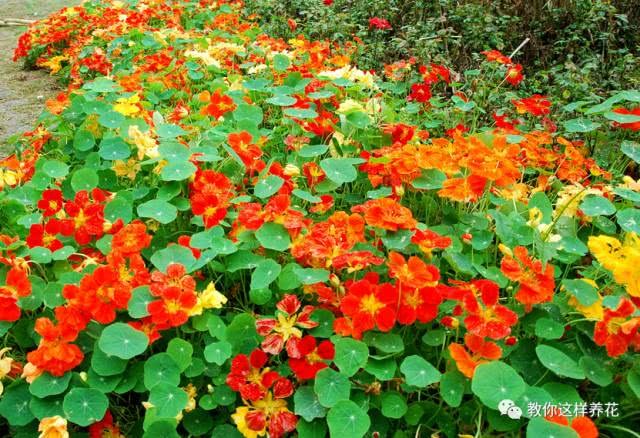
The leaves of nasturtium are shaped like bowl lotus, and when the creamy yellow flowers bloom, they look like a swarm of butterflies dancing, offering a unique charm. Compared with the lotus that rises unstained from the mud, nasturtium feels more approachable. Under suitable environmental conditions, nasturtium can bloom all year round. A single flower can last 8-9 days, and the whole plant can open dozens of flowers at the same time, with a fragrant scent and brilliant colors, earning people's affection.
Nasturtium likes moisture but does not tolerate waterlogging, so water must not accumulate. In spring and autumn, water once every 2-3 days; in summer, water once a day. Reduce watering frequency during the bud stage, and control watering in winter as well.
Nasturtium can be sown at this time. Generally speaking, spring sowing has a short cycle, blooms somewhat less, and sets less seed, making it suitable for climbing. Autumn sowing has a long cycle, blooms more, and sets more seeds, making it suitable for hanging.
Try to choose fresh seeds, as the germination rate is relatively higher.
Prepare water at 40-45 degrees C, soak the seeds in the water for one day, gently peel off the outer skin, and use a paper towel to germinate them.
After about 2-7 days, the sprout tip emerges, then transfer to potting soil
It is recommended to use disposable plastic cups for seedling raising, so you can observe the root condition
When the roots have basically filled the cup, they can be transplanted and planted in place
When there are 4 true leaves, pinch the growing tip for the first time, removing 2 leaves and keeping 2. If branching is good, only one more pinching is needed. Some varieties have weak branching ability and need multiple pinchings to achieve the ideal plant shape. You can wait until the side branches grow 4 true leaves, then pinch again.
Nasturtium has a relatively low demand for nitrogen fertilizer during growth. To make it bloom earlier and more abundantly, during the growing period use diluted monopotassium phosphate solution every 10 days to drench the roots or spray the leaves, or alternate between the two.
After blooming, if you are not saving seeds, promptly remove spent flowers to help new flower buds form.
When planted outdoors in warm spring, it easily sets seed. Indoor care requires hand pollination. Hand pollination is best done on a sunny morning. When the stamens release pollen and the pistil takes on a "person" shape, dab the pollen and apply it to the pistil. Both self-pollination and cross-pollination work. After pollination, the flower will quickly wither. When the flower stalk bends into a spiral shape, it indicates successful pollination.
Mature seeds will fall off on their own. At this point, dry the seeds in the sun, then store them in a cool place.
(Sichuan Zhongjiang gardening enthusiast forum chenminyang197)
-Oxalis-
Oxalis takes up little space, is easy to grow, and blooms readily. Even better, from sowing to blooming generally takes only one month. If several varieties are planted together, they can bloom without interruption, letting you enjoy flowers for a whole year!
Oxalis is a bulb plant and is relatively drought-tolerant, but it likes a moist environment. During the growing period, keep the potting soil moist, following the principle of "do not water until dry, and when watering, water thoroughly." In the high-temperature summer season, the plant enters dormancy; at this time, mist with water and just keep the potting soil slightly moist. When winter temperatures drop below 10 degrees C, water according to the rule of preferring dry over wet to prevent bulb rot.
Most gardening enthusiasts want so many flowers that the leaves are hidden. To achieve a pot-busting effect, you need to calculate how many oxalis bulbs are appropriate to plant in one pot. Different varieties have different planting densities. Generally speaking, a pot with a 10 cm diameter can hold 1-3 bulbs, a pot with a 15 cm diameter can hold 3-5 bulbs, and for sesame-sized bulbs, 10-20 can be planted per pot.
-White Sand Cactus-
White sand cactus is also called small cactus whip, golden bull palm, and gourd fist. It is a cactus family plant and is one of the most common cacti in gardening enthusiasts' homes. Its stems are short and covered with short spines, a bit prickly to the touch. It very easily produces offsets, and these offsets, once broken off and thrown into soil, quickly sprout, which is why the white sand cacti we see grow in clusters.
Compared with the rat-tail cactus, the white sand cactus is somewhat shorter, and the two look a bit alike
In spring and summer, the white sand cactus produces red flowers, very beautiful. If given low-temperature treatment in winter, it will bloom even more brilliantly. This is also why some gardening enthusiasts' white sand cacti do not bloom after being grown for many years.
Care is very simple. Basically, just water after the soil has dried through. Heat and cold tolerance are both good, and there is no problem even below 0 degrees C. In rural areas, many white sand cacti can be seen. This flower almost never dies, and after being grown for many years it can continue to multiply through offsets. However, whether it blooms seems to have a bit of a luck factor, but giving more light in spring and summer, watering less, and applying some fertilizer appropriately helps it bloom.
-Petunia-
Petunia's flowering period can run from April to November, and with suitable climate or greenhouse cultivation it can bloom in all four seasons. Petunia care is relatively simple, and the flowers are very beautiful. When the seedlings are small, pinch more to form a ball or a flower cascade, very lovely.
Petunia also has trailing varieties, such as Easy Wave, Snow Avalanche, and so on. Trailing varieties are simply breathtaking!
Among petunias, double-flowered varieties have overlapping petals and brilliant colors. After growing up, the flower density is especially high, even more beautiful than ordinary petunias.
-Lobelia-
Lobelia is also called jade butterfly flower. It generally blooms in spring and autumn. When in bloom, the flowers cover the entire plant and form a round shape, elegant and graceful. As long as lobelia is given some sunlight, it will very diligently and hard work at blooming for you to see. It does not have dazzling flowers, nor a legendary story, but when it blooms into a flower ball, you will never again overlook this blue beauty.
Lobelia is a long-day plant and needs to be guaranteed a relatively long period of light. In winter and early spring when daylight hours are shorter, lobelia needs supplemental artificial light to meet the lighting conditions for blooming and make it bloom earlier.
These care tips for clivia
Did you know?
After reading, share it with gardening enthusiasts who need it~
For more professional agricultural science and technology information, please scan the QR code to follow WeChat: NongXunNET

Please indicate the source when reprinting.