Are you worried that your flowers are slow to bloom? Actually, you don't understand what flowers need.
People keep asking about their own flowers, saying that by all indicators they are doing everything right, yet the flowers just won't bloom. In fact, flowers and plants have different growth habits, and their blooming times and care methods all differ. Today let's talk about the pre-bloom care and blooming periods of these common flowers...
People keep asking about their own flowers, saying that by all indicators they are doing everything right, yet the flowers just won't bloom. In fact, flowers and plants have different growth habits, and their blooming times and care methods all differ. Today let's talk about the pre-bloom care and blooming periods of these common flowers!
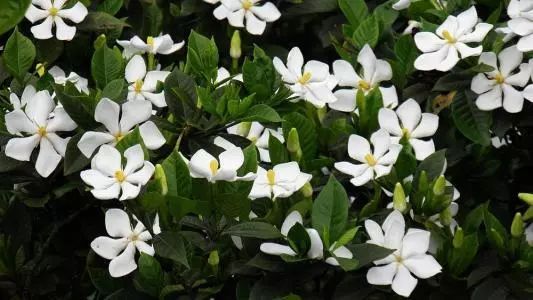
1. Gardenia
The gardenia's blooming period is March to July. It needs to be moved to a place with good light, but the light should not be too strong or too weak. Gardenias like acidic soil. When watering normally, you can add ferrous sulfate to improve the soil, and you can also regularly apply 10% alum fertilizer water as a top dressing.
Fertilizing: Gardenias like fertilizer. During the growing season, apply decomposed cake fertilizer as a top dressing, and apply phosphorus and potassium fertilizer before the blooming season. It is recommended to change the soil once every 1-2 years to maintain soil fertility.
2. Kalanchoe
The kalanchoe's blooming period is February to May. It must be grown in a place with sufficient light; insufficient or too weak light will affect blooming. During the blooming period, too much water easily causes leggy growth and flower drop.
Fertilizing: Kalanchoe likes fertilizer. During the growing season, nitrogen fertilizer can be applied to promote stem and leaf growth, and after blooming apply one more liquid fertilizer mainly containing nitrogen to help it recover. At other times, except for stopping application in summer, only nitrogen-phosphorus-potassium compound fertilizer should be applied. When fertilizing, do not get fertilizer on the leaves.
3. Rose
The rose's blooming period is April to September. Roses like light, so it is recommended to place them on a south-facing balcony or grow them outdoors. Roses bloom on the current year's new branches, so they need continuous pruning, cutting away some old branches to encourage new shoots. For large potted roses, pruning should be combined with repotting in early spring.
Fertilizing: During the growing season, appropriately supplement with some cake fertilizer, alum fertilizer water, etc. Before the blooming period, reduce nitrogen fertilizer and supplement phosphorus and potassium fertilizer.
4. Bowl Lotus
The bowl lotus's blooming period is June to September. Generally, a flowerpot with a diameter of 25cm and a depth of 30cm is best. Bowl lotus has very high light requirements.
Soil: Bowl lotus must be grown in soil. In summer, one bean cake can be inserted as a top dressing. If the pot soil and lotus leaves behave abnormally, pour out the pot water and continuously add fresh water to relieve it.
5. Hydrangea
The hydrangea's blooming period is June to August. It is recommended to repot in early spring, adding decomposed cake fertilizer as a base fertilizer when changing the soil, and supplementing phosphorus and potassium fertilizer before the blooming period.
Light:It should be placed in a place with good light but no direct sun exposure. Insufficient light easily affects flower bud differentiation, but light should not exceed10 hours. When placed indoors, fluorescent lamp illumination at night affects blooming.
6. Bougainvillea
The bougainvillea's blooming period is September to December, and in some places it can bloom year-round. It likes strong light, so place it in a spot with good light. In northern regions, it should be moved indoors for care when winter arrives. Before the blooming period arrives, control the amount of watering, and water appropriately again only when the leaves are slightly wilted. Too many or too dense branches will also affect nutrient distribution and prevent flower bud promotion. During care, regularly thin out overly dense and excess branches according to the plant's shape.
Fertilizing: During the growing season, apply nitrogen fertilizer once every 7-10 days. Stop applying nitrogen fertilizer during the blooming period and increase phosphorus and potassium fertilizer.
7. Jasmine
The jasmine's blooming period is May to August. Jasmine likes acidity. During the growing season, a 20% ferrous sulfate solution can be used to water it once every half month. A place with sufficient light is beneficial for flower bud sprouting.
Fertilizing: In summer, when it enters the full blooming period, apply a decomposed dilute liquid fertilizer once every 3-5 days; during the budding and blooming period, apply an organic fertilizer liquid mainly containing phosphorus once every 3 days, or spray 1-2 times with monopotassium phosphate.
8. Camellia
The camellia's blooming period is October to May. Be sure to pay attention to ventilation; poor ventilation will cause it not to bloom. The pot soil should not be too wet or too dry; keeping it moist is enough.
Fertilizing: In January, apply 1-2 times a mixed nitrogen-phosphorus fertilizer. Before blooming, do not apply nitrogen fertilizer, only phosphorus fertilizer.
Growing flowers mainly requires patience and care. If you tend them well, they will always reward you with beautiful flowers and a captivating fragrance!
For more professional agricultural science and technology information, please scan the QR code to follow WeChat: NongXunNET

Please indicate the source when reprinting.