This foliage plant needs no fussing over, and its "back" stays ramrod straight
Snake Plant, with thick, sword-straight leaves mottled in color, elegant and distinctive. With good care, even if you have no time and neglect it for 1 month, it still stands "ramrod straight" and can be enjoyed in all four seasons, making it a fine foliage plant for halls, guest rooms, and studies. ...
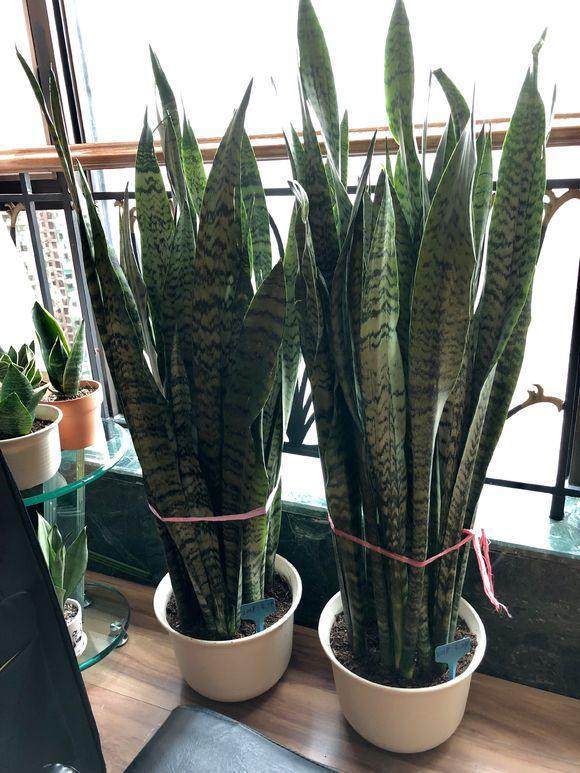
Snake Plant, with thick, sword-straight leaves mottled in color, elegant and distinctive. With good care, even if you have no time and neglect it for 1 month, it still stands "ramrod straight" and can be enjoyed in all four seasons, making it a fine foliage plant for halls, guest rooms, and studies.
So, if you want the Snake Plant to stand "ramrod straight" all year round, there are several key points to note in its care:
1. Control watering
The Snake Plant is a desert plant and can endure harsh environments and long drought. Watering too frequently makes the leaves turn white and the mottled color fade. From May to June it grows vigorously, so water generously to promote the growth and development of offsets. During the winter dormancy period, control watering and keep the soil dry; when watering, avoid pouring water into the leaf center, lest the leaf base rot and cause the leaves to bend and topple.
2. Ensure winter room temperature
The Snake Plant is not cold-hardy; its suitable growing temperature is 18-27°C, and it cannot tolerate low temperatures below 10°C. The wintering temperature must not be lower than 12°C; if too low, it often rots from the leaf base, causing the entire plant to die.
3. Provide ample light
The Snake Plant likes light and can withstand direct sunlight, so it should be placed on an unobstructed south-facing windowsill or in another sunny spot. It also tolerates shade, but not for too long, otherwise the leaves darken. Notably, if plants have been kept for a long time indoors in insufficient light and are suddenly moved into the sun, the leaves will get sunburned, so the Snake Plant should be acclimated gradually.
4. Do not over-fertilize
During the vigorous growth period, the Snake Plant can be fertilized once a month, with a small amount of fertilizer. Generally, a compound fertilizer is applied to keep the colors bright; alternatively, 3 holes of rotted chicken manure can be buried evenly in the soil at the edge of the pot, with 2-3 pellets per hole, not touching the roots. Stop fertilizing from November to March of the following year. If individual leaves age and turn yellow, prune them promptly.
5. Get the direction right for leaf cuttings
The Snake Plant is long and narrow like a sword, thick and succulent; after cutting it off, cut it crosswise into small sections of about 5 cm, and insert them upright into sand, and new roots and rhizomes can grow from the leaf sections and form new plants. But note that leaves also show polarity; if the leaf sections are inserted upside down, rooting and sprouting are difficult, so pay attention to the top-bottom direction during the operation to avoid reversing them.
For more professional agricultural science and technology information, please scan the QR code to follow WeChat: NongXunNET

Please indicate the source when reprinting.