One leaf represents wholehearted devotion, two leaves symbolize two hearts in perfect accord.
Introduction: Hoya belongs to the family Asclepiadaceae, subfamily Asclepiadoideae; it prefers shade and moisture, and its leaves are heart-shaped. It has a more common name, "Valentine hoya." In spring and autumn, sunlight should be given so it can absorb ultraviolet rays. The planting soil does not need to be too rich in fertilizer, but the soil must be kept loose. To retain moisture, some moss can be spread on top of the flowerpot. In summer, the sunlight exposure time should not be
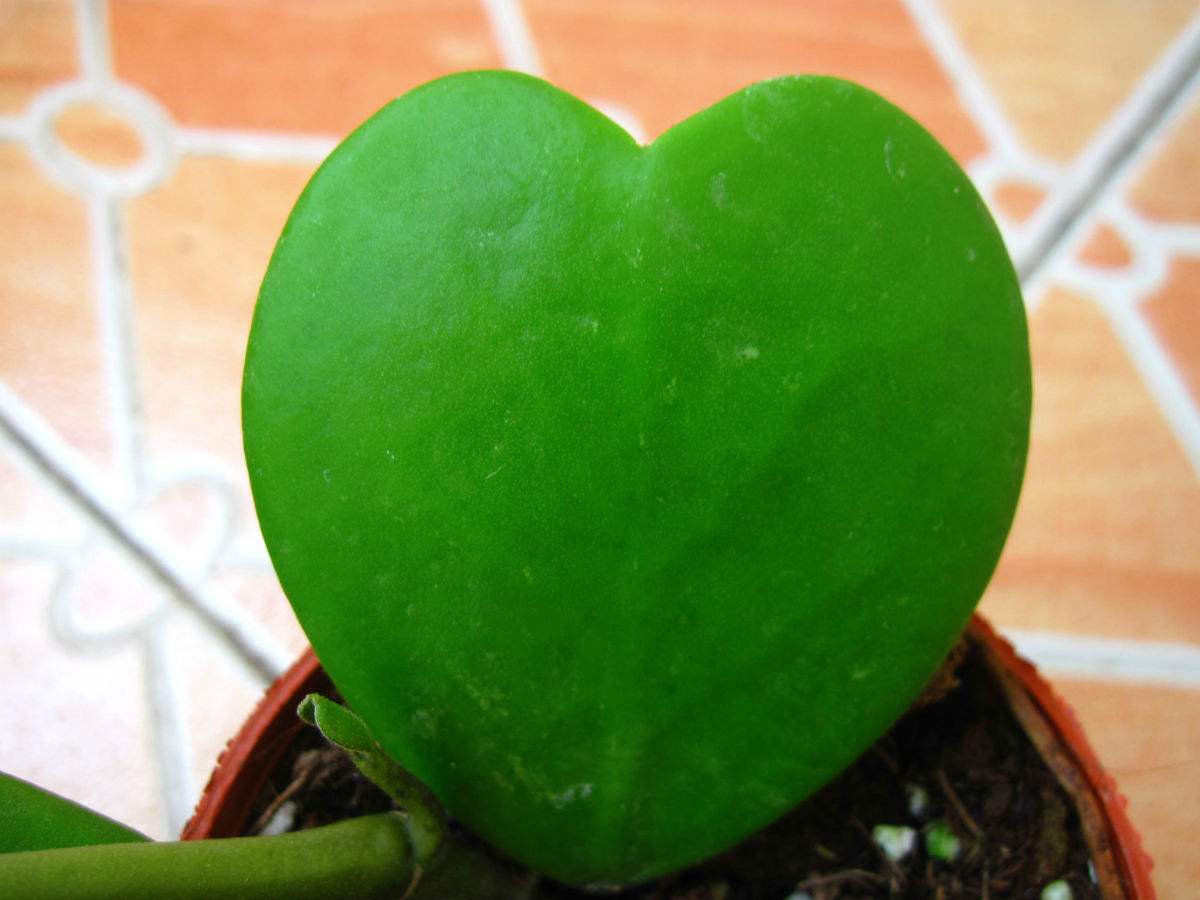
Hoya belongs to the family Asclepiadaceae, subfamily Asclepiadoideae, prefers shade and moisture, and is heart-shaped. It has a more common name, "Valentine hoya." In spring and autumn, sunlight should be given so it can absorb ultraviolet rays. The planting soil does not need to be too rich in fertilizer, but the soil must be kept loose. To retain moisture, some moss can be spread on top of the flowerpot. In summer, the sunlight exposure time should not be too long. If any rotten leaves are found, they should be cut off promptly. If the root rot is severe, the planting soil must be replaced, and the flowerpot should be replaced or disinfected before replanting. The new soil should be kept on the dry side and not too wet. Watering can continue only after new shoots grow. During the replacement period, it is best not to water; just use a sprayer to mist the leaf surfaces. It is best to place it in a sunny and ventilated place. The best sunlight position is direct sunlight for half a day in the morning or afternoon.
Heartleaf hoya
Description of characteristics - it is a subshrub. The stems and branches climb up to 2 m, yellow-gray. The petiole is thick and plump, 5 mm long, with 3-5 adaxial glands; the leaf blade is ovate to long-ovate, 5-9*4, 5-5 cm in size, thinly leathery when dry, glabrous on the adaxial side, with the midrib plump on the abaxial side, the base nearly heart-shaped, and the tip pointed to bluntly rounded; lateral veins 6-8 pairs. Axillary umbel-like inflorescence, hemispherical, with 30-50 flowers opening; peduncle 1-1, 5 cm long. Pedicel 2, 5-3 cm long. Sepals 2, 5 mm in size. Corolla white, rotate, plump, 1 cm in diameter; lobes obtusely triangular, 2, 5 mm in size. Outer angles of the corona acute. Flowering period May.
Heartleaf hoya
Heartleaf hoya is propagated mainly by cuttings. In the growing season, select healthy, plump vine stems, cut 2-3 nodes, and be careful to remove the white sap flowing from the wound. Let them dry for about 2 days, and after the wound is dry, insert them into vermiculite, akadama soil, or sand and other media with relatively low fertility. Place them in a bright place and keep the medium moist; they root very easily. Leaf cuttings can also be taken, but although they can root, it is very difficult for them to sprout and form a plant. It can also be propagated by layering, tissue culture, and sowing; the latter two methods are suitable for larger-scale propagation.
Heartleaf hoya
The flowers of heartleaf hoya are elegant in color, like wax handicrafts, and the thick leaves are like pieces of "heart," very unusual. It can be grown in pots and displayed on desks, stands, windowsills, balconies, and other places for appreciation. In addition to being grown in potting soil, it can also be grown by hydroponics, soilless culture, or other methods. Plants grown from leaf cuttings can survive for a long time after rooting. Because its leaves are heart-shaped, it is also called "loving heart leaf," "Valentine hoya," and so on. It can also be used as a gift exchanged between couples to express affection, and a flower language has already formed: one leaf means "wholehearted devotion," two leaves represent "two hearts as one" and "two hearts in perfect accord," and so on.
For more professional agricultural science and technology information, please scan the QR code to follow WeChat: NongXunNET

Please indicate the source when reprinting.