The secret to making ornamental bromeliads bloom a second time, and the method is very simple
Recently a friend asked me how to deal with the withered flowers of their ornamental bromeliad. Below I will teach you how to keep ornamental bromeliads multiplying continuously. This method is actually division propagation, using its offsets to re-cultivate by cuttings, and afterward it can still keep blooming.
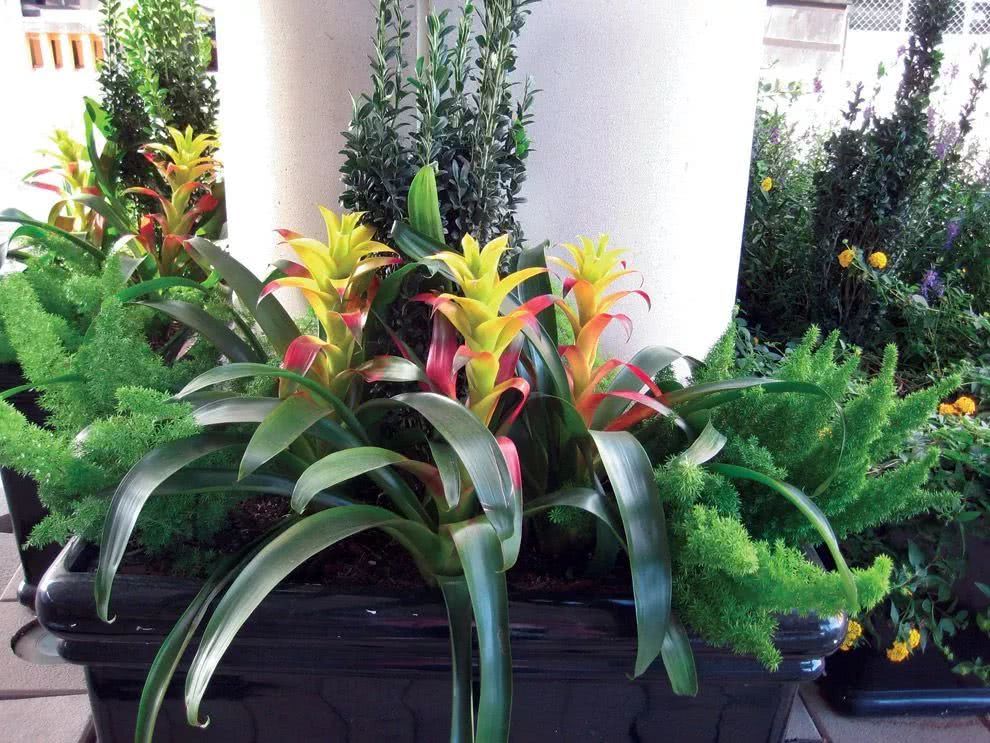
Recently a friend asked me how to deal with the withered flowers of their ornamental bromeliad. Below I will teach you how to keep ornamental bromeliads multiplying continuously. This method is actually division propagation, using its offsets to re-cultivate by cuttings, and afterward it can still keep blooming.
Ornamental bromeliads all like warm, humid environments. Even in winter, the temperature must stay above 10 degrees, and relatively high air humidity must be maintained. This way, ornamental bromeliads can keep their flowering period for a longer time.
After the flower bracts of the ornamental bromeliad wither, some pups will grow again from the sides. These are the new seedlings. Ornamental bromeliads have more than 3000 varieties and are generally propagated by division. Once its offsets have grown relatively large, they can be re-cultivated by cuttings.
Did you see the offset in the red circle in the picture above?
The flowers of most ornamental bromeliads can bloom for more than two months, and some even bloom throughout the entire winter and spring. The red and yellow parts are actually their flower bracts; their flowers are hidden inside and are very small.
After seeing the flowers of the ornamental bromeliad wither, do not water inside the flower bracts, otherwise it easily causes rot and also easily gives off a bad smell. Withered flower bracts should be removed promptly. After that, maintain a certain level of air humidity, keep the growing environment with appropriate scattered light, keep the environment ventilated, and keep the growing temperature above 15 degrees.
Many people throw it away after seeing the flower bracts of the ornamental bromeliad wither. In fact, it can continue to be cared for, and it will grow new offsets. As long as they grow to about 15 cm, they can be transplanted.
Its offsets generally appear after the flower bracts wither, and some also appear during flowering or before flowering. If you want to grow the offsets until they bloom, it takes a very long time, generally about 1 to 3 years.
After the flowers of the ornamental bromeliad are cut off, keep as many leaves as possible. This can promote the sprouting of offsets, benefit growth, and bring more nutrients to the offsets. In subsequent care, avoid watering directly into the center of the leaves. Instead, water directly into the soil in the pot. It is best to use peat soil mixed with bark, sand, or perlite. This can maintain good drainage, allow the roots to breathe, and also retain a certain amount of moisture.
Why do your ornamental bromeliad offsets still not bloom even after they have grown up?
Some friends, after re-propagating ornamental bromeliad offsets by cuttings, still do not see them bloom after two or three years of growing. This is actually because of insufficient nutrients.
I asked some friends at the nursery. For relatively young ornamental bromeliads, ethylene gas is generally used to promote flowering. During the flowering period of ornamental bromeliads, giving them ethylene can make them bloom.
However, ordinary home gardeners cannot possibly have ethylene gas at home, so we can place some ripe fruit next to it. An apple left out naturally will release ethylene gas.
Generally, put an apple that is not fully ripe into a bag, then put the apple and the bromeliad together into the bag. Then, as the apple slowly ripens, the apple ripening in the plastic bag will slowly release ethylene. This generally takes about three weeks, and the bag needs to be opened every day for proper ventilation.
After 8 to 13 weeks, the ornamental bromeliad can develop a new flower spike.
For more professional agricultural science and technology information, please scan the QR code to follow WeChat: NongXunNET

Please indicate the source when reprinting.