Vetiver Iris Essential Oil Storage Methods and Flower Language Introduction
How should vetiver essential oil be stored to maintain its quality and potency? What is the flower language of the vetiver iris, and do different colors have different flower languages?
How to store vetiver iris essential oil
Essential oils should be kept in a dark place
Essential oils must be kept away from sunlight and strong light. Sunlight is the easiest way to make essential oils go bad, so exposure to sunlight must be absolutely avoided. Do not place essential oils in direct sunlight or in places with sunlight; nor should they be exposed under lamplight, as the temperature and intensity of lamplight may also cause essential oils to deteriorate
Essential oils should avoid high temperatures
The volatility and oxidizability of essential oils make them very difficult to preserve. High temperature is also a taboo for essential oils. Normally, essential oils must not be placed in high-temperature places, and should be kept away from heat and high temperatures. It is best to place them in a dry, cool place, and they should not be too close to electrical appliances, much less placed in the kitchen or bathroom, as this will only make your essential oils no longer effective.
Different droppers should be used when blending different essential oils
The oxidizable nature of essential oils determines that they cannot be disturbed by the outside world. If you want to preserve your essential oils well and have a shelf life of six months, when blending essential oils you must not let droppers from other different essential oils get in, otherwise the life of your essential oils will be shortened to two months. You can buy several extra droppers online to prevent running short when blending essential oils and using the wrong dropper.
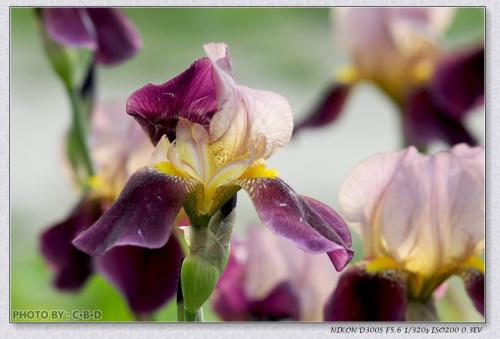
Vetiver iris flower language:
Iris represents the messenger of love. The iris flower is blue-purple, and its flower shape resembles a dancing butterfly. In May, the season when irises bloom, you can see blue butterflies fluttering among the green leaves, as if carrying news of spring to distant places. The French regard the iris as their national flower. This is because legend says that when Clovis, king of the first dynasty of the Kingdom of the Franks, was baptized, God gave him a gift, which was the iris. In France, the iris is a symbol of light and freedom. Iris is the general term for a group of herbaceous flowering plants. This flower consists of a sheath formed by 6 petal-like leaves, 3 or 6 stamens, and an ovary enclosed by the flower base. The name of this plant comes from the messenger of God and the rainbow that connects the earth and other worlds. There is also a legend that a rainbow once saved the life of a 6th-century Frankish king. When he saw the rainbow rise from the Rhine River, he knew the river water was shallow enough at that time, so he crossed the river and escaped pursuit by the enemy. Iris plants grow in Japan, China, Siberia and almost the entire temperate world. The iris flower is named because its petals are shaped like the tail of an iris bird, and its genus name iris means "rainbow" in Greek, referring to its rich flower colors. General flower industry professionals and flower arrangers commonly call it "Alice" based on the transliteration of its genus name. In Greek mythology, Alice is the goddess of the rainbow, the messenger between the gods and the mortal world. Her main task is to carry the souls of good people after death back to heaven via the rainbow bridge between heaven and earth. To this day, Greeks often plant this flower in cemeteries, hoping that the souls of the dead can be entrusted to Alice to bring back to heaven. This is also the origin of the flower language "messenger of love." In ancient Egypt, the iris represented "power" and "eloquence." Israelis generally regard the yellow iris as a symbol of "gold," hence the custom of planting irises in cemeteries, hoping to bring wealth in the afterlife. Monet also planted irises in his garden at Giverny; and with them as his theme, he left scenes of irises full of the vibrant rhythm of nature on canvas. Colorful irises each represent different meanings. White iris represents purity, yellow indicates everlasting friendship and warmth and cheerfulness, blue is admiration for the other person's simple elegance and generosity or secret admiration, and purple implies love and good fortune.