Kinmen Strictly Guards Against African Swine Fever, Holding Firm on the Front Line That Cannot Be Lost
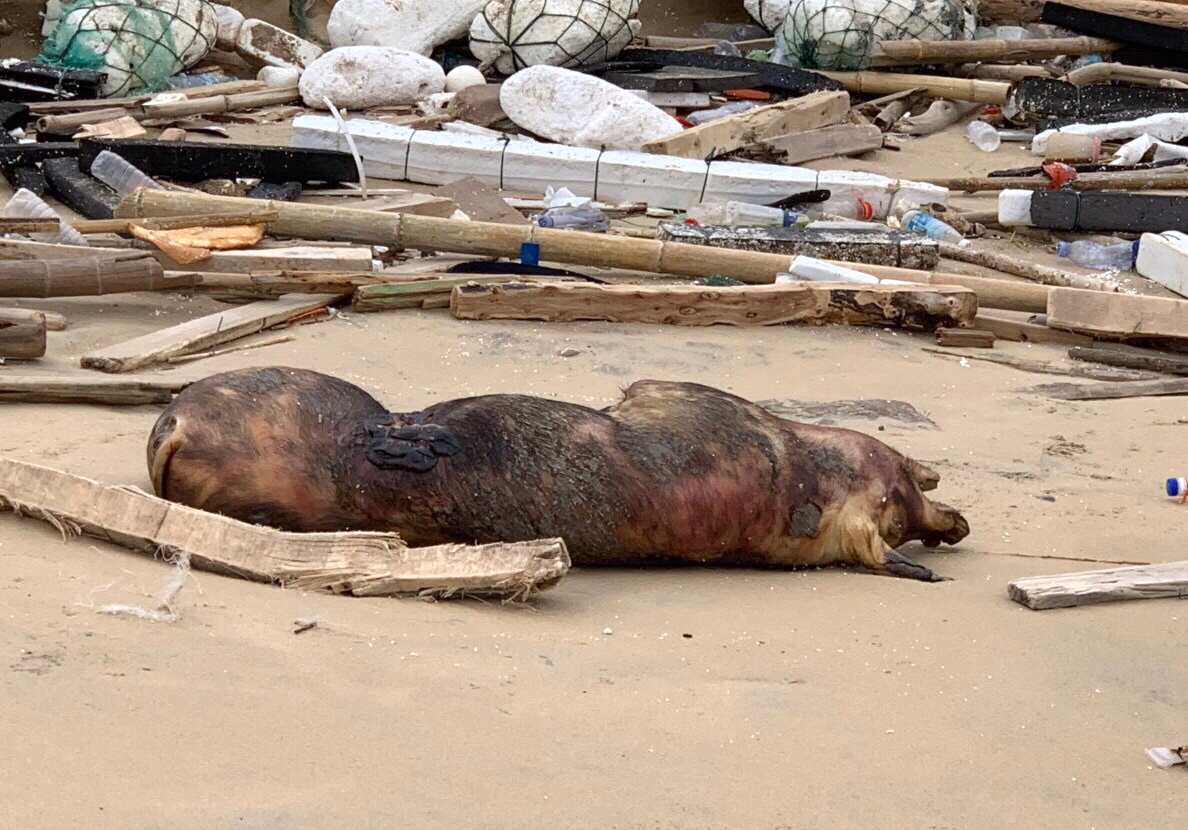
Day and night, rain or shine, coast patrol officers in bright orange uniforms search the beaches back and forth, afraid of missing any "uninvited guest" coming from the other side. Every Kinmen coast patrol officer turns pale at the mention of pigs; once a sea-drifted pig appears, the highest-level measures are immediately activated, with three additional teams dispatched for support, the "scene" cordoned off with layer upon layer of security, and the epidemic prevention station notified to handle the matter on site.
On October 31 last year (ROC year 106), the first interception in the country of Chinese-made pork products carrying the African swine fever virus occurred in the agricultural product discard bin at the Kinmen Mini Three Links entry point; two months later, a dead pig that drifted ashore on the beach at Tianpu on the northeast corner of Kinmen also tested positive for the African swine fever virus. The first positive pork product and the infected sea-drifted pig both appearing in Kinmen officially sounded the local epidemic prevention alarm, forcing the Kinmen County Government and pig farmers to tighten their nerves and protect their homeland.
For the coast patrol team members, the battle against African swine fever had long since begun; they must maintain combat readiness at all times, never relax for a single moment, and bear the operational pressure of the belief that "if epidemic prevention fails, Kinmen will be the first to bear the brunt."
News background: Since the outbreak of African swine fever in China in August 2018 (ROC year 107) up to now (as of May 5), a total of 19 pig carcasses have been found along the Kinmen coast, of which 4 cases tested positive for the African swine fever virus.
The security office at Liaoluo Commercial Port conducts security inspections on all goods shipped to Taiwan. Behind is Wu Chien-kuan, captain of the Ninth Coast Patrol Team.