Introduction to the Echeveria 'Chulian' (First Love) Succulent Variety
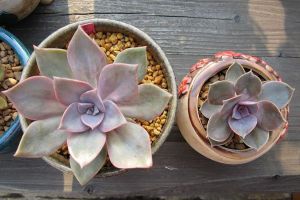
Common names of First Love
First Love is also commonly known as Pink Echeveria.
Habits of First Love
First Love is a plant of the Echeveria genus in the Crassulaceae family, and summer is its most suitable growing season.
It prefers a warm, dry environment with plenty of sunlight, and grows best at 18~25°C.
It is not cold-tolerant, and tolerates partial shade and drought.
Home growers usually propagate it by leaf cuttings. Common pests and diseases include: rust disease and root-knot nematodes.
Care tips for First Love
Repotting: First Love is a small to medium-sized plant, and depending on its growth it should be repotted once every 1~2 years. The pot diameter can be 1~2 inches larger than the plant diameter, and repot in spring each year. Use a mix of peat and coarse sand for the potting soil, with a small amount of bone meal added.
Watering: During the growing season, water once a week, and never let the potting soil become too wet. In winter, water only 1~2 times and keep the potting soil dry. Pay special attention to the white powder on First Love, and try not to let water touch the leaves when watering, otherwise water lingering too long in the leaf center can easily cause rot.
Fertilizing: Fertilize once a month during the growing season. Or apply a slow-release fertilizer once each quarter.
Light and temperature: The optimum growing temperature is 18~25 degrees Celsius. First Love needs plenty of sunlight for its leaf color to be vivid, its rosette to be more compact and attractive, and its leaves to be thick. Too little sunlight leads to leggy growth, pale leaf color, loosely arranged leaves, increased spacing between leaves, and thinner leaves. Apart from paying attention to proper shading in summer, it can have full sun in all other seasons.
Propagation methods for First Love
Leaf cuttings: In late spring, cut off mature leaves for cuttings, insert them into a sand bed, and after about 3 weeks they will root; once seedlings grow, pot them up. Note that the cut should be flat, and insert only after the cut surface has dried.
It can also be grown hydroponically; cut a section of the top stem and insert it into river sand, then transfer to hydroponics after new white roots grow. Add nutrient solution to the water in spring and autumn, and use plain water in summer and winter.
Suggested planting combinations: Pachyveria 'Blue Haze', Crassula 'Pagoda Village'
Related Articles
- How to prevent and control pests and diseases on desert rose? Ventilation and dryness are the key to prevention
- The three main causes of cotton diseases: climate, seeds and cultivation
- How to Grow Bird's Nest Fern in Water? Master Temperature, Light, and Water Change Techniques
- A Complete Guide to Identifying and Controlling Common Potted Flower Pests
- Do Carnivorous Plants Need Watering? Pot Watering and Wet/Dry Assessment Methods
- How to manage cotton during the flowering and boll-setting stage? Apply flowering and boll fertilizer heavily, use chemical regulation and pruning to prevent premature senescence
- How to Grow Chinese Hibiscus? Master These 5 Key Points for Blooms All Year Round
- How to Grow Tulips in Water? The Complete Process from Bulb Preparation to Blooming