Million Bells is a perennial herbaceous plant with persistent roots.
Morphological Characteristics of Million Bells
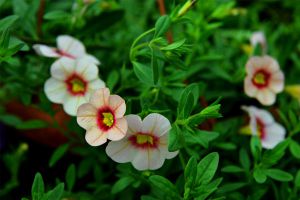
The Million Bells plant is covered with dense fine hairs, and the leaves are obovate-lanceolate or narrowly elliptical.
It has semi-lignified flower stems, and compared with general Solanaceae plants, Million Bells is more resistant to rain.
The flower corolla is funnel-shaped, and the petals are very small, but the number of flowers is astonishing; when in full bloom, they look like a cascading waterfall. The name "Million Bells" comes from the fact that each tiny flower closely resembles a beautiful little bell. Compared with ordinary dwarf petunias, its flowers and leaves are both smaller, but the flowering period of a single flower is longer; each flower blooms for about one week, and the flowers cover the branches like a waterfall. The tiny flowers are very lovely. Because the flowers resemble bells and are numerous, people affectionately call it "Million Bells." Similar to petunia, the flowers are slightly smaller, but more numerous, denser, and longer-lasting, making it more popular. Those who own "Million Bells" call themselves "millionaires." If you own 10 pots of "Million Bells," then you are a "ten-millionaire," someone whom everyone envies, is jealous of, or even wants to "rob."
Million Bells Growing Habits
Although Million Bells has a relatively long flowering period, its ability to adapt to the environment is average, and careful maintenance is needed for it to possibly bloom in all four seasons.
The Flower Language of Million Bells
The flower language of Million Bells is similar to that of petunia, carrying the beautiful meaning of "being with you."
Related Articles
- How to prevent and control pests and diseases on desert rose? Ventilation and dryness are the key to prevention
- The three main causes of cotton diseases: climate, seeds and cultivation
- How to Grow Bird's Nest Fern in Water? Master Temperature, Light, and Water Change Techniques
- A Complete Guide to Identifying and Controlling Common Potted Flower Pests
- Do Carnivorous Plants Need Watering? Pot Watering and Wet/Dry Assessment Methods
- How to manage cotton during the flowering and boll-setting stage? Apply flowering and boll fertilizer heavily, use chemical regulation and pruning to prevent premature senescence
- How to Grow Chinese Hibiscus? Master These 5 Key Points for Blooms All Year Round
- How to Grow Tulips in Water? The Complete Process from Bulb Preparation to Blooming