What kind of herbaceous plant is the larkspur?
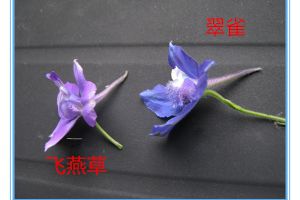
Other names for the larkspur
Pigeon flower (Northeast China), Baibu grass (northern Hebei), Chicken-claw lian, and others.
Growth habits of the larkspur
The larkspur by nature prefers a cool environment with plenty of sunlight, and it can also grow normally in a dry environment.
For growth it requires sandy soil with excellent drainage, and as for water it only needs the soil to be kept moist.
It is also drought-tolerant, sun-loving, and tolerates partial shade; it prefers warmth, but high heat and hot weather are taboo.
The value of the larkspur
The main value of the larkspur is as an ornamental potted plant.
The flowers of the larkspur are mostly blue-purple and light purple, looking fresh and elegantly plain, and their flower shape is like blue swallows perched all over the branches, so it is also called "swallow grass" (delphinium).
People usually grow it as a potted plant indoors for ornamental purposes.
It is said that in some European countries, the horticultural cultivation of the larkspur began as early as the 17th century, as an ornamental decorative flower for public places.
Today, thousands of ornamental varieties have been bred worldwide, and they are now mostly used in gardens to beautify them, as well as for green belts.
Related Articles
- How to prevent and control pests and diseases on desert rose? Ventilation and dryness are the key to prevention
- The three main causes of cotton diseases: climate, seeds and cultivation
- How to Grow Bird's Nest Fern in Water? Master Temperature, Light, and Water Change Techniques
- A Complete Guide to Identifying and Controlling Common Potted Flower Pests
- Do Carnivorous Plants Need Watering? Pot Watering and Wet/Dry Assessment Methods
- How to manage cotton during the flowering and boll-setting stage? Apply flowering and boll fertilizer heavily, use chemical regulation and pruning to prevent premature senescence
- How to Grow Chinese Hibiscus? Master These 5 Key Points for Blooms All Year Round
- How to Grow Tulips in Water? The Complete Process from Bulb Preparation to Blooming