Xiaoyu is a Crassulaceae succulent: characteristics and care guide
Other names for Xiaoyu
Trier jewel
Morphological characteristics of Xiaoyu
Xiaoyu is a small variety and easily forms clusters, with fine small branches and fleshy stems. After being grown for a long time, the stems gradually become semi-woody, but they will not stand upright and are basically creeping, because the leaves are too heavy while the branches are thin and weak, and the stems cannot support the weight.
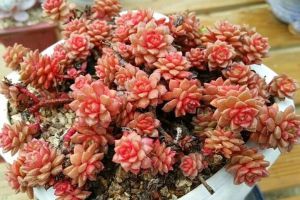
Xiaoyu leaves are short and spindle-shaped, smooth and thick, and range in color from green to dark red or purplish red. In late autumn and early spring, when the temperature difference is large, the dark red color is especially obvious.
Growth habits of Xiaoyu
Temperature
Xiaoyu is slightly cold-tolerant, and watering should gradually stop below 5°C. Suitable growth temperature: 8-28°C.
Light
Xiaoyu likes light and can be grown with full sun. In summer, when temperatures are high, pay attention to sun protection to avoid scorching the leaves.
Care tips for Xiaoyu
Soil
The planting soil should be a loose, breathable mix with good drainage.
Watering
During the spring and autumn growing seasons, Xiaoyu can be given plenty of water so it can grow fully.
In summer, when the weather is hot and rainy, watering should be controlled, and rain exposure and water accumulation in the center of the plant should be avoided, so the plant does not rot from lack of oxygen.
For winter care, once the temperature drops below 5°C, watering can be stopped. Keeping the potting soil dry often helps it overwinter safely.
Propagation methods of Xiaoyu
Stem cuttings: cut branches can be dried in a ventilated place for a few days, and after the cut heals, insert them into slightly moist soil, or they can be inserted directly into dry gritty soil, then given a small amount of water after a few days.
Leaf cuttings: Xiaoyu also propagates fairly easily from leaves. Place complete leaves flat on semi-dry potting soil, wait for small shoots to appear, and cover with soil after roots form.
Related Articles
- How to prevent and control pests and diseases on desert rose? Ventilation and dryness are the key to prevention
- The three main causes of cotton diseases: climate, seeds and cultivation
- How to Grow Bird's Nest Fern in Water? Master Temperature, Light, and Water Change Techniques
- A Complete Guide to Identifying and Controlling Common Potted Flower Pests
- Do Carnivorous Plants Need Watering? Pot Watering and Wet/Dry Assessment Methods
- How to manage cotton during the flowering and boll-setting stage? Apply flowering and boll fertilizer heavily, use chemical regulation and pruning to prevent premature senescence
- How to Grow Chinese Hibiscus? Master These 5 Key Points for Blooms All Year Round
- How to Grow Tulips in Water? The Complete Process from Bulb Preparation to Blooming