What kind of woody plant is the dragon blood tree?
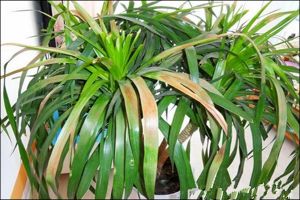
Alternative names of the dragon blood tree
bleeding tree, miracle blood-activating drug, plant longevity star, bucai tree, bamboo wood, horse-mule sugarcane tree
Morphological characteristics of the dragon blood tree
Evergreen small shrub, up to 4 m tall, bark gray. Leaves sessile, densely clustered at the top of the stem, thickly papery, broadly linear or oblanceolate, 10-35 cm long, 1-5.5 cm wide, base enlarged and stem-clasping, narrower near the base, midrib conspicuous in the lower part of the underside, rib-like, terminal large panicle up to 60 cm long, 1-3 flowers clustered. Flowers white, fragrant. Berry spherical, yellow.
Many species and varieties in the same genus are used for garden ornament. The dragon blood tree has loose wood, a hollow trunk, and branches full of holes, so it cannot be used as a pillar; when burned it only smokes and does not catch fire, and it cannot be used as firewood either, so it is really useless, which is why it is also called the "bucai tree."
Growth habits of the dragon blood tree
The dragon blood tree likes high temperatures and high humidity, and likes light; with sufficient light, the leaf color is vivid. It is not cold-tolerant; the winter temperature is about 15°C, and the minimum temperature is 5-10°C.
If the temperature is too low, because the root system absorbs insufficient water, yellow-brown patches will appear on the leaf tips and leaf margins. The dragon blood tree likes loose, well-drained soil rich in humus and nutrients.
Main value of the dragon blood tree
Ornamental: The dragon blood tree has a graceful and neat plant shape, and its leaf shapes and colors are varied. It is an excellent foliage plant for modern indoor decoration. Small and medium potted flowers can decorate a study, living room, and bedroom, and medium and large plants can beautify and furnish halls.
Medicinal: After the dragon blood tree is injured, it exudes a blood-colored liquid. This liquid is a resin, dark red, and is a precious traditional Chinese medicine. Its Chinese medicinal name is "dragon's blood" or "qilin blood." It has the medicinal function of activating blood and can treat muscle and bone pain.
Economic: The deep red sap of the dragon blood tree can be used as a dye, or to paint violins.
Related Articles
- How to prevent and control pests and diseases on desert rose? Ventilation and dryness are the key to prevention
- The three main causes of cotton diseases: climate, seeds and cultivation
- How to Grow Bird's Nest Fern in Water? Master Temperature, Light, and Water Change Techniques
- A Complete Guide to Identifying and Controlling Common Potted Flower Pests
- Do Carnivorous Plants Need Watering? Pot Watering and Wet/Dry Assessment Methods
- How to manage cotton during the flowering and boll-setting stage? Apply flowering and boll fertilizer heavily, use chemical regulation and pruning to prevent premature senescence
- How to Grow Chinese Hibiscus? Master These 5 Key Points for Blooms All Year Round
- How to Grow Tulips in Water? The Complete Process from Bulb Preparation to Blooming